 October 5: Elizabeth Coleman White, born on October 5, 1871, is one of the persons we can thank for commercially cultivated blueberries. Born in New Jersey, she grew up on a cranberry farm and assisted with supervising the cranberry pickers. In 1911, she read a report written by Frederick Colville, who was experimenting with wild blueberry bushes to determine if they could be commercially cultivated. She began working with Colville on his experiments, offering some of her family’s unused land to cultivate blueberry bushes. In 1916, White and Colville successfully cultivated their first blueberry plants. White helped organize the New Jersey Blueberry Cooperative Association in 1927. She then began working on other projects, including trying to bring the American Holly back. White died in 1954, and you can learn more about her life here and here.
October 11: On October 11, 1995, the Nobel Committee announced that Mario Molina, Paul Crutzen, and Sherwood Rowland were the recipients of the Nobel Prize in Chemistry for their work on the formation/decomposition of ozone. In their press release, the committee stated that this research was important as it showed the sensitivity of the ozone layer to the influence of anthropogenic emissions, and that their explanation of this contributed to potentially solving a global environmental problem. Crutzen was cited as being the scientist to provide a deeper understanding of the chemistry of the ozone layer. Molina and Rowland had published an article in 1974 in Nature that described the threat of CFC gases (freons) to the ozone layer, and their report is credited with leading to restrictions on CFC release in the late 1970s and 1980s. It should also be noted that Molina was the first Mexican-born scientist to win the Nobel Prize in Chemistry. You can read more about their prize and research here.
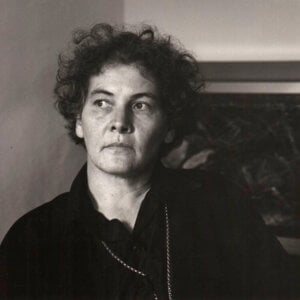 October 20: Born on October 20, 1942, developmental biologist Christiane Nüsslein-Volhard was one of three recipients of the 1995 Nobel Prize in Medicine for her research on the genetic control of early embryonic development. Born in Germany, Nüsslein-Volhard received an undergraduate degree in biochemistry from the University of Tübingen in 1969, and a PhD from the same university in 1974. She completed a post-doc in the laboratory of Walter Gehring at the University of Basel, becoming a specialist in the developmental biology of a fruit fly. After briefly setting up a lab at the European Molecular Biology Laboratory, she joined the Max Planck Institute in 1981. She researched with Eric Wieschaus, also a recipient of the 1995 Nobel Prize in Medicine, and their work on how mutations impact the genes involved in the development of the embryo of fruit flies had great significance for the scientific community. Their work, for example, increased understanding of how an embryo’s shape is determined by genes. In addition to receiving a Nobel Prize, Nüsslein-Volhard also received the Albert Lasker Medical Research Award and served as a director at the Max Planck Institute of Developmental Biology from 1985 until 2014. You can learn more about her life and research here and here.
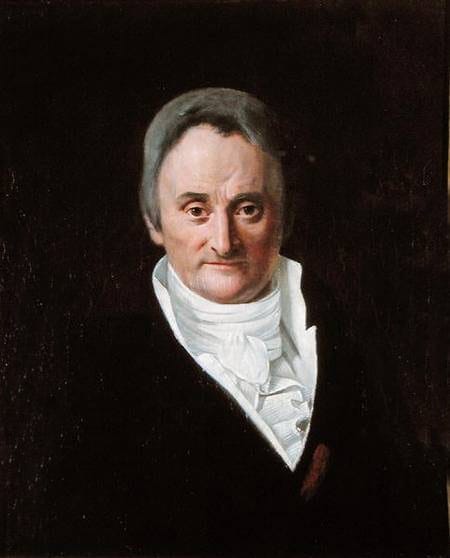 October 25: French physician Philippe Pinel, who died on October 25, 1826, was instrumental in the development of treating the mentally ill with humanity as well as being described by some as the “father of modern psychiatry.” Born in 1745 in France, he received a medical degree from the University of Toulouse and also studied medicine an additional four years at the University of Montpellier. In 1778, he moved to Paris, where he spent 15 years teaching, translating medical works into French, and serving as an editor to a medical newspaper. In 1793, he was appointed physician at Bicetre, an asylum in Paris with more than 4,000 male patients. He radically changed the way the patients were treated, insisting on them being unchained and taken out of dungeons, and ensuring they received adequate food, hygiene, and occupational therapy. During his time there, mortality rates among first-year patients fell from 50% to 12.5%. In 1795, he became chief physician at the Hospice de la Salpêtrière, which was home to between 7,000-8,000 women patients. He remained there for the remainder of his career. In addition to this work, Pinel published his Memoir on Madness, which posited that patients should be carefully studied over time, as insanity is not always continuous. In 1798, he published a classification of diseases, Nosographie philosophique ou méthode de l’analyse appliquée à la médecine, which posited four basic types of mental disorder. For the remainder of his career, Pinel championed the idea that mental health conditions were not caused by “personal wickedness” and that those that suffered should be treated compassionately. You can read more about his life and career here and here.