High Throughput Screening Facility

We empower researchers with cutting-edge tools and expertise to accelerate drug discovery and biomedical breakthroughs.

Section Contents

Overview

History

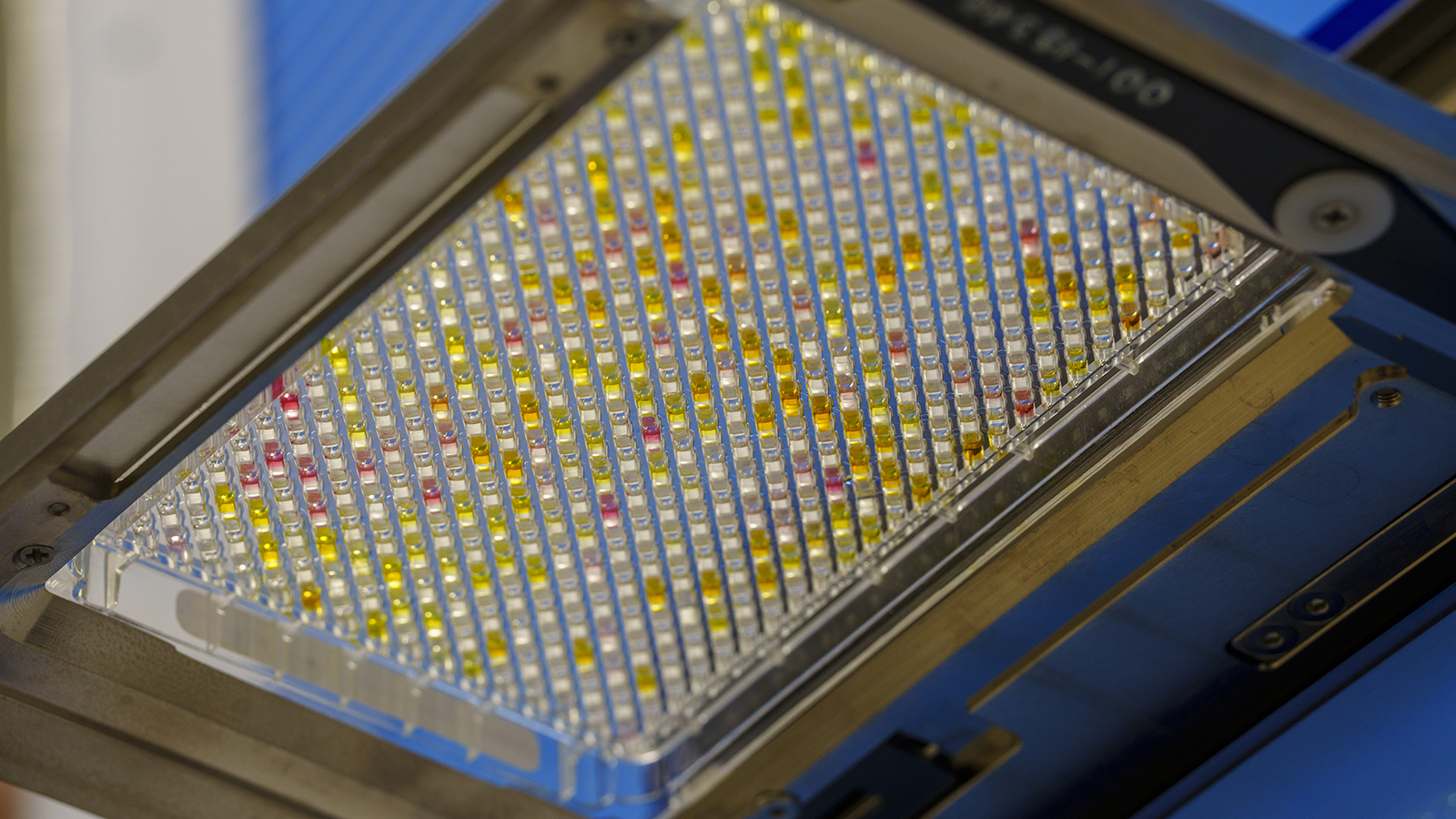
In 2002, Vanderbilt University made a major investment in therapeutic discovery and translation through the creation of the Vanderbilt Institute of Chemical Biology (VICB). A trans-institutional initiative between the College of Arts and Sciences and the School of Medicine, the VICB was given the mission to apply chemistry to important biological problems. Key to successful therapeutic discovery is the availability of resources enabling the high-throughput screening (HTS) of small molecules. To promote molecular probe discovery, the foundation of chemical biology research, the VICB established the V-HTS Core Facility in 2005. In the past 20 years, several landmark efforts have helped to boost the scope and capabilities of the V-HTS including the accumulation of >350,000 compounds available for screening, several high-end instruments (liquid handlers, kinetic imaging plate readers, and high-content imager), compound management automation, and robotic handling for screening automation that mimics industry-standard HTS practices. Knowing the importance of academic drug discovery, the V-HTS is further institutionally- supported by the University through the Vanderbilt Office of Research as well as the Vanderbilt Ingram Cancer Center.

Misson

The Vanderbilt Institute of Chemical Biology (VICB) High-Throughput Screening (V-HTS) Core accelerates drug discovery and biomedical breakthroughs through cutting-edge screening capabilities. Our comprehensive compound library contains over 350,000 diverse small molecules, including FDA-approved
drugs, NIH clinical candidates, and proprietary Vanderbilt synthesized compounds. The V-HTS Core offers small molecule screening, functional genomic screening with whole-genome libraries, and phenotypic screening using advanced imaging and machine learning analysis software. Our flexible, collaborative
model offers full-service, turnkey operations and walk-up access, along with personalized training. Advanced instrumentation includes multi-mode kinetic plate readers, high-content imaging systems, high-throughput metabolic instrumentation, and fully automated compound management platforms. Expert staff support researchers from assay development through hit-to-lead progression and data analysis and informatics support, ensuring reliable, reproducible results for basic research and pharmacology applications.

Our Team
HTS Team

Director

Assay Development and High-Throughput Screening

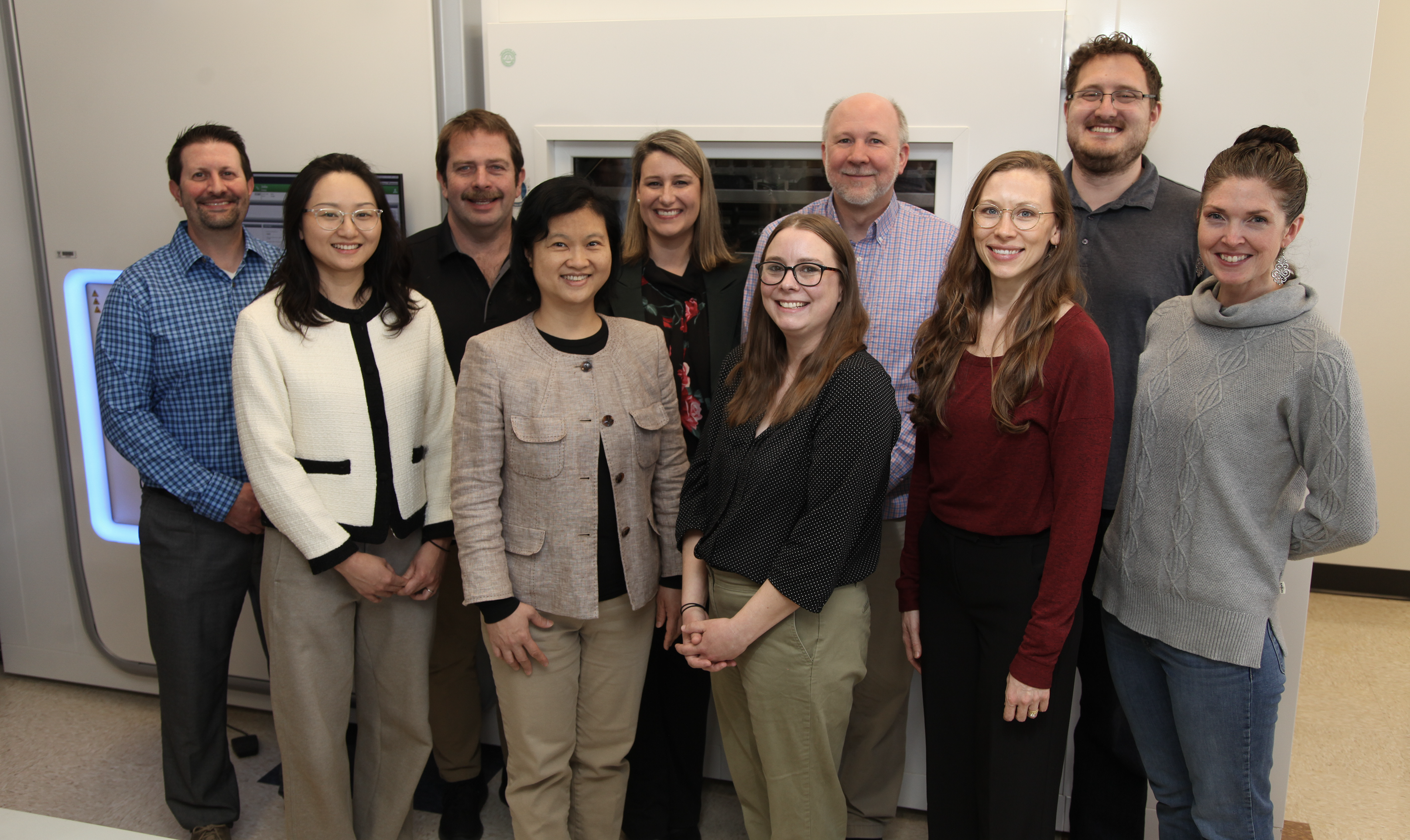
The assay development and HTS team is a group of expert staff responsible for developing and automating biological assays as well as conducting biochemical and cell-based high-throughput screens to identify new lead compounds that benefit both mechanistic studies and drug discovery/development. Working closely with research investigators, the HTS team strives to provide rapid, cost-effective assay development and chemical library screening. The team aids in instrument training/assistance, assay optimization, pilot screening, automation, data capture and analysis, compound distribution, full library screening, and screen validation.

Informatics

The HTS Informatics team is responsible for integrating automation and instrumentation with downstream data handling and reporting. This group maintains the laboratory technology infrastructure, including maintaining and troubleshooting instrumentation, robotic integration, network security, performing data backups, and managing data access. The team is also responsible for database management and information processing, including the Laboratory Information Management System (LIMS) management. They perform systems analysis and programming as needed for instrument interfaces and integration, as well as extracting, reformatting, uploading, aggregating, and/or analyzing data gathered in the course of HTS experiments. In addition, the group assists laboratory and scientific personnel with all their informatics needs, including overseeing data exchanges with research investigators.

Compound Management

The HTS facility houses a state-of-the-art automated compound management system (Hamilton Storage Technologies) that provides environmentally controlled storage and on-demand access to the library compounds. The chemical library collection consists of commercially purchased libraries as well as compounds synthesized by collaborating investigators to give a diverse array of chemical materials for biological testing. Processes such as compound registration, storage, and handling all meet or exceed industry standards. Compounds can be dispensed into a variety of tube and plate formats (6-well to 384-well) to accommodate the research investigator’s needs.

Lab Management

The HTS facility requires a dedicated person to maintain and manage inventory, supplies, and instruments.

Internal Advisory Board

The Scientific Advisory Board for the Vanderbilt HTS Facility is an association of research investigators and leaders with proven track records in academic and industrial research programs. Together, they oversee the intermediate and long-term goals of the facility by advising on growth and diversification strategies, assessing and prioritizing proposed projects that enter the facility, critiquing success metrics, and providing financial oversight and funding leadership.

How to get started

  • Consultations

    Consultation meetings can be requested directly to the HTS director or through email- hts@vanderbilt.edu. Consultations can be made for any of the V-HTS services as briefly listed below, for general assay design, screening services or equipment, grant/funding opportunities, grant support, collaboration projects, informatics support, manuscript writing, letters of support, estimates of cost, and anything involving V-HTS or the VICB. In addition to serving Vanderbilt, the Medical Center and local area institutes, we welcome external collaborators and projects.

    V-HTS Services:

    • Full-service HTS screens
    • Functional Genomics Screens (FGS) and library distribution
    • High-content Screening (HCS) and analysis support
    • High-throughput assay design and development
    • Screening data analysis
    • Training on almost all V-HTS equipment and instruments
    • Extensive compound management and informatics support
    • Use and support of robotic lab automation (V-HTS assistance required)
  • iLab

    The V-HTS core facility uses iLab for all new HTS project requests, instrument reservations, and for billing.

    All users must have a VU iLab account (including VUMC users).

    Further instructions on setting up an account can be found at VU iLab Instructions

  • Rates and Services

    Under construction- Coming Soon

  • Starting a New Project

    Before beginning any new work in the HTS Core, all users must complete the New Project Onboarding process; this ensures that each project is properly reviewed for feasibility, safety, and compliance with institutional and facility guidelines.

    We welcome both internal and external researchers and are committed to supporting a wide range of research. To maintain a safe and organized environment, we require all new projects to follow the steps outlined below.


    New Project Onboarding Process

    1. Submit a New Project Request in iLab

    All users must initiate their project by completing the New Project Request form in VU HTS Core iLab page; this form captures key details about your research goals, planned experiments, and required instrumentation or services. You must have a funding source and iLab billing or center number to complete the New Project Request form.

    1. Complete a Risk Assessment Survey (RAS) (if applicable)

    If your work involves pathogens, BSL2 materials, or Risk Group 2 agents, you are required to complete an RAS and upload your current IBC approval. Your project cannot be approved until the necessary documentation and consultation is received and verified.

    1. Staff Consultation (if applicable)

    After submitting your project request and completing the RAS (if applicable), a member of HTS staff may reach out to schedule consultation; this is an opportunity to review experimental needs, assess technical feasibility, and ensure the appropriate resources are available.

    1. Complete Required Safety Trainings

    Before accessing any lab space or instrumentation, all users must:

    • Complete university-required EHS trainings
    • Complete in-house instrument or workflow-specific trainings
    1. Project Approval & Lab Access

    Once all forms, approvals, and trainings are complete, your project will be reviewed for final approval. You will then be granted lab access and may begin work in V-HTS Core facilities.

  • Training Request

    Training Requirements:

    All users must be trained and authorized before independently operating any equipment or conducting any experiments in V-HTS lab spaces.

    Required trainings:

    • EHS-mandated training: Users must complete all relevant EHS trainings prior to lab access. Training requirements vary depending on the work you will be performing, but typically include Biosafety 101, Working Safely with Human-derived Materials, Biosafety 201, and Chemical & Physical Safety for Research Labs.
    • HTS Core training: Instrument-specific training is required for each piece of equipment and is provided in-house by HTS staff. Training is hands-on and tailored to the user’s project needs. You may request specific instrument training through the VU HTS Core iLab.
    • Access Policy: Only users who have completed all required safety and instrument trainings will be granted independent access to lab spaces and instrumentation. After completing instrument trainings, users will be granted access to reserve time on those instruments; time can be reserved through VU HTS Core iLab. Reservations must be made for all instruments so that billing can be processed. Use of instruments without reservations is prohibited and will result in loss of privileges.
  • External Users

    The V-HTS accepts both internal (VU/VUMC) and external projects. External projects can be fee-for-service (ie, CRO-like) or collaborative (eg, academic or start-up).

    External users are encouraged to begin with requesting a consultation meeting or by emailing your request to hts@vanderbilt.edu or the HTS director

    External users will need to fill out and submit a Core Addendum form (in conjunction with the V-HTS director) and a Core Agreement form which contains the terms and conditions of the agreement. These forms and instructions can be found at VU CORE agreements.

    All V-HTS users, internal or external, are required to have a iLab account. Instructions for External Users

HTS Policies

  • General

    Administrative Policy

    The HTS staff endeavors to achieve success with all projects and will thoroughly assess projects at each step of the screening process. As with all research, success cannot be guaranteed. Please be aware that users will be billed for all services, supplies, and equipment time regardless of assay success. A quote may be requested before beginning work on a project to estimate costs for HTS services, supplies, and equipment use as described during the intake process. Due to the variability of assays and cell conditions, please allow for 15% variance in costs from the quote. If the work should require further changes, HTS will contact the PI/users before proceeding.

    In addition, users will be required to agree to adhere to all HTS policies and procedures outlined in the training sessions with regard to equipment usage and to all HTS Facility Safety Policy guidelines. Failure to follow these policies and procedures may result in charges for equipment repair and/or require additional training. Repeated failure to comply with HTS Facility Policies may result in loss of access to HTS services and equipment.

    Data Sharing Policy

    The HTS Core Facility Stores project Data on network drives which are routinely backed up. Raw data is stored to a Data Drive in an anonymous, unlinked format. Data analysis information and protocols will be stored on Sharepoint for each project. By default, all project level information on the project site is private. The PI for each project, or a designated proxy, will be able to add user access to the project site for additional lab members and collaborators.

    HTS staff members will have access to all project data for the purposes of quality control. PIs have the option of sharing their target, compound hits, or other data with other PIs with compatible interests and assays. PIs must opt-in for any sharing options when completing the Intake Form. All data acquired in the HTS facility, data analysis performed by HTS staff, or protocols and assays developed by HTS staff must be acknowledged in any publication, presentations, and grant applications resulting from the work.

  • Instrument Policy

    Coming soon

  • Safety

    To ensure the safe and responsible use of our shared resources, all users must follow the policies and safety practices outlined below. These documents provide essential guidance for working in our facility, especially in biosafety level 2 (BSL2) spaces or when using high-risk biological materials.

    All users are responsible for reviewing and complying with these policies before beginning work in the core.

    HTS Core Facility Policies

    1. Biosafety Policy for New Users (PDF link)

    • Outlines the biosafety expectations and training requirements for all new users

    2. HTS User Safety Policy (PDF link)

    • Details safety protocols and training requirements specific to HTS instrumentation and workflows

    3. Pathogen Use Guidelines (PDF link)

    • Covers the approval and handling procedures for working with pathogens in accordance with IBC and EHS guidelines
    • Note: All users working with pathogens or other high-risk materials are required to submit a formal Risk Assessment Survey and consult with HTS staff for any proposed work with these materials.

    4. Risk Group 2 Oversight Summary (PDF link)

    • Summarizes the facilities risk management approach and compliance practices for experiments involving Risk Group 2 agents .

    5. Safe Practices for Working in CASSy (Containment Automation Screening System)

    • Covers best practices for working in CASSy involving Risk Group 2 agents

    6. Tissue Culture Room Guidelines 

    Safety Policies

    • The VICB HTS Core is committed to maintaining a safe, compliant, and efficient research environment for all users. We operate under the guidelines established by the Vanderbilt University’s Environmental Health & Safety (EHS) office and Institutional Biosafety Committee (IBC).
    • All HTS users must adhere to the following safety requirements:
    • Completion of mandatory EHS safety trainings and internal HTS trainings
    • Use of appropriate PPE while in our facilities
    • Adherence to posted SOPs and safety signage
    • Prompt reporting of spills, injuries, equipment issues, or other incidents to core staff
    • Access to lab spaces may be suspended for any user found in violation of safety policies. For more information on EHS training requirements, refer to the EHS website.
  • Compound Management Services and Policy

    The Vanderbilt High-Throughput Screening (V-HTS) Core provides comprehensive Compound Management (CM) services to support academic and translational research. Utilizing advanced instrumentation and custom software tools, we ensure precise, secure, and efficient handling of compounds throughout their entire lifecycle.

    Compound Registration

    All compounds to be used in HTS require registration to the  V-HTS chemical database, which serves as the central repository for compound properties and molecular descriptors. Each compound is assigned a unique VU# (e.g., VUXXXXXXX-X) to enable precise identification and tracking. 

    Registration is structure-based and begins with a staging step that runs QC checks and ensures accurate formatting prior to deposit to the database. If the compound is novel, it is assigned a new VU# and begins as batch 1 (e.g., VU1234567-1). If the structure already exists, a new batch number is added under the existing VU# to reflect a new synthesis or source for that same compound. This approach allows for batch-level differentiation while preserving structural continuity. 

    Compounds are organized in a Compound → Batch → Sample hierarchy, with each level independently assigned to either public or private project security. This flexible system allows the same compound to support both open collaboration and confidential research under appropriate access controls. Compounds and information can be registered seamlessly via the integration of chemist's ELNs (Signals).

    Comprehensive chemical information—including structure, molecular weight, purity, vendor, screening results, and distribution history—is securely stored and readily accessible for both research and operational use.

    Compound Tracking

    We ensure complete trackability of all compounds in the V-HTS chemical database in combination with BioVia Pipeline Pilot and our in-house HTS software, WaveGuide. Every compound is tracked from initial registration through distribution, with detailed, real-time records of location, volume, storage conditions, and usage history. 

    Compounds are formatted into Thermo Matrix 0.7 µL barcoded tubes and Echo-compatible 384-well plates and stored at -20°C in the Hamilton Verso for automated inventory control. For screening and distribution applications, volumes and DMSO concentrations are recorded using log files directly uploaded from the Zinsser Alli and Beckman Echo, ensuring precision and consistency. 

    This seamless integration between hardware and software enables automatic updates to the database, supporting accurate recordkeeping of every compound handling event. Meanwhile, WaveGuide supports daily operations such as tube distribution requests, compound availability monitoring, and compound library information, helping researchers quickly access information and assess compounds as needed.

    Screening Preparation and Support

    Compound libraries are maintained at a 10 mM stock concentration in DMSO and are readily available for screening using the Echo non-contact acoustic dispenser. Upon request through iLab, compounds are precisely transferred into user-defined assay plates (as low as 2.5 nL) that are barcoded, ensuring accuracy and minimizing sample waste.  

    To support hit validation workflows, stock tubes, when available, are used to prepare custom hit plates for confirmation and dose-response experiments. Transfer volumes can be tailored to the assay design, and Echo protocols are optimized for DMSO compatibility and assay performance. 

    To ensure maximum use of shared resources, compound distributions from the library are limited to a maximum of 10 µL per compound. All dispensing events are logged and trackable, supporting full data transparency for accuracy and reporting.

    Compound Distribution

    Researchers can request compound distribution using the WaveGuide request form. A variety of plate and tube formats are available to accommodate diverse project needs and assay requirements. Distributions are carried out using the Zinsser Analytic Alli liquid handler and Agilent Bravo, which provides automated and accurate liquid handling for consistent sample preparation. 

    Throughout the distribution process, each sample barcode is scanned and verified to ensure data integrity. Instrument activity logs from the Zinsser system are uploaded directly into the -HTS chemical  database, enabling real-time tracking of compound identity, format, and location. 

    Compound Management provides a standard 48-hour turnaround time for plate or tube preparation requests, with convenient pickup available at the V-HTS Core (824 RRB). This streamlined, reliable service supports fast-paced research timelines while maintaining the highest standards of quality control and documentation.

    Echo Protocol Development and Training

    We offer to help design and validate custom liquid transfer protocols for the Beckman Echo platform, enabling precise, low-volume, non-contact dispensing that enhances screening accuracy and efficiency. 

    V-HTS offers personalized training sessions to researchers interested in developing their own Echo protocols or operating the instrument independently (training requests are made through iLab). Our hands-on approach empowers users to optimize their workflows, reduce sample waste, and improve assay consistency.

    Compound Reorders

    Compound reorders (powder stocks) from vendors are initiated by researchers to further validate their screening hits. This usually occurs following dose-response curves of hits or when additional quantities beyond the standard limit of 10 µL of stock compounds from V-HTS are needed. Additionally, compounds from vendors can be reordered for small SAR testing. Upon request, Compound Management assists with coordinating the reorder process between the researcher and vendor to ensure timely replenishment of requested compounds. HTS, with the assistance from MDSC can also offer QC services using LC-MS. 

    For any reordered compounds intended for use in V-HTS, an aliquot must be submitted to register as a new batch for accurate tracking and data integrity. 

    Our current screening library, the Vanderbilt Discovery Collection from Life Chemicals, follows a defined reorder workflow. This includes requesting a vendor quote, obtaining Principal Investigator (PI) approval, submitting a purchase order through Vanderbilt Procurement, and charging the reorder as a passthrough consumable in iLab upon delivery. 

    Reorder timelines depend on compound availability and vendor schedules. Compound Management works closely with vendors, collaborators, and internal chemists to maintain compound quality and facilitate smooth delivery, supporting uninterrupted screening campaigns. 

    Researchers are encouraged to contact Compound Management early when additional compound quantities are required. 

Acknowledge

Publication Guidelines:

As you near publishing work that used HTS resources, please consider the following:

Small Molecule Naming
When referring to Vanderbilt library small molecules and other registered compounds in presentations, we encourage you to use the full 7-digit VU#, e.g. VU0824980. This provides a unique reference and allows proper tracking.

Authorship
Some of the projects that we support require significant intellectual input from HTS research faculty and staff in a way to warrant co-authorship on publications and listing as co-PI on grants. Examples include contributing to the design and development of an assay and determining the approach for and carrying out data analysis.

We request that the recommendations for authorship of the International Committee of Medical Journal Editors (ICMJE) be followed and that the PI engages HTS collaborators during the project and manuscript preparation. According to the ICMJE recommendations, individuals who meet all of the following criteria should be included as co-authors:

  • Substantial contributions to the conception or design of the work; or the acquisition,   analysis, or interpretation of data for the work; AND
    · Drafting the work or revising it critically for important intellectual content; AND
    · Final approval of the version to be published; AND
    · Agreement to be accountable for all aspects of the work in ensuring that questions   related to the accuracy or integrity of any part of the work are appropriately
    investigated and resolved.

Depending on the resource(s) that you use within HTS (including Compound Management and Informatics), a general or more specific acknowledgment may be appropriate. Below are examples of acknowledgements to include.

* NIH requires citation of S10 grant for instruments purchased using these funds. The Seahorse falls in this category.

Resource

Example Acknowledgement

HTS Instruments

Experiments were performed in the Vanderbilt High-Throughput Screening (HTS) Core Facility with assistance provided by <staff member names>. The HTS Core receives support from the Vanderbilt Institute of Chemical Biology and the Vanderbilt Ingram Cancer Center (P30 CA68485).

Seahorse Analyzer*

The Agilent Seahorse Extracellular Flux Analyzer is housed and managed within the Vanderbilt High-Throughput Screening Core Facility, an institutionally supported core, and was funded by NIH Shared Instrumentation Grant 1S10OD018015.

Panoptic 2*

The WaveFront Biosciences Panoptic kinetic imaging plate reader is housed and managed within the Vanderbilt High-Throughput Screening Core Facility, an institutionally supported core, and was funded by NIH Shared Instrumentation Grant 1S10OD021734.

NIH Clinical Collections

The NIH Clinical Collection is provided through the National Institutes of Health Molecular Libraries Roadmap Initiative and was distributed by the Vanderbilt High-throughput Screening Core Facility. The HTS Core receives support from the Vanderbilt Institute of Chemical Biology and the Vanderbilt Ingram Cancer Center (P30 CA68485).

SelleckChem FDA Approved

The FDA approved library was provided by the Vanderbilt CTSA (UL1TR00044) and distributed by the Vanderbilt High-Throughput Screening Core Facility. The HTS Core receives support from the Vanderbilt Institute of Chemical Biology and the Vanderbilt Ingram Cancer Center (P30 CA68485).

SelleckChem Anti-cancer and Protein Kinase Inhibitor Collections

The anti-cancer and protein kinase inhibitor collections were provided by funds donated by the Vanderbilt Ingram Cancer Center (P30 CA68485), the Vanderbilt Center for Cancer Targeted Therapies (part of the VICC), Dr. Lawrence J. Marnett, and Dr. Michael Savona.

Marnett Library

The Marnett library was donated by Lawrence J. Marnett.

Other Libraries

The <collection name> was distributed by the Vanderbilt High-Throughput Screening Core Facility. The HTS Core receives support from the Vanderbilt Institute of Chemical Biology and the Vanderbilt Ingram Cancer Center (P30 CA68485).