Compound Collection
The Molecular Design and Synthesis Core (MDSC) supports the chemical biology community by providing access to a curated collection of small molecule probes, tool compounds, and functionally relevant intermediates. These compounds, developed through research collaborations or synthesized at Vanderbilt, span a range of biological applications and are organized into category-specific catalogs for easy access and purchase.
In addition to offering these molecules to investigators, the Vanderbilt Institute of Chemical Biology (VICB) also hosts the Gilbert Stork Collection, a chemically diverse library of compounds made available through a unique agreement with Columbia University.
Investigators are encouraged to submit their own compounds to the Vanderbilt Compound Collection, where they may be considered for inclusion in future screening campaigns conducted by the VICB High-Throughput Screening Core (HTSC). This shared resource enables the broader research community to leverage Vanderbilt-discovered molecules for innovative, collaborative discovery.
Explore the sections below to learn more about available compounds, submission opportunities, and how to request samples.
Compound Catalog
The MDSC, established in 2007, is now approaching twenty years of supporting the organic synthesis, chemical probe design and development, and medicinal chemistry needs of researchers across Vanderbilt’s campus and beyond. Over its lifetime, the MDSC has produced a diverse array of functional small molecules, some of which have been previously reported in the scientific literature, with others being novel molecules that were designed and synthesized in collaboration with other research groups. The breadth and diversity of small molecules produced by the MDSC since its founding was illustrated in a review article published in 2021 (ACS Chem. Biol., 2021, 16, 787–793).
Many compounds are currently available or prepared on demand in quantities from milligram to multi-gram. Over its 20-year history, MDSC has completed over 500 projects requested by Vanderbilt and external investigators. In many cases, the products of these projects have been pharmacologically characterized, and possess defined biological activity.
 Classes of small molecules available to support research include chemical biology probes, isotopically labeled standards, nucleic acids, peptides,and natural products. A partial listing of each class, as well as downloadable pdfs of each is provided below. The MDSC also has, in collaboration with the VUII radiochemistry group, has the capability to deliver high-quality precursors of 18F-labeled chemical probes for PET imaging studies (see: Chemical Probes). To request a quote for a specific compound (listed below), please complete the MDSC compound request form. For custom synthesis requests, visit the project request forms listed above.
-
Molecular Probes
Molecular probes Vanderbilt investigators have contributed to the development of molecular probes dating from the inception of the NIH molecular probe initiative (Cell 2016, 161, 1252 PDF). Over the course of these studies, the MDSC synthesized a variety of high-quality probes, which in some instances led to pre-clinical leads for further drug discovery optimization. The MDSC continues this mission, assisting both VU/VUMC and external groups in the synthesis of small molecule probes in anywhere from milligram to multi-gram quantities for study in basic science, including in vivo study.
replace that code below with just this
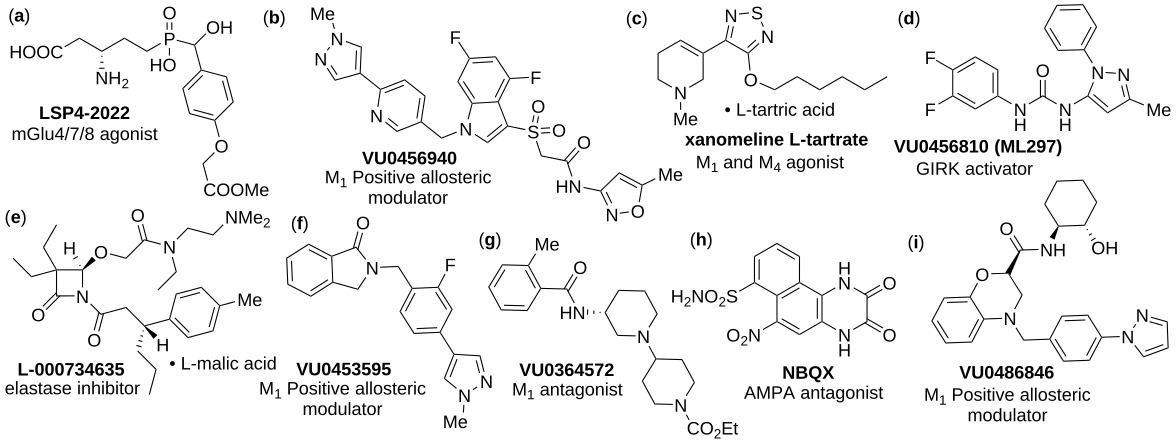
Molecular Probes: (a) LSP4-2022 (DOI:10.1523/JNEUROSCI.4543-14.2015); (b) VU0456940 (DOI: 10.1016/j.drudis.2013.09.005); (c) Xanomeline L-tartrate (DOI: 10.1021/acschemneuro.2c00592); (d) VU0456810 (ML297,DOI:10.1021/cn400062a); (e) L-000734635 (DOI:10.1053/j.gastro.2014.02.007); (f) VU0453595 (DOI:10.1038/s41386-020-00812-7); (g) VU0364572 (DOI:10.1021/cn300103e); (h) NBQX (DOI:10.1016/j.expneurol.2016.04.010); (i) VU0486846 (DOI:10.1021/acschemneuro.8b00131)
-
Amino acids and Peptides
Amino acids and peptides The MDSC has the capability to produce peptides by solid-phase synthesis including incorporation of unnatural amino acids. For some peptide synthesis needs, investigators may be referred to a Contract Research Organization that can offer peptide synthesis at a competitive price (see: Resources).

Amino acids and Peptides: (a) GluDOPA (DOI:10.1038/ki.1990.131); (b) PF74 (DOI: 10.1016/j.ejmech.2020.112626); (c) FLAG tag peptide (DOI:10.1038/nm.1795); (d) DizPK (DOI:10.1038/ncomms12299)
-
Chemical biology tool compounds
Chemical biology probes are central to biological studies, including target identification, assay development for high-throughput screening, and protein profiling. Below are examples of probes divided into affinity and fluorescent based reagents.
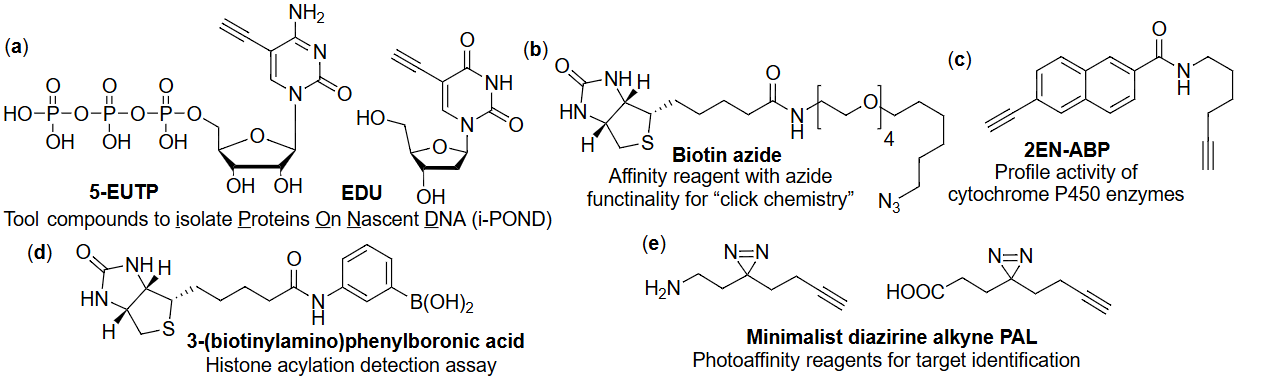
Affinity, photoaffinity, and click reagents: (a) 5-EUTP (DOI:10.1021/jacs.0c05635); 5-EDU (DOI:10.3390/molecules16097980); (b) Biotin Azide (DOI:10.1038/nprot.2012.010); (c) 2EN-ABP (DOI:10.1016/j.chembiol.2007.08.008); (d) 3-(biotinylamin)phenylboronic acid (DOI: 10.1007/978-1-4939-9434-2_3); (e) Alkynyl diazirines (DOI:10.1002/anie.201300683)
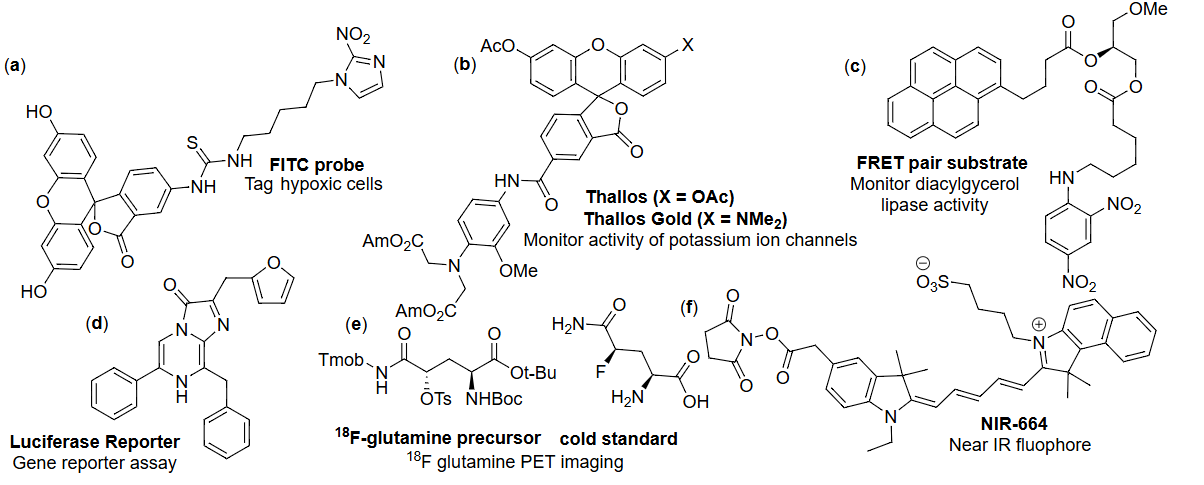
Fluorescent, metal sensing and other reporter probes (a) FITC probe (DOI:10.1021/bc500400z); (b) Thallos Gold (DOI:10.1039/c8ob01098f); (c) FRET pair substrate (doi:10.1016/j.bmcl.2012.05.101); (d) Luciferase reporter (DOI:10.1073/pnas.0809482105); (e) 18F glutamine precursor (DOI: 10.1007/s11307-015-0862-4); (f) NIR-664 (DOI:10.1021/bc300693w)
-
DNA synthesis, nucleotides, and nucleosides
DNA synthesis, nucleotides, and nucleosides Vanderbilt has a long history in toxicology research, including the study of DNA modification by xenobiotics and other toxic agents. The MDSC provides access to modified nucleotides, nucleosides and custom DNA synthesis. Work in this area has been expanded to include natural and unnatural cyclic-dinucleotides and other complex nucleic acid structures.
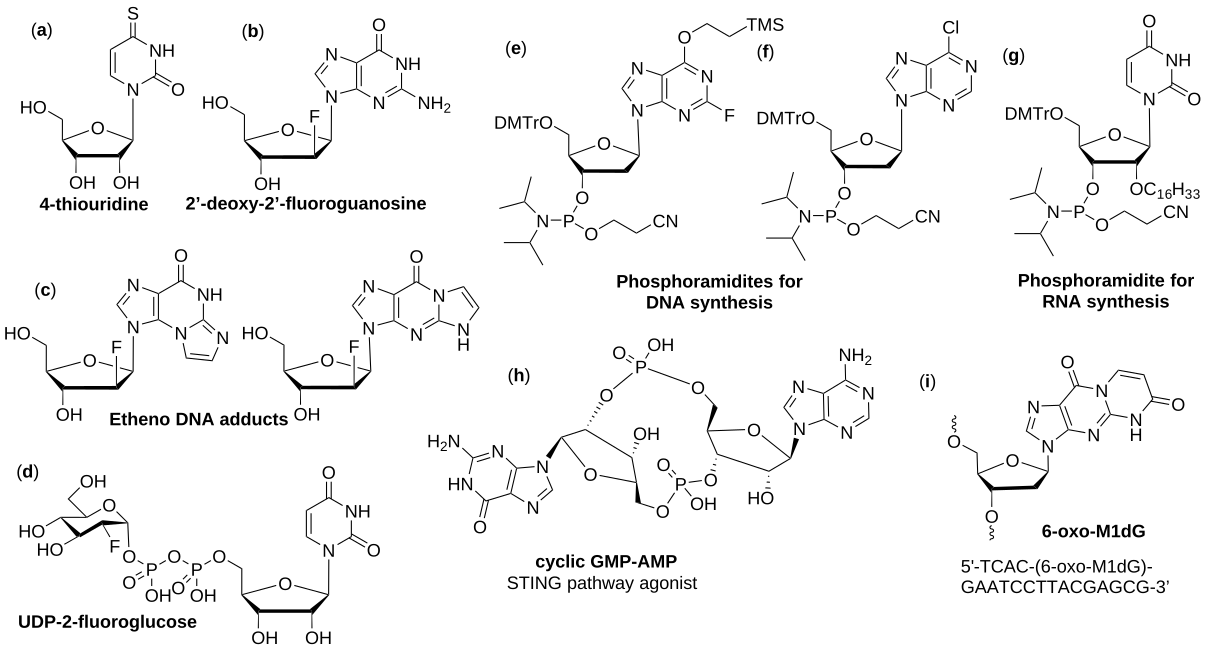
Nucleic acids, nucleotides, nucleosides: (a) 4-thiouridine (DOI:10.1021/jm1016297); (b) 2-fluoroguanosine (DOI:10.1080/15257770.2015.1043214) f; (c) etheno DNA adducts (DOI:10.1016/s0040-4039(00)99193-7); (d) UDP-2-fluoroglucose (DOI:10.1016/j.bmc.2015.03.042); (e) Phosphoramidite (DOI:10.1080/15257770.2015.1043214); (f) Phosphoramidites (DOI:10.1080/15257770.2015.1043214); (g) RNA phosphoramidites (WO2021-US20777); (h) cyclic GMP-AMP (DOI:10.1126/sciimmunol.add1153); (i) DNA synthesis (DOI:10.1021/acs.chemrestox.1c00334)
-
Isotopically labeled standards and drug metabolites
Isotopically labeled standards and drug metabolites Quantification and identification of small molecule metabolites, including drug metabolites, is critical to basic and clinical research. MDSC has provided investigators deuterium-labeled metabolites to enable quantification of clinical samples as well as drug metabolites such as 4-hydroxylation of diclofenac acid.

Isotopically labelled standards: (a) d4-acetaminophen (DOI:10.1096/fj.07-8506com); (b) d4-bile acid metabolites (DOI:10.1152/physiol.00028.2020); (c) 4-hydroxy Diclofenac acid (DOI:10.1007/s002530051184)
-
Natural products and metabolites
Natural products and metabolites Natural products encompass a broad number of compound classes, many natural products and metabolites have biological activity and/or produced under disease states. In many cases these compounds are available in trace quantity with chemical synthesis the only way of production for their study. A good example of the latter group are arachidonic acid metabolites such as prostaglandins.

Natural products and metabolites: (a) Bacillithiol disulfide (DOI:10.1021/ol302327t); (b) PGE1 tetranor (DOI:10.1016/j.tetlet.2020.151922); (c) Iso-levuglandin (DOI:10.1089/ars.2005.7.185); (d) Luotonin B (DOI:10.3390/molecules29153522)
Pricing & Access
MDSC compounds are available to a wide user base with tiered pricing:
- Vanderbilt researchers: Discounted rates
- Academic/non-profit institutions: Academic rate
- Industry: Standard commercial rate
Orders are typically fulfilled within 3–7 business days.
Shipping is available to domestic and international locations, and includes analytical data.
Request a Quote / Order Compounds
Submit your compounds
Submitting compounds to HTS Screens available in the HTS include both target-specific screens and target-agnostic phenotypic screens that can lead to new target discovery. Submitting your compounds into the HTS compound collection for use in screens can benefit your lab and the scientific community as a whole. See here for a summary of these benefits and assays available: Reasons to submit compounds to HTS pdf here. The process for compound submission into the HTSC compound library starts with an MDSC deposit as described here.
Submitting compounds for MDSC storage The MDSC can assist Vanderbilt investigators with compound registration and storage and registration. Contact Sydnee Elmore for assistance with either HTSC compound library deposit or MDSC compound storage and/or registration.
Statement of quality control and compound authentication All VICB compounds are provided in >95% purity. All final products are purified and analyzed by LCMS and 1H NMR at minimum. Compounds provided in large quantity for in vivo studies are subjected to a higher level of analysis (1H and 13C NMR at high compound concentration and LCMS analysis at multiple wavelengths and over longer gradient times).
Gilbert Stork Collection
Gilbert Stork was a giant in the field of total synthesis. Many who passed through his research group went on to attain leadership roles in academia and the pharmaceutical industry. Professor Stork passed away on October 21, 2017. Remaining in his lab was a well-curated collection of synthetic products.
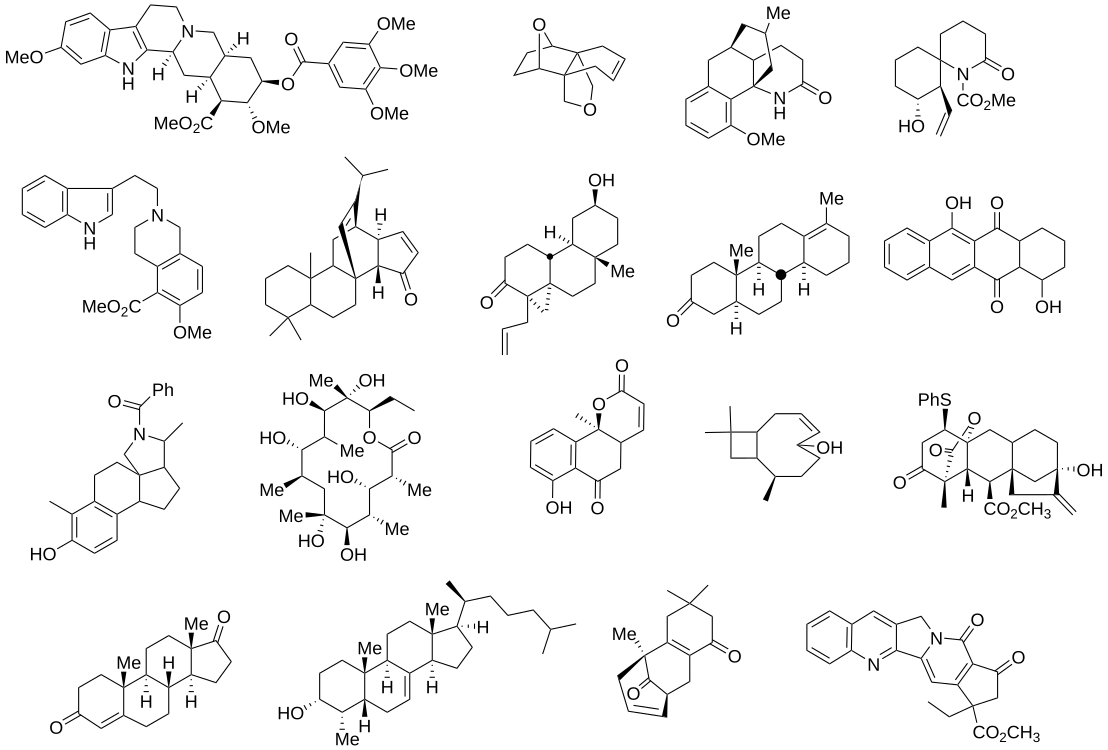
Professor Stork maintained an interest in understanding the biological activities these compounds. To honor his interest, with the help of Ayako Yamashita, we have cataloged the Stork compound collection and offer the compounds to investigators world-wide, under a master MTA with Columbia University). A small sampling of compounds in the Stork collection is shown below, a complete catalog of compounds is provided here.
The Stork compound collection consists of approximately 2500 samples. A complete collection is available in 96-well plate format to enabling screening for activity in HTS assays. If you are interested in purchasing a plate copy of the collection or individual samples, please contact Sydnee Elmore. Vanderbilt scientists and investigators from other non-profit institutions are eligible to receive a discounted rate.
Small sample of compounds in the Stork collection