Molecular Design and Synthesis Center

Whether you need a novel molecule for an experiment or bulk custom reagents, we are your trusted partner in chemical synthesis.

MED Basic Sciences - 2025 Vanderbilt Institute of Chemical Biology
Section Contents
  • scientist working
  • workign scientist
  • scientist

Design, Synthesis, and Capabilities

The Molecular Design and Synthesis Core (MDSC) provides consultation and support in all aspects of small molecule design and synthesis. Scope of work ranges from single compound synthesis (milligram up to 100g scale ), hit prioritization following screening (in collaboration with the VICB High-Throughput Screening facility), lead optimization, and scale-up for in vivo Proof-of-Concept (POC) Studies. The MDSC has also supported chemical biology studies such as target identification and assay development by designing and synthesizing novel chemical probes. Specific examples are provided below.

Citing the Molecular Design and Synthesis Core, VICB
If the MDSC lab provides compounds that are used in your publication, please use this acknowledgement: Compound “X” was provided by the Vanderbilt Institute of Chemical Biology, Molecular Design and Synthesis Center, Vanderbilt University, Nashville, TN 37232-0412.

Chemical Probes for Proof-of-Concept studies and pre-clincal development

  • Figure 1.

    Basic research is a necessary precursor to translational research that can lead to new therapeutic strategies. This research typically requires the development of small molecule chemical probes that modulate biological pathways and thus enable researchers to test biological hypotheses of potential importance to disease treatment.

    In vivo validation or POC usually requires a high-quality probe molecule, which must possess good potency and selectivity (refer to earlier sections ), but also must have suitable Drug Metabolism and Pharmacokinetic (DMPK) properties to allow it to reach the intended site of action in the animal model. In some cases, the target validation driven by this probe then supports an extended drug discovery campaign, using the probe compound as a lead molecule for additional optimization.

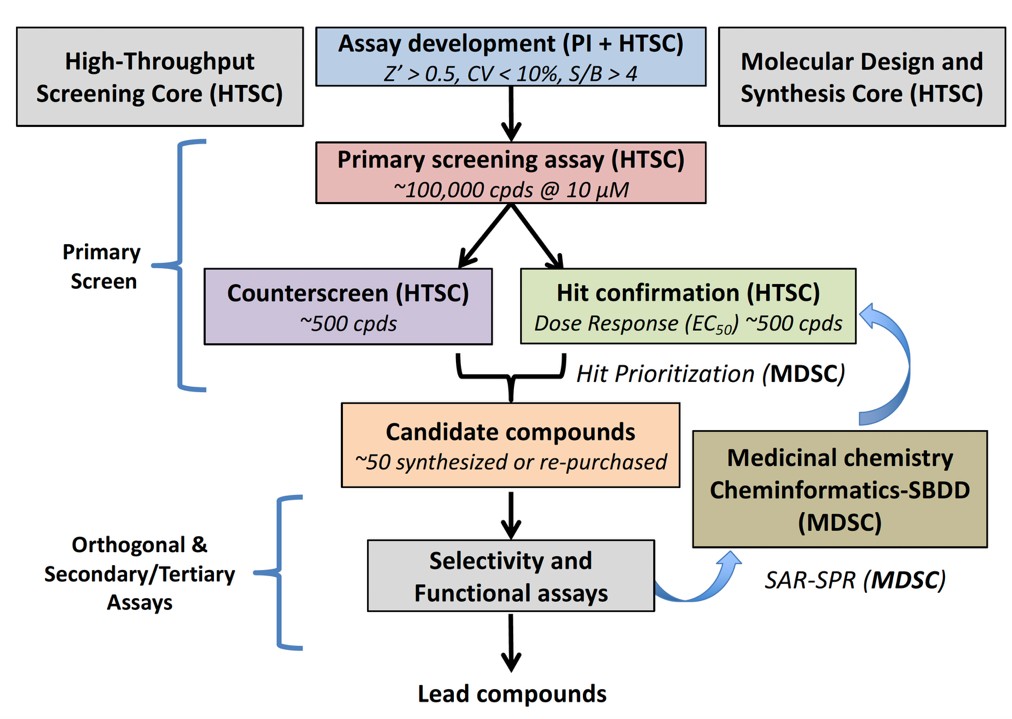
    Figure 1. Typical workflow aimed at lead discovery and development.

  • Figure 2.

    Since their founding in 2007, the MDSC and HTS cores have supported chemical probe and pre-clinical lead discovery and development, efforts that initiated with their participation in the NIH Molecular Library Screening Center Network and the NCI Chemical Biology Consortium.

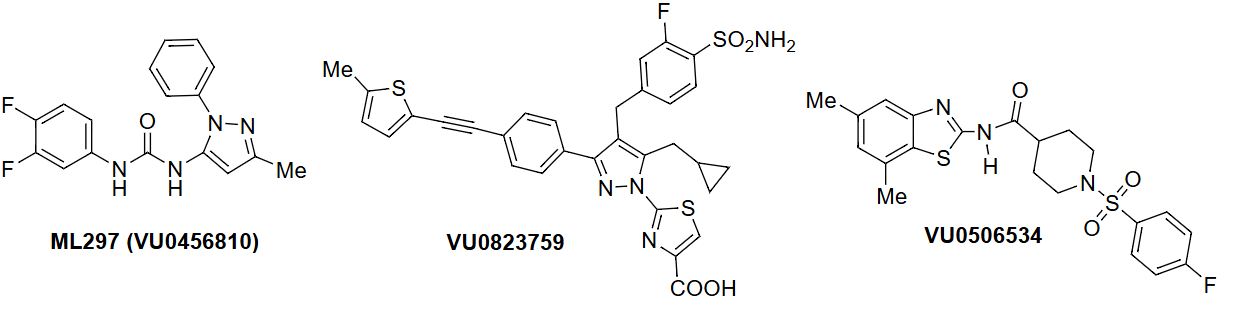
    Discovering probes and lead molecules is a process that requires collaboration among chemists, pharmacologists, and individual PIs. Figure 1 shows a generic example workflow that highlights the cooperative interaction between a PI’s lab and the MDSC and HTSC cores. Examples of small molecules developed at Vanderbilt with support from HTSC and/or MDSC are shown in Figure 2.


    Figure 2. ML297 (VU0456810) GIRK Channel activator (DOI:10.1021/cn400062a); VU0823759 LDHA inhibitor (DOI:10.1021/acs.jmedchem.0c00916); VU0506534 NAPE-PLD activator (DOI:10.1021/acschembio.3c00401)

Chemical probe design and synthesis for interrogating biology

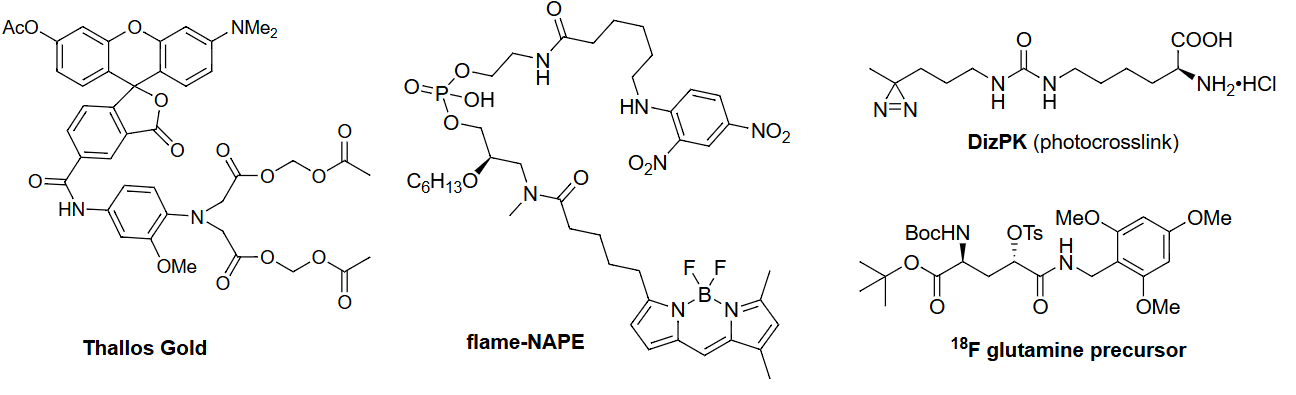
A variety of creative assays and techniques have been developed that employ affinity and/or fluorescent probes to interrogate biological processes in real time using a spectrum of systems that range from biochemical and single cell assays up to and including whole organism models. Several examples of chemical probes developed and/or provided by MDSC are shown in Figure 3.


Figure 3. Thallos Gold: monitor potassium ion channels (DOI:10.1039/c8ob01098f); flame-NAPE selectively monitor NAPE-PLD activity over esterases (DOI:10.1016/j.jlr.2021.100156); DizPK photo crosslinking amino acid (DOI 10.1038/ncomms12299); 18F glutamine precursor to PET active 18F glutamine

Synthesis of Natural products and metabolites

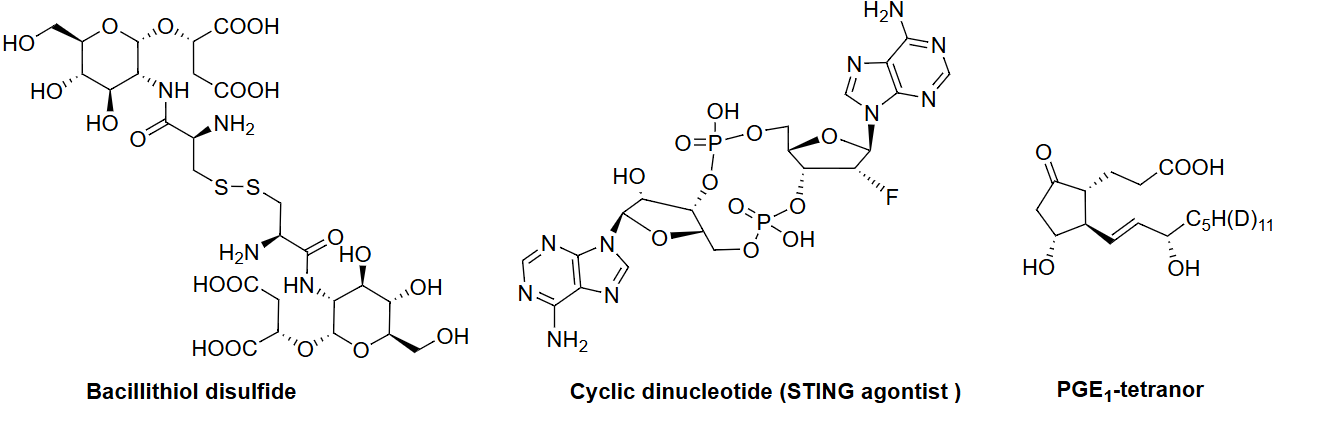
Small molecule natural products, which are identified within living organisms, are of frequent interest to biomedical investigators for study of their function and/or as biomarkers of human disease. Several naturally occurring compounds produced by MDSC are highlighted in Figure 4.

A more comprehensive listing of MDSC compounds available for purchase is provided under Compound Collection.


Figure 4. Bacillithiol disulfide: Gram-positive bacterial thiol (DOI: 10.1021/ol302327t); Cyclic dinucleotide STING agonist (DOI:10.1126/sciimmunol.add1153); PGE1 tetranor prostaglandin metabolite.

Facilities and Instruments

The Molecular Design and Synthesis Core (MDSC) is located on the 12th floor of Medical Research Building IV (MRB IV), with research labs in 12475 and an office suite in 12478. Each staff member is assigned bench space including a 6-foot chemical fume hood, a variety of storage units, refrigerator and desk space. One fume hood is designated for cGMP (current Good Manufacturing Practice) synthesis with dedicated equipments and glassware used specifically for cGMP syntheses. MDSC maintains a quality collection of over 6000 chemicals and building blocks to facilitate lead optimization studies employing principles of medicinal chemistry.

An interior lab (12465) houses multiple low temperature and humidity-controlled  refrigerators  for storage of MDSC compound samples (see Compound Vault and Sales) as well as large equipment including a large Buchi rotary evaporator R-220 SE (10L capacity), 5L benchtop reactor, ozonolysis apparatus, two lyopholizers, two Biotage microwave reactors, Zinsser Analytics instrument for liquid handling, MBraun inert atmosphere glove box for storage and manipulation of air- and oxygen sensitive materials, , and a Parr shaker hydrogenator.

Image

Purification and Analysis

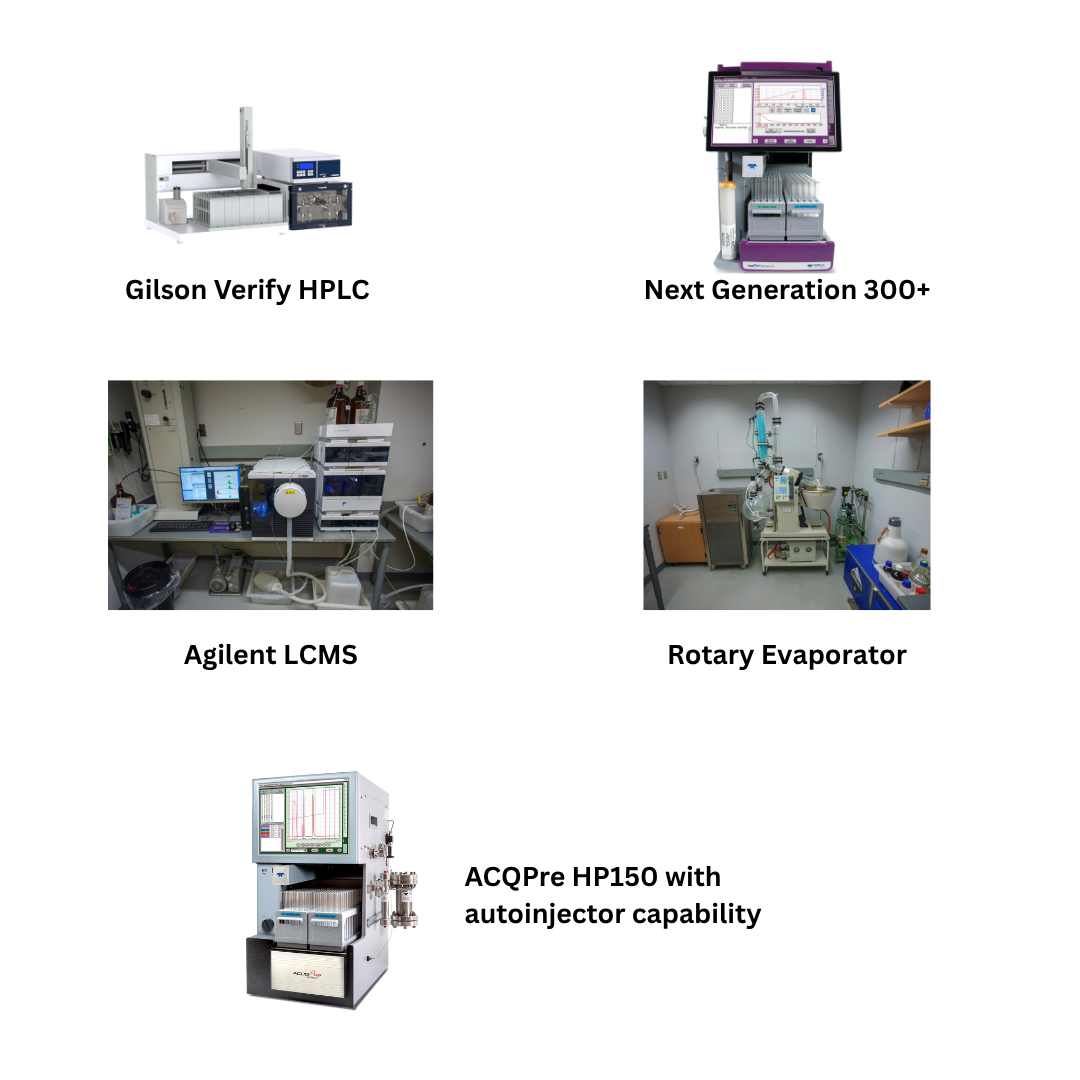
MDSC maintains multiple ISCO CombiFlash systems for compound purification [three Combi Flash Rf, two Next Generation 300+, an Ez prep system and an ACQPre HP150 with autoinjector capability] plus two Gilson HPLC instruments. Two Agilent LCMS instruments are available for compound and reaction analysis. 

NMR Analysis

The NMR facility provides MDSC staff access to a 400 MHz instrument equipped with a sample changer adjacent to MDSC lab space on the 12th floor of MRB IV. In addition, MDSC staff have access to other state-of-the-art NMR spectroscopic equipment along with expert consultation and collaboration (see: NMR Facility).

External Use Policy: Occasionally, Vanderbilt trainees and staff may require purification and/or analytical support. MDSC can provide sample analysis and purification for a fee-for-service basis (to request compound analysis and/or purification either submit a project request or contact the core director).

Recources

The Molecular Design and Synthesis Core (MDSC) routinely provides investigators and trainees with Letters of Support and/or cost estimates for the synthesis individual tool compounds or sets of analogs as a part of a hit follow-up or hit optimization project. To request a Letter of Support please fill out the project request form. Other proposal support documents can be accessed below under MDSC Resources and Proposal-Support Information.

MDSC Resources and Proposal-Support Information

  • Facilities and Resources FY25

    FACILITIES AND RESOURCES (Molecular Design and Synthesis Center, MDSC)

    Facilities-Resources-FY25

    RESEARCH LABORATORY SPACE-MDSC

    The Vanderbilt Institute of Chemical Biology (VICB) Molecular Design and Synthesis Center (MDSC) is housed on the twelfth floor of Medical Research Building IV. Each staff member is assigned bench space including a 6-foot fume hood, a variety of storage areas and desk space. Ten fully equipped hoods with associated rotary evaporators, stirring hot plates, etc. are assigned to the MDSC. One of the hoods is designated for cGMP (current Good Manufacturing Practice) synthesis with equipment and glassware used specifically for the practice of cGMP syntheses.


    OFFICE

    Drs. Kim (Director), Christov (Assistant Director), Sulikowski (Scientific Director) and Waterson (VICB, Associate Director for Medicinal Chemistry and Director for Vanderbilt Center for Cancer Drug Discovery) each occupy individual offices. Remaining MDSC staff scientists share an office suite adjacent to open lab space as well as individual lab desks adjacent to assigned hood space.

    PERSONNEL

    Kwangho Kim, Ph.D, Director

    Plamen Christov, Ph.D., Assistant Director and Drug Discovery Scientist, senior

    Somnath Jana, Ph.D., Drug Discovery Scientist

    KyuOk Jeon, Ph.D., Drug Discovery Scientist, senior

    Ian Romaine, Ph.D., Drug Discovery Scientist

    Benjamin Guttentag, B.S., Research Assistant, senior

    Sydnee Ellmore, M.S., VICB Lab Manager

    Alex G. Waterson, Ph.D., Director for Vanderbilt Center for Cancer Drug Discovery (VCCDD)

    Rates 2023-2024 Chemical synthesis projects, including lead optimization (medicinal chemistry), are supported by one or more staff members at a rate of $133.55 per hour, $2,671 per week, $10,684 per month, or $128,208 per year. This rate includes labor plus consumable lab supplies and reagents, while project-specific chemicals and analyses are charged separately. All core members have extensive experience in chemical synthesis and drug discovery.

    OVERVIEW OF LEAD OPTIMIZATION PROCESS In addition to providing services focused on the synthesis of single targets, the VICB MDSC has established a process to support extended lead optimization campaigns, often in collaboration with the (VICB) High-Throughput Screening (HTS) core. The molecular design process incorporates principles of modern medicinal chemistry and typically starts from compound(s) that were identified in the initial (HTS) screen(s) or fragment and progressed though hit validation activities. The VICB Associate Director for Medicinal Chemistry (Alex Waterson, Ph.D.) leads hit prioritization and analog design. In conjunction with the core Director (Kwangho Kim, Ph.D.) and other MDSC staff, synthetic schemes and specific analogs are prioritized based on medicinal chemistry design principles, existing activity data, synthetic accessibility and commercial availability of monomers, as well as patent and literature searches assisted by search engines such as Scifinder.

    Scheduled team meetings that include participation from both the “designers” and “synthesizers” are led by Waterson and serve to share and review structure-activity relationship (SAR) data to support subsequent analog design/synthesis cycles aimed at further lead refinement. Concepts of structure-based or property-based drug design are utilized where applicable, and all available assay and physical properties and ADME data are considered to both inform the iterative optimization process and drive progression of individual molecules toward translational program goals.

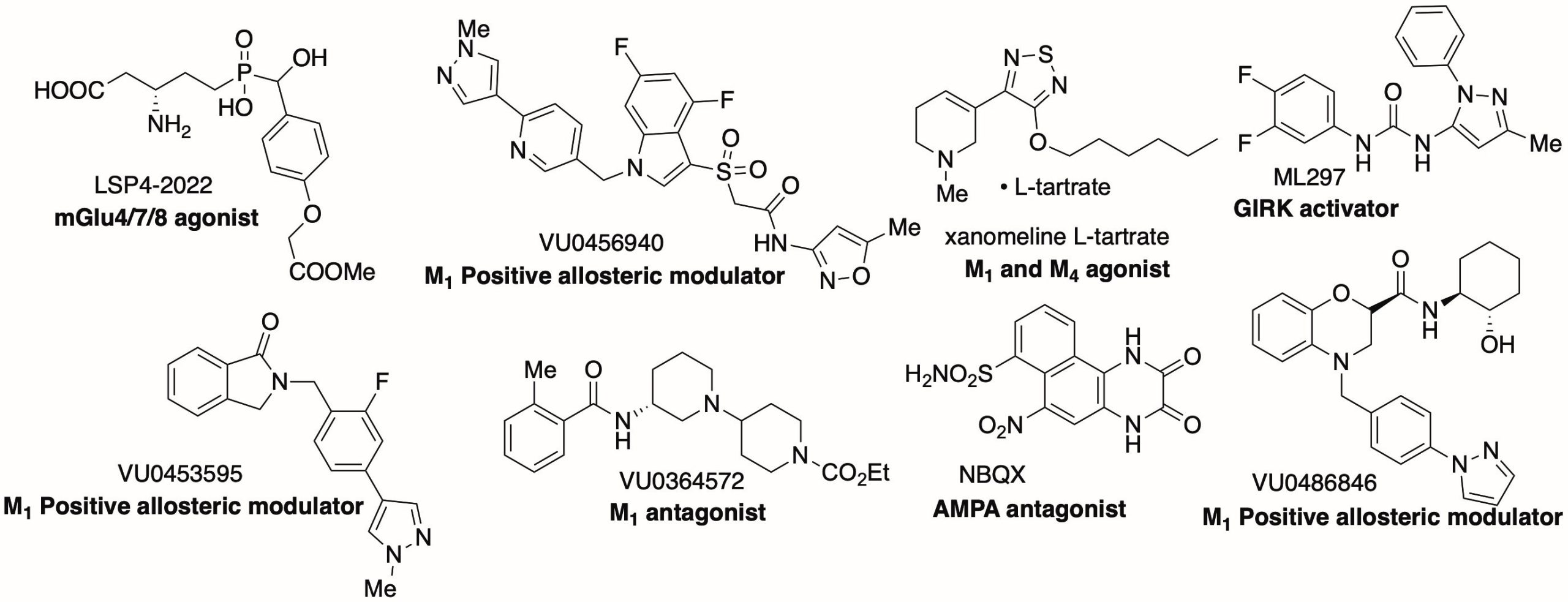
    VANDERBILT COMPOUND COLLECTION The MDSC, established in 2007, is now approaching twenty years of supporting the organic synthesis, chemical probe design-development, and medicinal chemistry needs of researchers across Vanderbilt’s campus as well as external collaborators. Over its lifetime, MDSC has produced a diverse array of small molecules with functional activity. Some of these have been previously reported in the scientific literature, while others are novel, designed and synthesized in collaboration with other research groups. The breadth and diversity of functional small molecules produced by the MDSC since its founding was illustrated in a review article published in 2021 (ACS Chem. Biol., 2021, 16, 787–793). Examples include well-characterized selective small-molecule protein modulators of enzymes, ion channels, GPCRs, kinases, cell death, etc. Many of these compounds are available from milligram to multi-gram quantities, as needed, to support in vitro or in vivo studies. Indeed, the MDSC maintains a catalog of over 500 compounds available on demand to Vanderbilt and external investigators. Many of these compounds have been pharmacologically characterized, and many may have as yet unknown activities. Selected examples of available small molecule probes with potential utility in biochemical and biological studies is provided below. The MDSC also has the ability, in collaboration with VUII radiochemistry group, to provide access to 18F-labeled chemical probes for imaging studies.
  • Data Management Plan

    Compound Characterization and Sample Storage Compound characterization data will be stored on computer hard drives and backed up on a university hard drive including LC-MS and NMR data. Specifically, NMR spectra are written and stored in Bruker’s documented data format. This NMR data can be viewed and analyzed by Bruker’s widely available TOPSPIN software and by software published by myriad 3rd party vendors. NMR data is written to the hard disk of the spectrometer computer at the time of collection and mirrored to a second physical location maintained by the Vanderbilt Distributed Online Research Storage project (dors). Dors operates a high-performance storage facility from the Hill Center on the Vanderbilt campus with associated backup policies, ensuring that spectral data collected can be retained by the Small Molecule NMR Facility indefinitely. NMR Data stored on dors is accessible to users with a VUNetID and password from any computer on the VU network. Users are restricted to accessing data in their own directory via this system. Integration of the proposed instrument into this system is expected to be trivial, as this system is redundant and scalable by design and has been in place for many years.

    Samples of final compounds and select intermediates along synthetic routes are stored within the Molecular Design and Synthesis Center in temperature-controlled refrigeration units. In some cases, samples will be maintained with the High-Throughput facility compound storage unit.

  • Authentication Chemicals

    Authentication PLAN

    Chemical Resources

    Synthetic procedures and product analysis data are documented using electronic lab notebooks, Small molecules produced by chemical synthesis are subjected to LC-MS, 1H/13C/DEPT NMR analysis, HRMS, as appropriate. Synthetic protocols are documented with characterization data, and final products are registered by batch within the VU compound registration system.

VU and VUMC faculty may consider applying for internal funding to cover project costs. The MDSC can assist in such applications by providing detailed cost estimates (to start process either submit a Project Request and/or contact core director).

Preferred Contract Research Organizations-In addition to internal support, MDSC maintains collaborations with several external CROs to extend capabilities in areas.

  • IQVIA Labs

    Provides in vitro ADME and physicochemical properties analysis.

    Please contact MDSC core director for assistance in sample submission.

    Website

  • Lotus Separations

    Provides chiral separation of enantiomers.

    Website

  • Reaction Biology

    Provides multiple assays and resources to support pre-clinical profiling.

    Website

  • For protein production

    We recommend Pharmaron, or Viva Biotech.