By: Leigh Ann Gardner
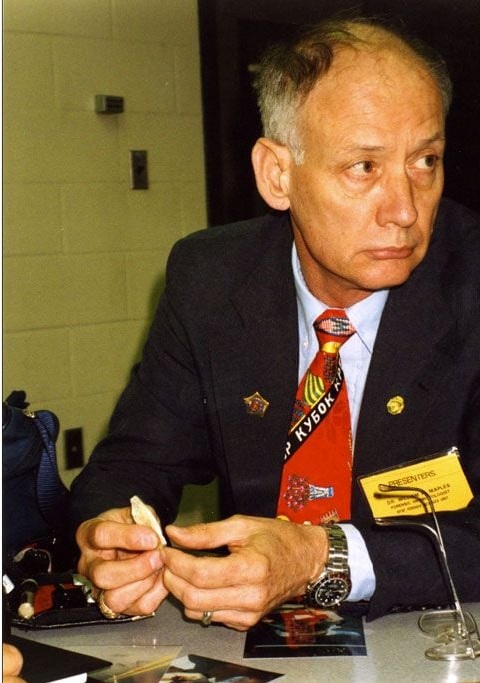
August 7: Forensic anthropologist William R. Maples, known for leading the team that identified the remains of the Romanov family and helped solve the murder of civil rights leader Medger Evers, was born on August 7, 1937. He received his PhD in anthropology from the University of Texas, and during that time, he spent several years in Africa researching the taxonomy of baboons. After a year as an assistant professor at Western Michigan University, Maples then went to the University of Florida, where his initial years were spent researching primate behavior. After becoming chair of the Florida Museum of Natural History, he became involved in his first forensic anthropology case, identifying human skeletal remains. As he became recognized as an expert on this, he was often invited to work on high-profile cases. These included an invitation from the Peruvian government to identify the remains of European explorer Francisco Pizzaro, an examination of President Zachary Taylor’s remains to determine if he had died of arsenic poisoning (he did not), and invitation in 1992 to examine remains in Ekaterinburg, Russia, where he was able to identify the remains as belonging to Tsar Nicholas II and his family. He was also invited to examine the remains of Medgar Evers, murdered in 1963, and his investigation and evidence assisted in the conviction of white supremacist Byron De Le Beckwith in the murder of Evers. Maples died in 1997, and you can learn more about his career here and here
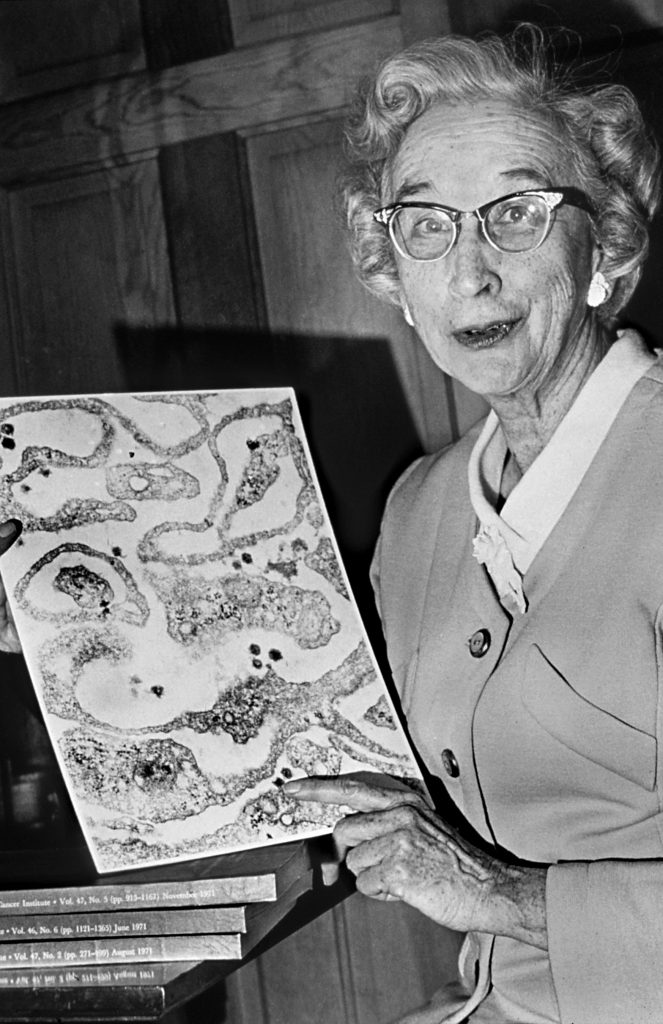
August 16: Mexican American oncology researcher Sarah Elizabeth Stewart was born on August 16, 1905, in Tecalitlán, Jalisco, Mexico, and her family migrated to the United States in 1911 during the Mexican Revolution. After earning a master’s degree from the University of Massachusetts Amherst in 1930, she worked as a bacteriologist at NIH from 1935-1944. During her time there, she also completed her PhD from the University of Chicago in 1939. While at the NIH, she studied the link between viruses and animal tumors, but NIH executives were not encouraging of her research. She then went to Georgetown University as a faculty member in the School of Medicine, later enrolling as a medical student there and completing her MD in 1949. After receiving her MD, she returned to NIH to research viral links to cancer with her colleague Dr. Bernice Eddy, and their research led them to identify cancer-causing virus, which they named the SE (Stewart-Eddy) polyomavirus. Their research became a cover story for Time magazine in 1959. Following this discovery, Stewart spent the remainder of her career researching oncogenic viruses and is regarded as one of the most influential cancer researchers of her time. You can learn more about her life here and here.
August 17: Chemist and entrepreneur Hazel Bishop, known for creating “kiss-proof” lipstick, was born on August 17, 1906, in New Jersey. She received a BA in Chemistry from Barnard College in 1929 and originally intended on becoming a physician and attending medical school. However, the stock market crash and subsequent Great Depression left her without the money for school, and she took a job as a biomedical technician at the New York State Psychiatric Hospital and Institute. She then became a research assistant to a dermatologist at Columbia University, and the dermatologist she worked for, Dr. A. Benson Cannon, later launched Almay Cosmetics. Inspired by her work with Cannon, Bishop experimented in her spare time with cosmetics, believing that a smudge-proof, long-lasting lipstick would be beneficial for professional women. By 1949, she had created a product that would stain the lips but not coffee cups and enlisted the assistance of an advertising professional, Raymond Spector, to launch the product, providing him with stock in the company for his assistance. The lipstick was a success, and the company, Hazel Bishop, Inc., was making more than $10 million a year by 1953. However, a dispute between Bishop and Spector led to him forcing her out of the company in 1951. Bishop went on to create another consumer chemical company which produced cosmetic products and cleaners. In 1962, Bishop changed careers and became a financial analyst and broker on Wall Street. She ended her career at the New York Institute of Technology where she helped launch the school’s Cosmetology, Fragrances, and Toiletries program. Bishop died in 1998, and you can learn more about her life here.
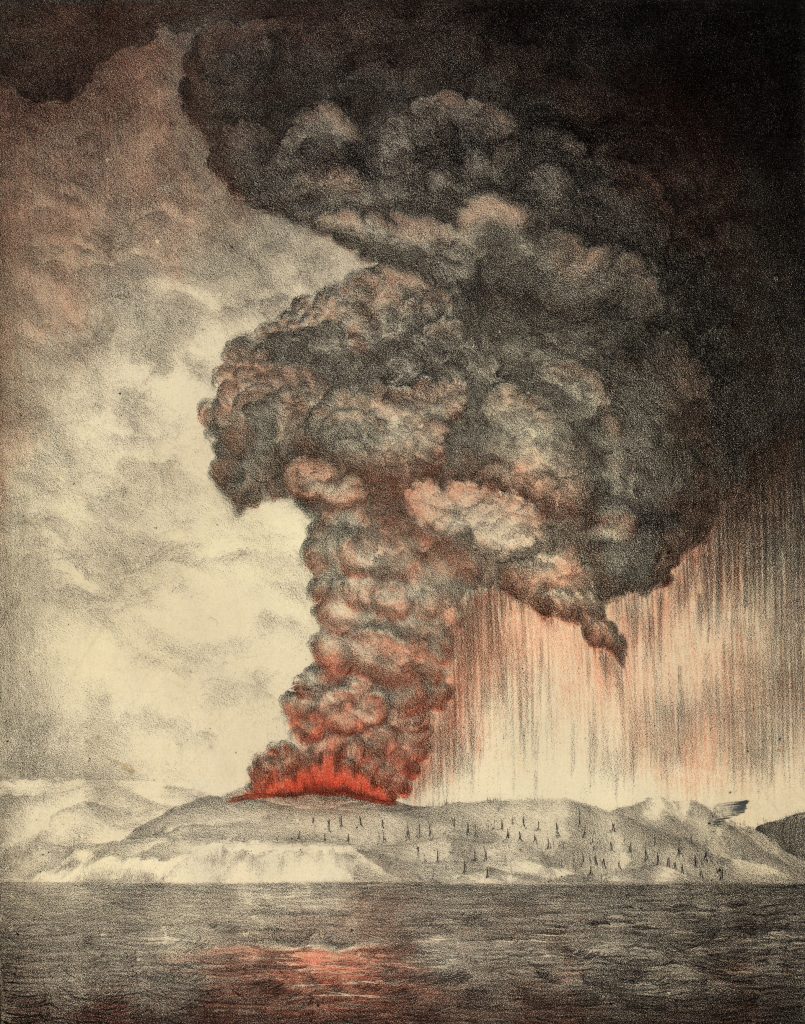
August 27: Between May 20 and October 21, 1883, the volcano of Krakatoa erupted, with the most significant eruption occurring on August 27, 1883. Located in the Sunda Strait, which connects the Java Sea with the Indian Ocean, there had been previous seismic activity at Krakatoa in 1680, but nothing compared with the eruptions of 1883. Explosions occurred on May 20, June 16, June 19, and June 24; however, it is the explosion of August 27th that is the most significant. That explosion was heard more than 1,930 miles away in Perth, Australia, and acoustic pressure of the explosion circled the globe three times. It created a tsunami that was responsible for the deaths of at least 36,417 individuals. It is believed that the 3rd explosion on August 27th was the loudest sound in history, calculated at 180 decibels. The explosion also caused a volcanic winter, and the ash remained in the atmosphere for the following year and caused spectacular sunsets. You can learn more about Krakatoa here and here.