By Neil Chada (G4)
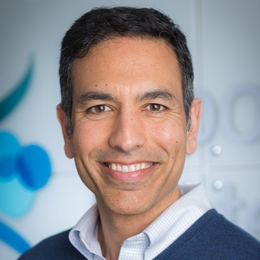
I had the pleasure to connect with our very own Vandy MSTP alum Sameer Chopra MD, PhD ’09 and am excited to share snippets with our community. Dr. Chopra is a medical oncologist who currently serves as Vice-President, Clinical Development at a biotechnology company of ~45 employees in Boston. Originally from Boston, he graduated from Harvard and matriculated to the Vanderbilt MSTP after which he was a laboratory-based physician-scientist at the Dana-Farber Cancer Institute and Harvard Medical School, where he also did his clinical and post-doctoral fellowships. Prior to his current role, he held roles as a discovery biology lead and translational medicine lead at a much larger company.
Let’s go back a little bit, what drew you to pursue both the MD and PhD, and how did that vision evolve during your training and into what you do now?
Looking back, I believe that my decision to become a physician was really a natural extension of my desire to have a career focused on service to others. As an undergraduate at Harvard and then for a year after college, I worked in India helping to lead HIV/AIDS prevention and advocacy efforts. Some of this work was based in under resourced public hospitals in Mumbai, where I found myself deeply inspired by the work of passionate, hard-working physicians. Medical care was first-come, first-served and I vividly remember patients with HIV/AIDS waiting in long-lines that spilled out of the hospital onto the street. I really wanted to be like those physicians who were not only helping individual patients in need but also working to solve an enormous public health crisis.
In parallel, I had been involved in research projects in multiple fields including chemical engineering, biomedical engineering, even marine ecology dating back to my sophomore year high school. In my final year at Harvard, I earned a master’s degree in molecular biology after contributing to development of a new primate model for Alzheimer’s disease. I not only found research intellectually rewarding but discovered a framework for better understanding disease biology and developing new therapies. When I was subsequently in India, I then saw first-hand the tremendous impact of new antiretroviral therapies that – in conjunction with public health measures – altered the course of the global pandemic. I realized then that I wanted to become both a physician as well as a researcher who developed new treatments for disease. Combined MD/PhD training made a lot of sense for me. These days, I cannot really imagine what it would be like to be trained as a clinician or a scientist alone. Being a physician-scientist is an integral part of my identity, and I am grateful to be able to draw on my experiences in medicine and science equally in my current role in biotech.
In my current role, I am basically responsible for the design, conduct, analysis and reporting of first-in-human clinical trials of new anticancer therapies. I love the company’s small size, collegiality, innovative culture and of course its mission to develop safer and more effective treatments for patients with cancer. My colleagues are experts in protein engineering, immunology, clinical pharmacology and clinical operations, and we work closely together to try to advance new concepts from the lab to the clinic (and hopefully to FDA approval!). Everyone here is deeply motivated to try to make a difference for patients. We have a company-wide lab meeting every week that is run by our CEO, who is an immunologist.
At Vanderbilt, what was your PhD research focused on, and how did that experience including your mentor shape your scientific identity?
I earned my doctorate in pharmacology in 2007 after spending five years in Dan Roden’s lab working to develop the zebrafish as a new model in the lab to study cardiac ion channel biology. I was drawn to work with Dan Roden because of his dual interests in understanding the mechanistic basis of cardiac arrythmia risk (i.e., at the level of ion channel dysfunction) as well as advancing a vision for personalized medicine, which at the time was simply the idea that human genetic data could be useful to help physicians make better treatment decisions for patients. In the lab, we had the goal of using zebrafish as a tractable genetic model to better understand the function of newly identified human candidate genes that appeared to contribute to arrhythmia susceptibility. However, the focus of my work changed quite substantially when I knocked down expression of the primary zebrafish cardiac voltage-gated sodium channel and found that the heart did not develop normally. I ended up cloning and expressing zebrafish sodium channels and accessory subunits and then characterizing their role in early cardiac development. The work was exhilarating, and I spent many long hours (and nights) in the lab watching embryonic development unfold in real time, studying gene expression in situ, taking time-lapse movies and injecting various ion channel modulating toxins and other perturbagens into embryos to try to grasp the logic of cardiac development.
Though I am neither a cardiologist nor a developmental biologist today, my doctoral research was a seminal scientific experience that laid the foundation for my career. In addition to being a physician, I consider myself a basic scientist who is deeply interested in the molecular mechanisms that underlie disease phenotypes and therapeutic responses. I am incredibly excited by experimental and computational tools and technologies that now enable us to perform multiscale modeling of disease biology to better understand how derangements of protein function in individual cells ultimately cause organ dysfunction and lead to complex disease states in patients.
What inspired your decision to move into industry as a physician-scientist?
To be honest, this was a big career move but not one that I could have readily anticipated. After MD/PhD training, a combined residency in internal medicine and medical genetics at the Brigham and then hematology/oncology fellowship at Dana-Farber, I finally had to decide whether I primarily wanted to be a clinician or a scientist. Cancer patients do not really benefit from a part-time oncologist and there are also few part-time researchers who end up making impactful contributions to science. Acknowledging that I had really trained for two different careers (at least in the Harvard system) was an important epiphany for me. I did know that I really wanted to help develop new ways of treating cancer, and so I elected to differentiate as a researcher. After my clinical fellowship year, I spent five additional years as a post-doctoral researcher in the fields of chemical biology and cancer systems pharmacology at Harvard Medical School. In the lab, I used single cell- and time-resolved experimental methods in tandem with computational modeling to identify and characterize a class of small molecules with a novel mechanism of action that I believed could be particularly useful for treatment of certain patients with breast or ovarian cancer. I really wanted to bring these molecules to the clinic as new anticancer therapies but there were so many gaps in my understanding of how new drugs are developed that it was nearly impossible to be successful. In the end, I had a nice publication and some interesting questions to further investigate but not what I had really dreamed about. Though academia was no longer a good fit for my career aspirations, it took some time for me to recognize that given the number of years I had spent on a certain path. I went ahead and submitted a K08 grant application and started to prepare for a national job search to start my own lab.
Around that time, I got a call from one of my former co-fellows from Dana Farber who had landed in industry. She asked me if I wanted to interview for a job in pharma. Though I hadn’t previously considered a career in industry, I kept an open mind and went there to meet the head of discovery research as well as multiple scientists. I was invited back and gave what would have been my academic job talk. Because of the topic and the rigor, it was incredibly well received and I ended up getting a job offer in writing before I even went home. After lengthy deliberations, I ultimately took the position and decided to abandon my academic job search. I take pride in having been honest with myself about my aspirations and ultimately making a difficult decision that was the right one for me.
What are the biggest differences you’ve noticed between academic research and your current work in industry?
Having worked in both environments, I can say with confidence that scientists in industry and academia alike are often very bright and highly motivated individuals. In biotech, the basic, translational and clinical research we do is quite rigorous because the fate of our company depends on it. For this reason, I think our research goals are quite focused. Our experiments help us to design new molecules, better understand their mechanism of action in models of disease, interrogate alternative or competitor approaches and advance our core platform technology. In early clinical trials, we are trying to efficiently figure out whether our drugs work as intended by their design (i.e., achieve clinical proof of concept). We also seek to identify indications for further development and/or molecularly defined patient subpopulations where our therapies are likely to work best. When I was in academia, I recall that there was a bit more freedom for exploration: if you had an interesting question and could convince someone to give you funding, you could spend several years in the lab generating data that may lead to some new insights and a paper. However, the goal was never really to engineer and develop a completely new therapy with the intent of filing an IND with the FDA and running a Phase 1 clinical trial. End to end that requires a very diverse team of experts not commonly found in an academic lab and is very resource intensive ($$$). Lastly, I think that in biotech, we generally make quicker decisions than in academia to stop working on certain projects because of the steep opportunity cost and our need to focus on “critical path” activities.
What advice would you give to MSTP students who are considering non-traditional or non-academic paths?
I am reminded every day that being fully trained in clinical medicine and in basic science is an unbelievably powerful skillset and an incredible privilege. You will have the flexibility to do nearly anything you want in healthcare. You just need to be honest with yourself about what you enjoy doing most and what type of contributions you ultimately want to make in your career. By virtue of where you spend most of your time now and in the immediate future, you will learn LOTS about academic medicine. However, it’s a disservice to you and to society if you end up believing that academic medicine is the only way you can meaningfully contribute to advancing human health. The onus is on you to find and talk to physician-scientists who are doing what you think you may want to do in the future. Depending on your personality type, you may also end up blazing a completely new path for yourself.
Ending on a lighter note, what’s something people would be surprised to learn about you?
Given how passionate I am about my work (and how much time I spend working), I think it is worth mentioning that I also do my best to be a good husband to an incredible wife (academic law faculty) and a good father to my two lovely but very mischievous kids (ages 8 and 10). We all love music and though my strict immigrant parents would never have done this for me, my wife and I took our daughter to a Dua Lipa concert on a school night last week. I am also avid sailor and skier, help to coach my kids’ soccer and lacrosse teams and also volunteer to teach a Sunday school class for Indian-American youth. My life feels very full right now, but I wouldn’t have it any other way and I don’t want to waste a minute of it. I am truly grateful to have a great family and friends and the opportunity to pursue multiple interests outside of science and medicine to feel more complete as a human being.