By Hannah Luviano (M1)
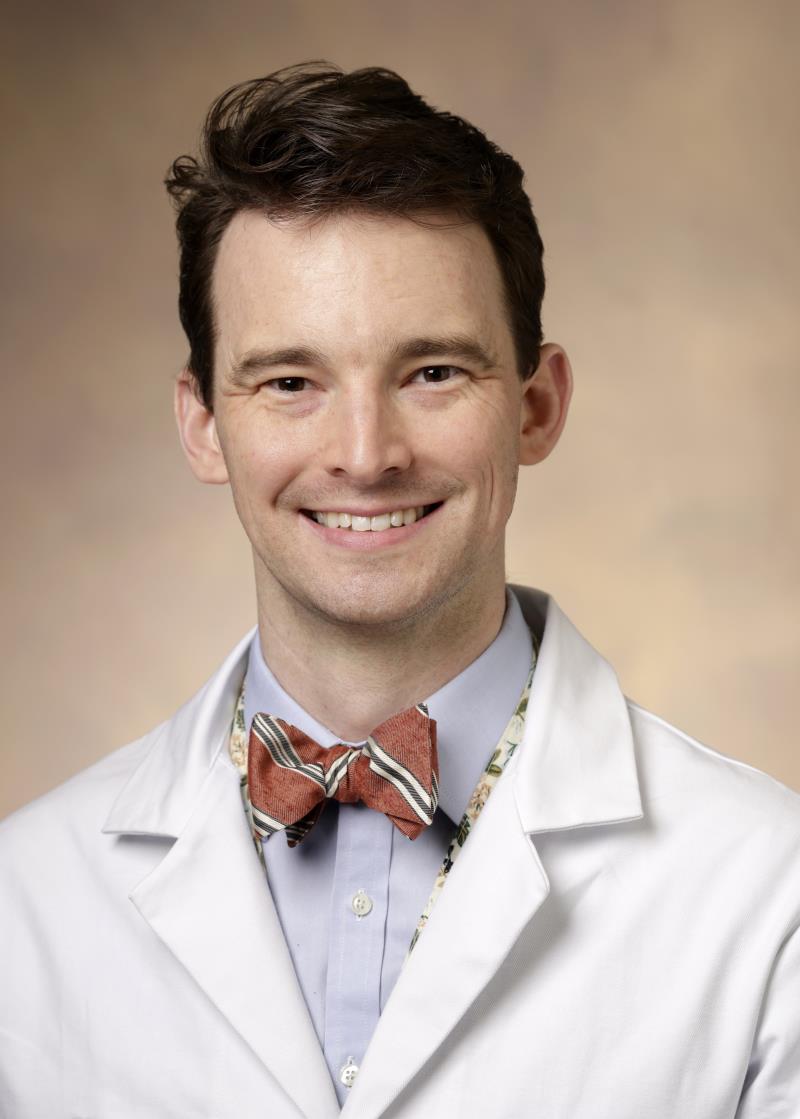
Dr. Alex Linsalata, MD, PhD is Avery-Cohen’s newest PSTP Associate College Advisor. He is a PGY-5 Pulmonology and Critical Care Fellow in Vanderbilt’s Physician Scientist Training Program. His current research focuses on trying to understand how interstitial lung disease drives pulmonary hypertension.
When Dr. Linsalata entered the University of Michigan MSTP, he was drawn both clinically and scientifically to neurology. His thesis research focused on aberrant mechanisms of proteins synthesis and how they relate to neurodegenerative disorders. After completing his PhD and beginning clinical clerkships, Dr. Linsalata quickly realized he was drawn towards critical care and decided to pivot to pulmonology and critical care programs for residency applications. Dr. Linsalata realized his passion for critical care while rounding in the neonatal ICU on a surgery rotation where he was drawn to the ability to process a multitude of clinical data to inform the next step in care for medically complex patients. With time, as he handled more cardiopulmonary cases in the ICU and saw how rapidly care could evolve for these patients, he knew pulmonology would be perfect complement. Dr. Linsalata is fascinated with neuroscience but acknowledges that he may have made some different decisions if he had explored this clinical interest before entering the PhD phase. For this reason, he supports how programs like Vanderbilt’s MSTP allow for exploration of clinical interests with clerkships prior to selecting a research lab for the PhD.
Dr. Linsalata knew the research skills he gained from his PhD in how to think as a scientist would be valuable and translatable into any field, but that he would need to brush up on the basics of pulmonary physiology and disease. The next step in preparing for residency applications and interviews was to spend some time identifying the most pressing research questions in the field that best aligned with his interests. Throughout this process, Dr. Linsalata was able to draw parallels between the slow progression and limited treatments of neurogenerative diseases with interstitial lung disease. For any students pursuing a clinical specialty that differs widely from their PhD research, Dr. Linsalata recommends being able to speak intelligently to both fields, drawing parallels when possible, and appreciating the differences when they exist.
Dr. Linsalata shares that the best way to identify a mentor, whether for graduate or postgraduate research training, is to find someone who you are compatible with and who will prepare you well for the next phase of your career. For Dr. Linsalata this has meant identifying a more junior primary mentor with time to dedicate to your personal development and who works with other, more senior mentors that can connect you with resources and others in your field. In Dr. Linsalata’s current work at Vanderbilt, this dynamic looks like Dr. Jon Kropski, MD acting as a primary mentor and expert on interstitial lung disease and idiopathic pulmonary fibrosis while James West, PhD acts as a co-mentor to provide his expertise on pulmonary hypertension. Dr. Linsalata is able to utilize his team of mentors to cultivate his project centered on the relationship between interstitial lung disease and pulmonary hypertension.
Looking to the future, Dr. Linsalata imagines his life split between research and clinical care where he can treat patients with interstitial lung disease and pulmonary hypertension in the outpatient setting while directing a research lab that integrates computational biology into mouse models and human tissue experiments. Dr. Linsalata is particularly drawn to computational biology, especially single cell RNA sequencing, because of its leverage in hypothesis generating experiments and the ability to identify new targets for treatments, which is particularly important for the interstitial lung disease field where so much is waiting to be unearthed.
Dr. Linsalata’s best advice to early MSTP trainees is to explore all potential clinical and research interests and be attentive to what resonates with you, even if it is not what you anticipated. For our later trainees, Dr. Linsalata says the dual degree training provides a unique perspective in being able to identify the range of clinical problems that you find interesting and what tools are available to address them with your research. Then, when applying to residency programs you must consider if this residency program would be a good fit for you. For Dr. Linsalata, these questions included if Vanderbilt had faculty utilizing the techniques he wanted to employ, such as single cell RNA sequencing, and if he could access a breadth of patient samples to use for experiments.
For individuals in all phases of training, Dr. Linsalata’s number one recommendation to maintain a work-life balance is to tailor your hobbies to provide the pressure valve you need at the time and know that they will change as the pressures around you shift throughout training. In Dr. Linsalata’s preclinical years of medical school, he picked up baking, as he reminisced on his days performing wet lab research before medical school. In his PhD phase, he was drawn towards a need to socialize with others and exert more physical activity, so he learned to rock climb with a fellow MSTP student. Today, as he switches between research and clinical obligations depending on the week, he is still able to both bake and rock climb but finds that baking is a little easier to incorporate into his downtime. When Dr. Linsalata is not in the hospital or the lab, you can probably find him kneading some pie crust for his newest creation.