Taking on a challenge often comes naturally to medical students. Determination, resiliency, and drive are central to success in such a rigorous academic setting. For many, this sky-is-the-limit ambition expands outside of just the classroom and into personal pursuits. For Vanderbilt University School of Medicine M4 Christian Oakley and G3 Mark Petrovic, however, going the extra mile has become a literal pursuit, achieving something few ever will: competing in triathlons. Ever eager to exceed expectations, however, the two could not stop at simply achieving an unbelievable feat; rather, they decided to take their hobby to another level and country, qualifying for the 2025 Ironman 70.3 World Championship in Marbella, Spain, on November 9, 2025.
The Path to Triathlon
While Oakley and Petrovic’s triathlon journeys differ, they both stem from a lifelong love of being active. Petrovic grew up playing soccer, a passion he continued to pursue in college as co-captain of the Drexel University club soccer team. It was also during this time that he was introduced to Ironman races by one of his professors, who connected him to a training group. After completing his first triathlon, he was hooked; not even a global pandemic could prevent him from pursuing this new passion. By the time he entered Vanderbilt as an M1 that fall, Petrovic was already committed to balancing medical school with Ironman training and went on to compete in the Chattanooga Half Ironman in the spring of 2022. This balance, he says, is something he has refined over the past four years.
“When I came to Vanderbilt, I considered playing club soccer but decided to focus on triathlon because the medical school schedule changes so much,” said Petrovic. “I prioritize being really good at it, and with only 24 hours in a day, that means sometimes you have to make sacrifices.”

For what could be an isolating experience for someone used to being part of a team, things changed when Christian Oakley arrived at VUSM a year later. After an undergraduate career deeply focused on academics, Oakley took the start of medical school as an opportunity to dive back into his cherished hobby of running. It was not long into his first year when Oakley heard about one of his peers training for the Half Ironman World Championships. When Oakley approached Petrovic asking about how to become involved, Petrovic immediately introduced him into the world of triathlons, passing on the gift his professor had given to him just a few years earlier. Like Petrovic, Oakley was immediately invested and jumped into his own training.
“I knew Mark did these triathlons and figured I could do it too,” Oakley said. “During the summer before M2, I trained quite hard and kept training during my Pediatrics clerkship for the Memphis Ironman 70.3. I fortunately did pretty well, and I realized I could keep building on this.
Finding the Right Rhythm
One defining aspect of both medical school and triathlon training is the significant time commitment required to achieve success. Most people would see combining the two as impossible to juggle. Petrovic and Oakley, however, saw this balancing act as both a challenge and an opportunity, one they were determined to manage. Now multiple years into their medical school and triathlon journeys, the two say they have found a rhythm in their own ways, even with 15-20 hours of weekly training. The key? Flexibility.
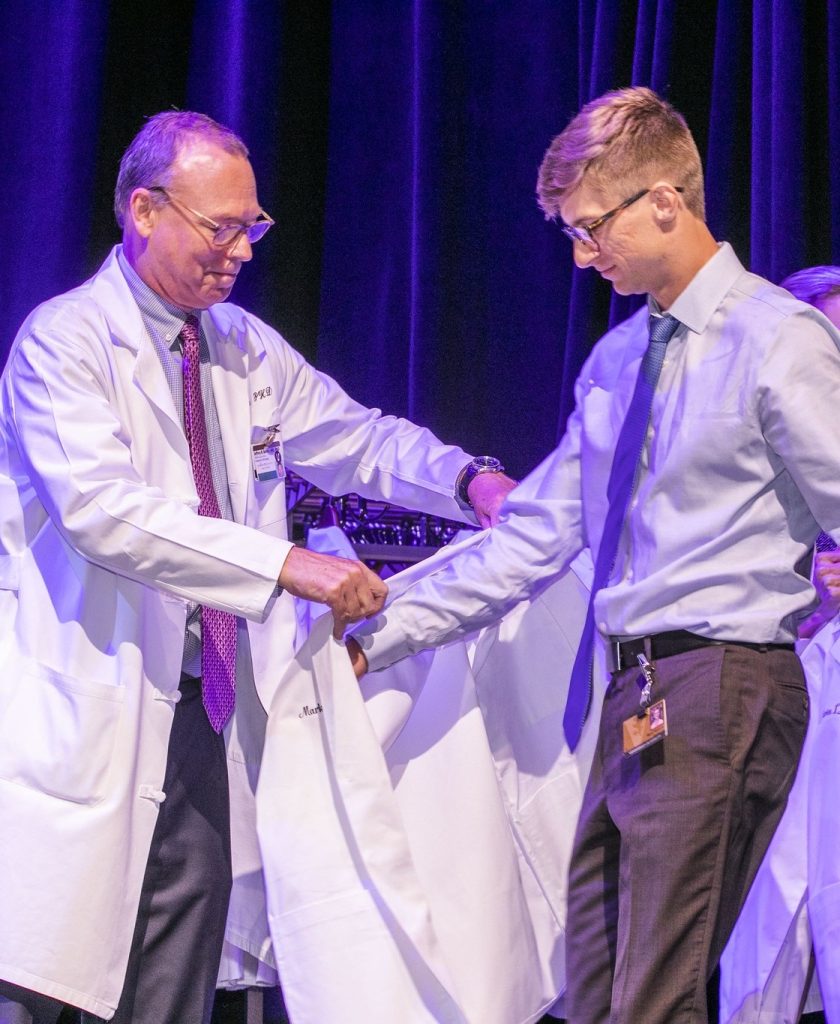
“Part of fitting in training is finding ways to be efficient,” Petrovic explained. “As an M1 and M2, you could be reviewing and studying when you’re biking. I train without a coach, so I can set my own schedule around the changing demands of school.”
As Petrovic mentioned, however, balance does not come without sacrifice. Weekends are oftentimes dedicated training days, entire evenings (and sometimes even overnights) are devoted to exercise, and sufficient sleep must be built into their schedules.
But just as training can take priority over free time, medical school can require concessions of its own.
“When clerkships ended in June of my second year, I went home for the summer and had plenty of time to build my fitness while studying for Step 1,” Oakley said. “But in January and February of third year, I studied around 80 hours per week for Step 2. That was my focus, and I really couldn’t train at all during that time.”
Despite all the potential hurdles, Petrovic and Oakley say that the personal benefits gained from participating in triathlons are well worth dealing with unorthodox schedules and shifting priorities.
“What we do can make life more challenging, and it definitely does at times, but I do get a therapeutic benefit from it, especially from a mental health perspective,” said Oakley. “For me, I think exercise calms my anxieties and makes me more level-headed. It does a lot of good in my day-to-day.
Chasing the Championship

Petrovic and Oakley’s commitment to their sport was not just a benefit in helping them reach the world championships; it was a necessity for such a strict qualifying process. Each Ironman race has only 30-35 World Championship qualifying slots awarded to top finishers. With thousands of competitors at any given race, finishing high enough to earn a slot requires a truly exceptional performance. Thankfully, that’s exactly what the two achieved, with Petrovic qualifying during the Chattanooga Ironman 70.3 in May and Oakley during the Western Massachusetts Ironman 70.3 in June. Despite their tireless training, the two say qualifying still felt nearly unbelievable in the moment.
“I didn’t know I qualified when I finished the race,” Oakley explained. “At one point, my dad told me I was second place in my age group, and I was like, ‘Oh, we’ll see how long that lasts.’ As more competitors finished, I remained in that spot and I realized, ‘Wow, this could actually happen!'”
This amount of pressure, both while racing and training beforehand, can be overwhelming to carry; that is, without personal cheerleaders like Petrovic and Oakley have at every race. With words of encouragement, placement updates during the race, and smiling faces at the finish line, the two say their families’ support is often the highlight of the experience.
“To celebrate that moment with your family is incredible,” Oakley said. “Hearing my dad and sister cheer me on and giving them big high fives at the finish line was priceless; it’s a moment I’ll never forget.”
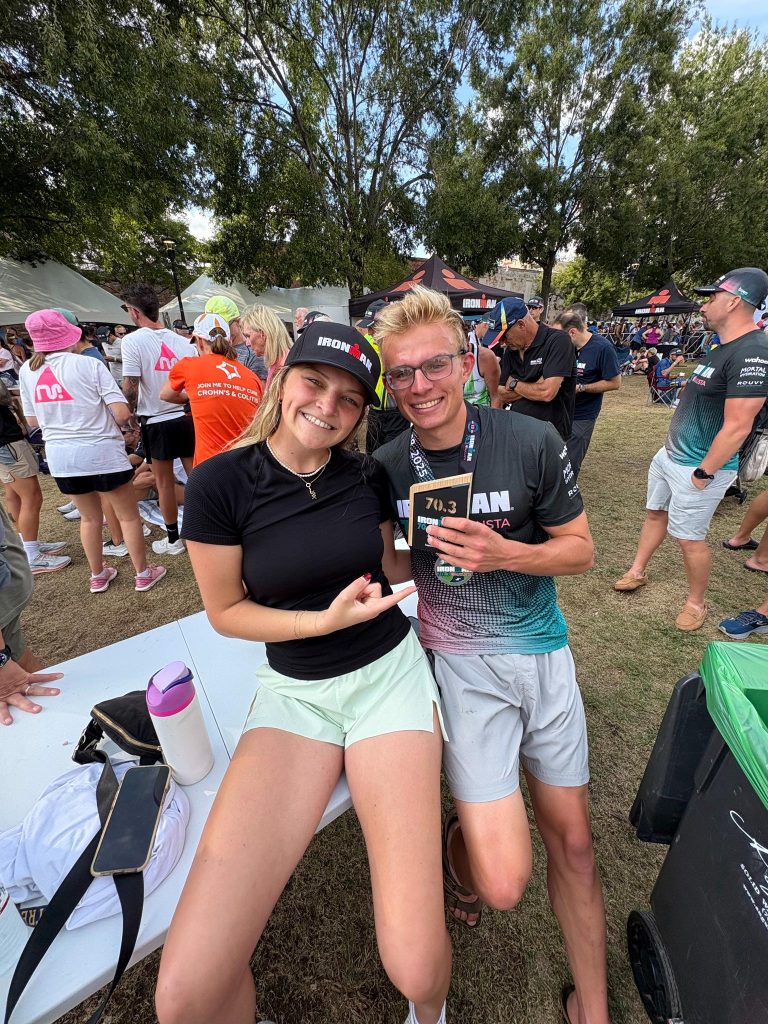
With the World Championship just a month away, Petrovic spending long hours in the lab, and Oakley applying for residency, nerves and excitement are at an all-time high. But for both students, competing on the world stage is ultimately less about the finish time and more about honoring the tireless work it took to get there and the people that made it possible. Whether on the wards or crossing the finish line, Oakley and Petrovic have built a rhythm and a community that keeps them moving forward: one mile, one patient, one day at a time.
While their families will be cheering them on at the Marbella finish line, the VUSM community will be keeping up with Petrovic and Oakley live from Nashville on race day. Join us in tracking their progress via the IRONMAN website.