By Leigh Ann Gardner (MSTP Sr. Grants Manager)

January 9: Born on January 9, 1864, Paul Kroegel is a man who fought to protect the brown pelican in Florida, and who efforts in this area led to President Theodore Roosevelt designating Pelican Island as the nation’s first wildlife refuge in 1901. Born in Germany, Kroegel and his family immigrated to the United States by 1881 and settled in Sebastian, Florida. They made a home on a farm that overlooked Pelican Island, which was the last rookery for brown pelicans on the east coast of the United States. Kroegel kept watch over the pelicans, wearing a pistol to protect them from “plume hunters,” those who killed thousands of birds in order to use the feathers in fashion. He would stand guard on Pelican Island to protect the birds that lived there. In 1901, naturalists were able to pass legislation in Florida protecting non-game birds, and Kroegel became one of the first wardens hired by the Florida Audubon Society to enforce the legislation and protect wildlife. After President Roosevelt signed the executive order designating Pelican Island as a wildlife refuge, Kroegel became the first federal warden of the island. You can learn more about Kroegel here and here.
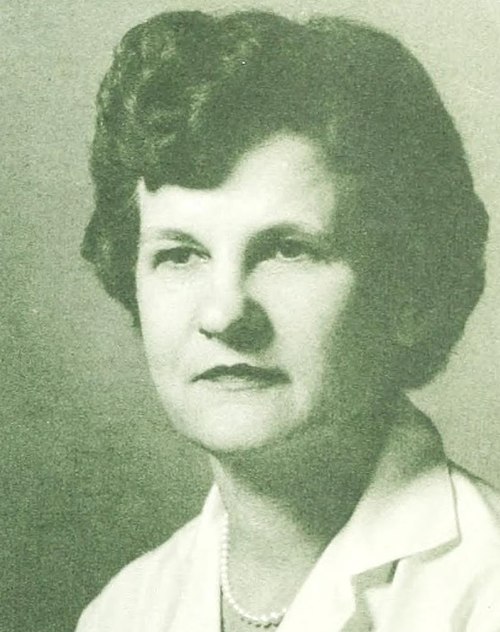 January 12: American chemist Ruth Rogan Benerito, born on January 12, 1916, is remembered for her development of wrinkle-resistant cotton fabrics, and held 55 patents during her lifetime. Born in New Orleans to progressive parents that valued women’s rights and education, she was encouraged to pursue her education. She attended Sophie Newcomb College, the women’s college of Tulane University, where she earned a degree in chemistry as well as physics and math. She also attended Bryn Mawr College for one year of graduate studies. She then worked as a teacher and worked on her master’s degree at night. She then earned her PhD in physical chemistry from the University of Chicago and went to work for the USDA. While there, she and her research team discovered how to treat cotton fibers so that they were wrinkle resistant. Their research also led to researchers learning how to make fabric stain resistant and flame resistant. After retiring from the USDA in 1986, she returned to teaching, and she taught chemistry courses at both Tulane and the University of New Orleans until 1997, when she was 81 years old. She was the recipient of the Garvan Medal from the American Chemical Society and the Lemelson-MIT Lifetime Achievement Award. You can learn more about her life here. You can view an online exhibit about her at Tulane University here.
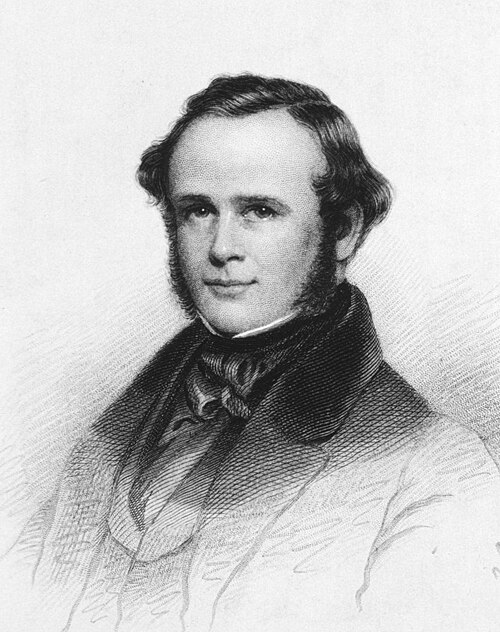 January 21: Horace Wells, an American dentist who pioneered the use of anesthesia in medicine, was born on January 21, 1815, in Hartford, Vermont. Wells trained as a dentist in Boston, and published a booklet in 1838, An Essay on Teeth, which advocated for preventive dentistry and advocated for using a toothbrush. Following his training, he returned to Hartford and opened a dental practice. In 1844, after witnessing a demonstration on nitrous oxide, he realized that the gas had analgesic properties. He tested his ideas on himself first by inhaling nitrous oxide and having someone extract a tooth. Once he realized he didn’t feel pain during the procedure, he used nitrous oxide on other patients and organized other demonstrations. A demonstration in Boston led to the patient crying out in pain, due to the bag of gas being removed before it had taken effect. As a result, Wells was labeled as a quack, and his mental health declined. He left dentistry and was imprisoned after throwing acid on a passerby. Wells died in 1848. Content warning: these links contain mentions of suicide – you can learn about his life here and here.
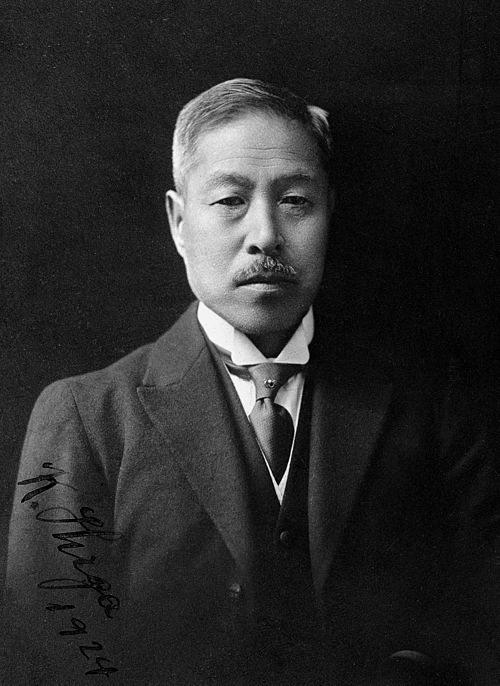 January 25: Kiyoshi Shiga, a Japanese physician and bacteriologist that identified the Shigella dysenteriae organism, died on January 25, 1957, in Sendai, Japan. Born in 1871 in Sendai, Japan, Shiga attended the Tokyo Imperial University School of Medicine, graduating in 1896. While there, he was mentored by Dr. Shibasaburo Kitasato, a renowned infectious disease specialist. Following graduation, Shiga worked for the Institute for Infectious Diseases in Tokyo, where he initially researched tuberculosis and diphtheria; however, following a outbreak of dysentery in 1897 which had a 20% mortality rate in Japan, Shiga shifted his focus to studying dysentery. He identified the bacteria causing dysentery, as well as a toxin produced by the bacterium known as the Shiga toxin. In 1901, Shiga went to Germany for 4 years to study at the Institute for Experimental Therapy with Paul Ehrlich, a pioneer in the use of chemotherapy. After returning to Japan in 1905, he continued to work with Dr. Kitasato and played a role in the development of the BCG vaccine for tuberculosis. Shiga was also known for his advocacy for public health education, emphasizing the importance of hygiene and disease prevention. You can learn more about Shiga’s life here and here.