Lamson Memorial Lecture
Paul Dudley Lamson, Ph.D.
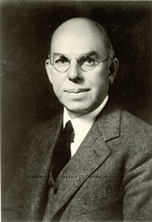 Dr. Paul Lamson was the first Chair of the Department of Pharmacology at Vanderbilt. Dr. Lamson obtained his medical degree from Harvard University in 1909 and did further training at Massachusetts General Hospital, the University College in London and the University of Wurzburg in Germany before joining the faculty of Johns Hopkins Medical School in 1914. His early work in electrocardiography resulted in the publication of a book, “The Heart Rhythms”, in 1921. In 1923, he was recruited by Dr. Canby Robinson to be the Chair of the Department of Pharmacology, a position he held until 1952.
Dr. Lamson made significant contributions to the field of Pharmacology including the introduction of carbon tetra-chloride therapy and hexylresorcinol therapy for the treatment of hookworm and ascariasis. Furthermore, he was one of the first researchers to recognize the importance of chemistry and the use of “chemical probes” to elucidate mechanisms of drug action.
In 1951, he demonstrated the “Lamson effect” by showing that glucose given intravenously to animals awakening from barbiturate anesthesia caused them go back to sleep. He also described the role of the liver in the regulation of blood volume, was the first to artificially produce cirrhosis of the liver, and built one of the first artificial hearts. Dr. Lamson’s additional contributions include his work in the areas of toxicity, acute polycythemia, and shock.
In addition to teaching and research, Dr. Lamson was also active in many professional organizations including the American Society for Pharmacology and Experimental Therapeutics. He served as the Vice-President of the American Association for the Advancement of Science in charge of the Section on Medical Science in 1943. He was also editor-in-chief of the Journal of Pharmacology and Experimental Therapeutics from 1937 to 1940.
Allan D. Bass Endowed Lecture
Allan D. Bass, Ph.D.
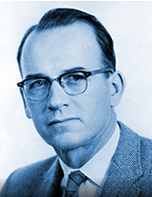 Allan D. Bass was Professor and Chairman of the Department of Pharmacology at Vanderbilt University School of Medicine from 1953 until 1973. He served as Acting Dean of the School of Medicine from 1973 to 1974 and as Associate Dean for Biomedical Sciences from 1973 until his retirement in 1975. Additionally, he was Associate Chief of Staff for Education at the Veterans Administration Hospital from 1974 to 1981.
Dr. Bass was nationally recognized as an outstanding administrator, scientist, and educator. He participated actively in many national societies including The American College of Physicians, American Society for Pharmacology and Experimental Therapeutics (President, 1967-1969) and the American Medical Association Council on Drugs (1962-1972). Dr. Bass was active in scientific research for more than four decades, and wrote many professional papers on such topics as anthelmintics, skin sterilizing agents, sulfonamides, adrenal corticosteriods, hormones, and chemical transmitters.
Dr. Bass was responsible for the development of Vanderbilt’s Department of Pharmacology from a relatively small entity to a program that has achieved national recognition. As an educator, Dr. Bass always made every effort to assist each student to reach his or her academic potential and to meet professional requirements. Pre-doctoral and post-doctoral students trained in pharmacology during Dr. Bass’ tenure now reside throughout the nation and several foreign countries, and many have held leadership positions in academia, government and the pharmaceutical industry.
Elaine Sanders-Bush Lecture
Elaine Sanders-Bush, Ph.D.
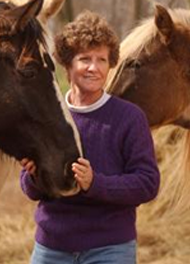 Born and raised on a small farm in Kentucky, Elaine Sanders-Bush attended Western Kentucky University in Bowling Green, where a visiting professor in Pharmacology from Vanderbilt University introduced her to the excitement of scientific research and the significant opportunities made available by advanced training. Upon graduation with a B.S. in Biology and Chemistry, she joined the graduate program in Pharmacology at Vanderbilt in 1962 and earned a Ph.D. degree in Pharmacology in 1967. After postdoctoral training, she joined the Vanderbilt faculty in 1969, where she remained until her retirement in 2010, interrupted only by brief sabbaticals at the Karolinska Institute in Stockholm and Stanford University. Her service locally and nationally has been transformative. In 2006, she was elected President of the American Society for Pharmacology and Experimental Therapeutics. In that year, she was also named the Harvie Branscomb Distinguished Professor at Vanderbilt University.
Dr. Sanders-Bush’s research has made major contributions to the understanding of serotonin and its receptors, from pharmacology and signal transduction to in vivo brain function. Her research interest in serotonin dates back to her graduate school days studying the metabolic inactivation of a hallucinogenic serotonin derivative. Over time, as neuroscience research expanded exponentially, her work evolved to take advantage of the tremendous advances that were offered in molecular biology, genetics and behavior. Her research accomplishments have brought her broad recognition at a national and international level; among her research awards are a Bristol-Myers Squibb Award for Neuroscience Research, a MERIT Award from the National Institute of Mental Health and the Heftner Prize for Outstanding Basic Research.
Dr. Sanders-Bush has been a leader in the development of neuroscience research and graduate education at Vanderbilt. In 1997, she spearheaded the creation of a new Ph.D. degree program in Neuroscience and served as director of that program until 2008. During this decade, the program grew to more than sixty graduate students. In 2002, she was appointed the first Director of the Vanderbilt Brain Institute. In recognition of her impact in graduate education at Vanderbilt, the Elaine Sanders-Bush Award for Mentoring Graduate and/or Medical Students in the Research Setting was created in 2006. Dr. Sanders-Bush has a deep personal commitment to enhancing opportunities for minority trainees and has worked to enhance minority training programs at Tennessee State University, Meharry Medical College, and Vanderbilt. In recognition of her commitment and accomplishments, she was the first recipient of Vanderbilt’s Levi Watkins, Jr., Award for Leadership Diversity in 2002 and, in 2009, the Dr. Dolores C. Shockley Lecture and Partnership Award.
Over the course of her career, Dr. Sanders-Bush has mentored scores of graduate students and postdoctoral fellows as well as junior faculty. She has a strong record of training students who think both creatively and critically and is recognized for being a nurturing mentor while insisting that her students function at their highest level. Her former trainees hold prominent positions at major U.S. academic centers and in the pharmaceutical industry.
The Inaugural Elaine Sanders-Bush Lecture was given by Jean-Pierre Changeux, Ph.D., Honorary professor at the Collège de France and Emeritus professor at the Institut Pasteur. Dr. Changeux presented “The Nicotinic Receptor: an allosteric membrane protein engaged in neuronal communication: The Logic of Allosteric Receptors in Signal Transduction and Chemical Therapeutics” on February 25, 2010.
Dolores C. Shockley Lecture
Dolores C. Shockley, Ph.D. (1930 – 2020)
 Dr. Shockley completed her early education at Booker T. Washington in Clarksdale, Mississippi until the tenth grade. She left home to attend Mary Holmes College, a private high school for black girls, located in West Point, Mississippi. After graduating in 1947, she enrolled in Pharmacy school at Xavier University in New Orleans, Louisiana, where she earned her B.S. in 1951 and was number one in her class. She continued her education at Purdue University in West Lafayette, Indiana, where she received her M.S. in 1953, and her Ph.D. in Pharmacology in 1955 at the age of 25. Dr. Shockley was the first black woman to receive a Ph.D. in any discipline from Purdue University and was the first black woman in the United States to receive a Ph.D. in Pharmacology.
While obtaining her Ph.D., Dr. Shockley accepted a faculty position as an Assistant Professor of Pharmacology at Meharry Medical College in Nashville, Tennessee, in 1954. Dr. Shockley took a leave of absence in 1955 to complete a Fulbright Fellowship at the Pharmacology Institute in Copenhagen, Denmark. Dr. Shockley continued her research in New York City at Albert Einstein College of Medicine from 1959-1962 then returned to Meharry Medical College as an Associate professor in the Department of Pharmacology where she worked for 26 years. In 1988, she became the first black woman to chair a pharmacology department at an accredited medical school in the United States. After an accomplished career, Dr. Shockley retired from Meharry Medical College as Professor Emerita in 2005.
Dr. Shockley’s research focused on the chemical compounds to treat stimulant dependency and overdose. As Chair of the Department of Pharmacology at Meharry, she worked closely with Dr. Lee Limbird to unite students at Meharry Medical College and Vanderbilt University. Together they developed several joint programs. These interactions continue today with a joint pharmacology scientific retreat each year that inspires collaboration and continued reciprocal mentoring. She worked tirelessly to help others for more than 50 years. She loved to see her students succeed.
After her retirement, she continued to serve on many national committees including NIH, NSF, NRC, and FDA. She held offices in the American Society of Pharmacology and Experimental Therapeutics (ASPET). The society established a travel award in her honor for student(s) to attend the national meeting biennially. Other distinguished honors include, the Dolores C. Shockley Lecture and Partnership Award which was inaugurated at the Vanderbilt University School of Medicine, Department of Pharmacology, in 2009, and is presented biennially, and Distinguished Alumna of Purdue, Old Master at Purdue. Recipients of the Dr. Dolores C. Shockley Lecture and Partnership Award are recognized for their involvement in partnerships that foster minority scientist career development.
The Department of Pharmacology at Vanderbilt University is proud to host this lecture.