Student and Program Support
Director of Graduate Studies
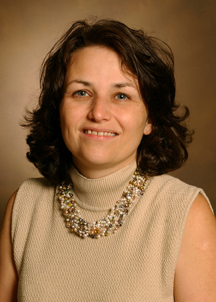
Christine Konradi
6133 MRB III
465 21st Ave South
PMB 407933
Nashville, Tennessee - 37240-7933
Email: christine.konradi@vanderbilt.edu
Phone: (615) 480-5738
Associate Director of Graduate Studies
 Sean Davies
556 Robinson Research Building
2220 Pierce Avenue
Nashville, Tennessee - 37232-6602
Email: sean.davies@vanderbilt.edu
Phone: (615) 322-5049
Graduate Program Manager
 Annie Alfonsin
704 Robinson Research Building
2220 Pierce Avenue
Nashville, TN, 37232-6602
Email: annie.alfonsin@vanderbilt.edu
Phone: (615) 343-0402
Program Overview
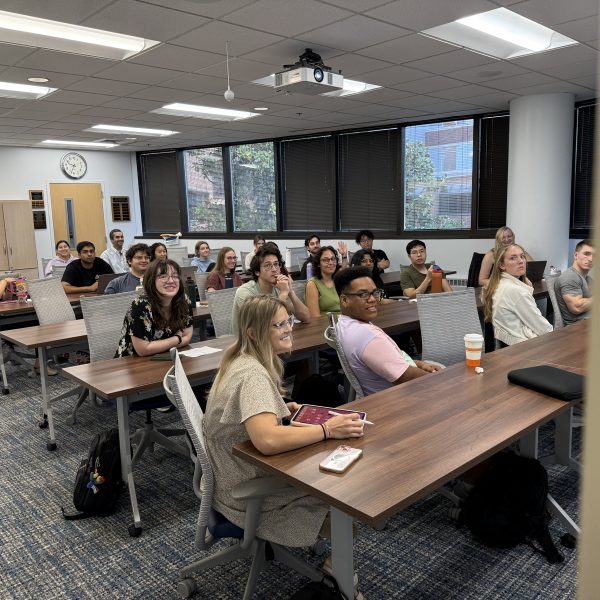 Goals of the Training Program
Training in Pharmacological Sciences at Vanderbilt University pursues several inter-related goals. At the scientific level, we seek to provide a didactic curriculum that assures that each student has an understanding of the core knowledge in pharmacology, including the molecular, cellular, and integrated understanding of drug action, receptor theory, pathways of drug metabolism, pharmacokinetics, and rational drug design.
Note: Students receiving Vanderbilt University financial support (stipend) must devote full-time to graduate study to the exclusion of other employment. Students cannot accept jobs for pay within or outside the University unless prior approval is given by their advisor, Director of Graduate Studies, and the Graduate Dean. Engagement in outside employment or failure to obtain approval for University employment may result in loss of financial aid (stipend).
Framework
How to Apply
Individuals pursuing a PhD in the basic biomedical or biological science departments, including Pharmacology at Vanderbilt University, join these departments following completion of their first year through the Interdisciplinary Graduate Program in the Biomedical Sciences (IGP) or the Quantitative and Chemical Biology Program (QCB).
Potential Pharmacology students may access the Graduate School’s website where they will gain important and relevant general information. This website also gives information about how to apply.
For information on the IGP program itself or the application process, please visit the Biomedical Research Education and Training (BRET) website.
Please note: At Vanderbilt, we have a long tradition of free expression, which is one of our core principles. We believe in bringing together people of differing viewpoints for a common purpose. Learn more about how we practice free expression at Vanderbilt and read Vanderbilt’s Freedom of Expression policy in the Student Handbook.
Overview of Coursework
Most students enter our program through the Interdisciplinary Graduate Program in the Biomedical Sciences (IGP), the Quantitative and Chemical Biology Program (QCB), or the Medical Scientist Training Program (MSTP). Vanderbilt University’s Interdisciplinary Graduate Program in Biomedical Sciences organizes first-year training of most graduate students who are interested in basic biological and biomedical research. Subsequently, interested students apply to the Training Program in Pharmacological Sciences. IGP and QCB students are admitted to Vanderbilt University uncommitted to a specific department or Ph.D. program and take a two-semester course. During the first year of study, students also engage in rotations in four laboratories chosen by the student. Students who know or expect that they will apply to the Training Program in Pharmacological Sciences should conduct laboratory rotations in approved pharmacology laboratories. At the end of two semesters of coursework and laboratory rotations, IGP and QCB students declare their intent to pursue a Ph.D. in pharmacology and choose the laboratory in which they will conduct their dissertation research. Students enter their selected laboratory the summer after their first year of study.
The coursework is designed to impart to students a common framework of basic principles in Pharmacology and related disciplines. This framework is supplemented by exercises that allow students to use and integrate basic principles. All coursework is taught by faculty. An overview of the Program, including the IGP or QCB year, is presented below.
The Ph.D. in Pharmacology requires 72 total credit hours with a minimum of 24 hours of formal, didactic coursework toward the Ph.D. degree (including the 16 hours in the first year IGP, QCB or MSTP).
Note: A grade below B(-) in the required Pharmacology courses is considered a failing grade.
Year |
Fall |
Spring |
Summer |
| 1-IGP |
|
|
|
| 1-QCB |
Coursework for the Ph.D. degree is selected based on the student’s undergraduate training and the primary research track that the student is interested in.
|
||
| 2 |
|
|
|
| 3-6 |
|
||
| 5 |
Four years after graduate students have taken an RCR course, the course has to be retaken (e.g. IGP 8004 or another RCR course of their choice) |
||
Note 1: Students in the Pharmacology program within the first to the third year are required to attend all Journal Clubs. They will be granted two Journal Club absences per term if the course director is informed in advance. Students in the Pharmacology program beyond the third year are encouraged to attend Journal Clubs to support the younger students. Anchorlink is used to track mandatory attendance.
Note 2: Students in the Pharmacology program within the first to the fourth year are required to attend 12 seminars/term. Included in these 12 seminars are all mandatory endowed lectures and at least six seminars in Pharmacology (these include the endowed lectures which are mandatory). The remaining six seminars can be in any basic research program covering any topic that is relevant to a student’s project or is of interest to the student. To ensure that all requirements are met, students will submit the list of attended outside seminars to the DGS and the program manager at the end of each semester. Students in the Pharmacology program within the first to the fourth year are required to attend all Works-in-Progress (WIP) presentations.
Beyond the fourth year, students in the Pharmacology program must attend endowed lectures and thesis defenses. Beyond that, we hope that students will take advantage of all the offerings at Vanderbilt, but the program will not keep track of attendance at regular seminars. Anchorlink is used to track attendance at Pharmacology events.
Required Coursework
Note: A grade below B(-) in the required Pharmacology courses is considered a failing grade.
Examples of Elective Coursework
The program does not require any hours of electives, although students are encouraged to take advantage of the educational opportunities on campus. Any student who wants to take an elective on any topic related to their area of thesis research, such as Cancer Biology, Diabetes, Cardiology, Ion channel pharmacology, pharmacogenetics/-genomics, neuropharmacology, or any other course that is offered by any program at Vanderbilt University, should talk to the program DGS to get support signing up for their course of choice. Below is one elective course offered by the Pharmacology Program for students interested in neuropharmacology, though that is just one area of interest of our students and faculty. This course is open to all graduate students on campus. An overview of other courses offered at Vanderbilt can be found in the Graduate School Catalog linked from the University Registrar's website.
Note: Graduate students in the Pharmacology Program receiving Vanderbilt University financial support (stipend) must devote full-time effort to graduate study. Students cannot accept jobs for pay within or outside the University unless prior approval is given by their advisor, their Director of Graduate Studies, and the Dean for the Office of Biomedical Research Education and Training. Exceptions to this rule include part-time internships and activities that contribute to career development and that do not exceed the time commitment outlined by the National Institutes of Health, and occasional and temporary part-time pursuits (e.g. house sitting). Engagement in outside employment without obtaining approval may result in loss of financial aid, including stipends.
Recruiting Faculty for Grant Review and Subsequent Committees
Step 1: Communication Skills II - The grant writing course (PHAR-GS-8323)
- 2 faculty reviewers are needed for Communication Skills II
- First reviewer is selected from faculty with Pharmacology appointment (can be primary or secondary; faculty appointments can be found in the Vanderbilt Faculty Registry)
- Second reviewer is selected from faculty with any appointment at Vanderbilt University or VUMC (this includes, but is not restricted to, Pharmacology appointments)
- Exclusion criteria: the mentor cannot be a reviewer
- Timelime to submit names for approval: Late November to early December
Procedure: the student consults with their mentor and submits up to 5 names to the course directors of PHAR-GS-8323 and to the DGS. Four of the proposed faculty should have an appointment in pharmacology and one cannot have a pharmacology appointment but has to be at Vanderbilt University. Once the list is approved, the student asks two faculty members from the list to be the grant reviewers. If faculty declines, the student goes down the list. Once the reviewers have agreed and are finalized, the student sends their names to the program manager and CC's the course direcors and the DGS. Faculty reviewers can later be asked to be on the qualifying exam committee, and - thereafter - on the thesis committee.
Step 2: Qualifying Examination (QE) Committee
- Exactly 4 faculty are needed for the Qualifying Exam Committee
- Three faculty with Pharmacology appointment are selected (can be primary or secondary)
- Fourth faculty is selected from faculty who cannot be appointed in Pharmacology but has to have an appointment inside Vanderbilt University or VUMC
- Exclusion criteria: the mentor cannot be a member of the Qualifying Exam Committee
- Timelime to submit names to the DGS and associate DGS for approval: February
- Exam date for May/June should be finalized by March
Procedure: The student consults with their mentor and submits 5 names to the DGS and associate DGS for approval. These can be the same names as submitted for the Communication Skills class. Once the list is approved, the student asks three faculty members with an appointment in pharmacology and one who is not appointed in pharmacology (neither primary nor secondary appointment) to be on their Qualifying Exam Committee. If faculty declines, the student goes down the list. All committee members have to be present at Vanderbilt University. Once the committee members are finalized, the student asks one of the pharmacology faculty members to be the chair of the committee. The student then sends out a poll to the committee members to find a date and time for the meeting. The student informs the program manager, the DGS, and the associate DGS and asks the program manager to find a room for the meeting. Finally, the student fills out a form in Kuali (see below). Faculty reviewers can later be asked to be on the thesis committee.
The graduate school requires the student to submit the "Schedule or Modify the Qualifying Exam" form via Kuali through their individual Vanderbilt student account no less than two weeks before the qualifying exam is scheduled. If the thesis committee members can also be entered through this form the student is all set. Alternatively, the student might additionally have to enter the "Appoint or Modify the Ph.D. Committee" form. Detailed information is found in the Doctoral Access User Guide. Neither the Program Manager, nor the DGS, has access to these student accounts and therefore cannot submit these documents.
Step 3: The Thesis (Dissertation) Committee
- 5 or more faculty are needed for the Thesis Committee
- Three faculty with Pharmacology appointment are selected (can be primary or secondary)
- Fourth faculty is selected from faculty who cannot be appointed in Vanderbilt Pharmacology; this faculty can be at another accredited University. If the fourth faculty is not at Vanderbilt, their CV, and a letter that justifies their expertise on the thesis project is submitted to the DGS who will forward these items to the graduate school for permission.
- Fifth faculty is the mentor
- More faculty can be chosen but have to be discussed with the DGS and associate DGS
- Timelime to submit names to the DGS and associate DGS for approval: within 2 weeks of passing the qualifying exam
- Time to first thesis committee meeting is set by the QE committee but cannot be beyond 6 months of the QE
- Student finalizes the date for the first meeting within one month of taking the QE
Procedure: The student consults with their mentor and submits 5 names to the DGS and associate DGS to request approval. These can be the same names as submitted for the qualifying exam with the additon of the mentor. Once the student has permission to go ahead, they ask three faculty members with an appointment in pharmacology and one who is not appointed in pharmacology (neither primary nor secondary appointment) to be on their Thesis Committee. If faculty declines, the student consults with their mentor, the DGS, and the associate DGS. Finally, the student asks one of the committee members to serve as chair of the committee. The mentor cannot be the chair. The student informs the program manager, the DGS, and the associate DGS, and asks the program manager to schedule a room. Any changes from the QE committee will have to be logged via Kuali.
If the committee is different from the QE committee, the student will have to submit the "Appoint or Modify the Ph.D. Committee" form through their individual Vanderbilt student account. If the mentor was not listed as "mentor" in the form submitted for the Qualifying Exam, the student has to submit the "Appoint or Modify the Ph.D. Committee" form with the mentor listed.
Graduate School rules for Ph.D. thesis committees
Committees consist of not fewer than four members of the Graduate Faculty who possess a terminal degree (e.g., Ph.D., M.D.). Three of the members must be Graduate Faculty from the Vanderbilt Department of Pharmacology and one must be from outside the program. The outside member may be anyone who does not have an appointment in the Vanderbilt Department of Pharmacology (primary or secondary), may be internal or external to Vanderbilt University, and from any appropriate academic field. Faculty members from outside universities may be appointed to serve on a Ph.D. committee. This requires a short letter of justification explaining the expertise this person brings to the student’s committee along with a copy of the faculty member’s curriculum vitae.
Qualifying Examination and Exam Committee
Information about Paperwork
The Office of the University Registrar has implemented Kuali, an online workflow product to assist with various processes on campus. All workflow has to be entered by the student through their individual Vanderbilt student account. Neither the Program Manager, nor the DGS, has access to these student accounts and therefore cannot submit these documents. Detailed information is found in the Doctoral Access User Guide. The following requests are examples of what has to go through the student’s account, but be aware that new workflow is added on a continuous basis:
- Appoint or Modify the Ph.D. Committee
- Schedule or Modify the Qualifying Exam – Note: The Graduate School must be notified at least two weeks in advance.
- Schedule or Modify the Dissertation Defense – Note: The Graduate School must be notified at least two weeks in advance.
- Extend Deadline for Qualifying Exam – Note: The Graduate School must be notified at least two weeks in advance.
- Extend Candidacy
Qualifying Examination (QE) for Admission to Candidacy
The admission to candidacy for a Ph.D. in the Pharmacological Sciences requires successful completion of the required course work (no grade below B- in the required course work), at least 24 hours of formal, didactic coursework, and passing of the Qualifying Examination (QE). The goal of the QE is to assess the student’s ability to think critically, solve problems, interrogate novel questions in pharmacology, and challenge conventional wisdom whenever warranted or possible. Students should be able to formulate questions and solve problems in their research area using their general foundational knowledge of pharmacology gained in their course work. Emphasis is placed on principles of molecular pharmacology and how they may be applied to the student’s area of research.
General Overview of the Qualifying Examination
The QE has a written section followed by an oral exam in the presence of four faculty. Initially, the student writes a grant proposal about their thesis research (see details below). This will ensure that the student is familiar with relevant literature, gains experience with scientific writing, and can formulate testable hypotheses based on foundational work in their field. Grant-writing requires that the student is able to design experiments with necessary controls, is familiar with principles and limitations of methods, has the ability to interpret data that may – or may not – align with their hypothesis, and is able to clearly explain their reasoning. Ideally, this document forms the foundation for a proposal that will be submitted to the NIH or another comparable funding entity. The subsequent oral exam of the QE should evaluate the student’s ability to think scientifically and apply fundamentals of pharmacology to research questions relevant to their proposal and the broader scientific field. While it requires a solid knowledge of pharmacology, it is not a didactic exam, nor a critique of the proposed research. The proposal indicates to the examiners the area that the student should be tested in and serves as a springboard for probing the thoughtfulness and scientific aptitude of the candidate. It examines how pharmacological principles play into the proposal and how these principles can be applied to address questions that might come up to further evaluate prospective data and adjust hypotheses. As always, if you have any questions or need additional information, please contact the DGS or associate DGS.
Preparation for the Qualifying Examination
In preparation for the exam, the student is expected to...
- select four potential members for their committee (in consultation with their research advisor; more on that below), three from within the department and one from outside the department
- get approval of the potential committee from the DGS and associate DGS
- ask the potential members of the committee if they are able to serve
- ask one of the Pharmacology committee members to serve as the chair and inform the DGS, associate DGS, and the Program Manager about the choice
- fill out the “Appoint or Modify the Ph.D. Committee” form in Kuali
- send out a poll to find a date for the exam and inform the Program Manager, the DGS, and the associate DGS about the date
- work with the Program Manager to reserve a room for the exam.
- fill out the "Schedule or modify the qualifying exam" form in Kuali with the date, time, and room of the exam. The Registrar’s office has a manual how to use the system
- submit the grant proposal (“Written Proposal”, see below) to the committee at least three weeks before the exam
- meet with each committee member before the examination
- practice for the QE with peers
The Program manager has to be informed in advance of the committee composition and of the chosen date for the QE to send out required paperwork to the chair. The student must submit committees and changes to committees via Kuali to the Graduate School at least two weeks in advance of the meeting.
The Qualifying Exam (QE) Committee
The Qualifying Exam Committee consists of four members, three of whom from within the department and one who has no appointment in Pharmacology. All members of the Committee must be from within Vanderbilt or VUMC and need to be present in person at the exam. All committees must be approved by the DGS and associate DGS (see "Recruiting Faculty for Grant Review and Subsequent Committees", above). Students are encouraged to select examiners who will likely participate in their future Ph.D. thesis committee. This can include reviewers for the document developed in Scientific Communications II. The student’s research advisor cannot be on the QE committee and will not be present at the examination. Because the Graduate School considers a student’s QE committee identical to their Ph.D. thesis committee, Graduate School rules for thesis committees must be followed (see next), with the exception that the mentor will be part of the thesis committee but not of the QE committee.
Graduate School rules for Ph.D. thesis committees
Committees consist of not fewer than four members of the Graduate Faculty who possess a terminal degree (e.g., Ph.D., M.D.). Three of the members must be Graduate Faculty from the Vanderbilt Department of Pharmacology and one must be from outside the program. The outside member may be anyone who does not have an appointment in the Vanderbilt Department of Pharmacology (primary or secondary), may be internal or external to Vanderbilt University, and from any appropriate academic field. Faculty members from outside universities may be appointed to serve on a Ph.D. committee. This requires a short letter of justification explaining the expertise this person brings to the student’s committee along with a copy of the faculty member’s curriculum vitae.
The Written Proposal for the Qualifying Examination
All members of the committee receive the written proposal from the student at least two weeks before the exam. The written proposal is based on the document developed during the course “Scientific Communications II”, with careful incorporation and refinement through feedback and exercises provided throughout the course. The written proposal is formatted either as an NIH grant submission (F31 for PhD, F30 for MSTP students) – or a format such as NSF, AHA or other foundations. Formats to accommodate international students and individuals who are not eligible for research grants should include a specific aims page and 5-6 pages of approach section with literature citations in an addendum. Prior approval for non-NIH formats must be justified and obtained from the associate DGS, the DGS, and the course director(s) of Scientific Communication Skills II. An NIH-style document should contain a specific aims page, the full proposal and citations to support the student’s proposed research. Other sections, such as mentoring plans, resources, environment, etc. are not required and will not be reviewed or considered for the examination. The proposal will be judged on the appropriateness and timeliness of the topic, organization, clarity, and interpretation of previous work in the field that forms the foundation of these ideas. Strong proposals will have feasible aims with the potential to advance the chosen field and contain insightful background and rationale, ample justification for the specific aims, and detailed experimental strategies.
Upon receipt of the document, QE committee members will review the document as soon as possible – within the first week – and decide if the document is of sufficient quality to proceed. If the document is acceptable the QE will proceed as scheduled. If the committee deems it not satisfactory they will inform the student which modifications are needed. Modifications will focus on logic, reasoning, and foundational literature and will not be about the field or specific experimental approaches (unless those experiments do not have appropriate controls or logic). The student will have two weeks to make the changes and will send the document back to the committee for approval. Once approved the exam can be rescheduled, either for the initial date or a later date, if necessary. The student must submit changes to the schedule via Kuali to the Graduate School at least two weeks before the meeting. As with all meetings, the Program manager has to be informed by the student of all dates and all changes to dates.
The Oral Part of the Qualifying Examination
The oral exam should be scheduled for late May or early June after successful completion of the second year of coursework. The exam begins with a ~5 min presentation by the student based on the significance, background and rationale of the written component. Students should also touch on the approach, but not go into minute detail. This is intended to build confidence and relieve nervousness. The student will be allowed to finish the presentation without interruptions. After the presentation, questioning will begin. The student will be examined on the application of pharmacological principles to their scientific area of interest. While the student requires a solid knowledge of pharmacology, the exam is not a didactic exam, nor a critique of the proposed research. The proposal indicates to the examiners the area that the student should be tested in and serves as a springboard for probing the thoughtfulness and scientific aptitude of the candidate. The committee examines how pharmacological principles play into the proposal and how these principles can be applied to evaluate prospective results, adjust hypotheses, and use pharmacological approaches to test further hypotheses. The questioning aims to probe the student’s ability to appropriately develop and test hypotheses as well as accurately interpret data. General knowledge of pharmacology, cell signaling, molecular biology, and statistics is needed to address these questions.
The total time for the oral exam will be approximately 90 minutes, but a 2-hour time period should be allotted to allow for committee discussions before and after the exam.
Potential Outcomes of the Qualifying Examination
At the end of each exam, the faculty will fill out a redcap form assessing student performance in key areas and decide if the student passed. The Chair of the exam committee will write a letter summarizing the view of the committee and send this to the student as well as the Program Manager for the Pharmacology Graduate Program.
The exam has three possible outcomes:
Pass. This is self-explanatory. No further action is required of the student and they advance to candidacy.
Conditional pass. If a student has overall strengths, but shows a significant weakness in one specific area, the committee may decide to give a conditional pass, with the stipulation that the student shows improvement in the area of weakness. This may require a written report, a 30-minute exam limited to the area of weakness, or both. The report or the limited exam should take place within one month of the initial exam. The committee letter should state the expectations in detail, and in-person meetings of the student with committee members within a couple of days after the initial exam should provide further clarification.
Fail. This is self-explanatory.
Note: Students may log into their personal RedCap account to download the committee letter and the committee evaluation logged in the SACS form.
Even the Best Student Can Have a Bad Day…
A student who fails the QE will have one more opportunity to take the exam. In most cases, the student is expected to retake the QE within 4 weeks. However, the DGS will confer with the examination committee, the oversight committee (if necessary), and the student, and allow for more time, if needed. A written set of comments outlining areas of deficiencies must be given to the student and the retake exam does not need to cover areas where the student already showed competence. All faculty in the Pharmacology Program are committed to individually mentoring the student to rectify any deficiencies. Per Graduate School rules, a student is allowed only two opportunities to pass the qualifying examination, though in the past 15 years, all students in the program who failed on the first try passed on the second try. Should a student fail twice, the DGS and associate DGS of the Pharmacology Program will help to examine other options that may be available.
Thesis Committee and Thesis Committee Meetings
Assembling the Thesis Committee
After passing the QE, the student needs to set up their thesis committee. Details about Graduate School rules for thesis committees are found above. Thesis committees might have the same members as their Qualifying Exam Committee, with the addition of their mentor, or they can be assembled from a different group of faculty. In all cases the mentor is part of the thesis committee and Graduate School rules must be followed (see also the Graduate School Catalog found at the University Registrar's website). The mentor cannot be chair of the committee. All committees must be approved by the DGS. Students must file the form "Appoint or Modify the Ph.D. Committee" via Kuali, as detailed in the Doctoral Access User Guide.
In setting up the thesis committee, the student needs to...
select potential members for their committee (in consultation with their research advisor; these can overlap or be the same as the QE committee)
get the approval of the potential committee members from the DGS
ask the potential members of the committee if they are able to serve
ask one of the Pharmacology committee members to serve as the chair (this cannot be the mentor) and inform the DGS about the choice
upon approval of the committee, send out a poll to find a date for the first meeting
work with the program manager to submit all necessary paperwork to the Graduate School.
First Committee Meeting
The first committee meeting should be between 3 and 6 months of passing the QE. The time frame is provided to the student by their Qualifying Exam committee and the student is in charge of polling their committee for a date and time for a 2-hour meeting. The program manager needs to be informed about data and time to set up SACS forms for the committee chair and help to schedule a room.
The student will present their specific aims and research approach (an updated version of the NRSA/grant proposal) and have the committee approve them as the basis of the dissertation work. The student will present their overall research plan, experimental approach, and preliminary data collected to date. The updated NRSA/grant proposal has to be e-mailed to the committee no later than 2 weeks before the scheduled meeting, and slides used for the student’s presentation should be submitted 24 hours before the meeting. This first Committee Meeting is intended as an in-depth discussion of the student’s research project, preliminary data, and potential early adjustments to the project, and should be scheduled for a 2-hour duration.
Note: Students may log into their personal RedCap account to download the committee letter and the committee evaluation logged via the SACS form.
Subsequent Committee Meetings
Thesis committee meetings are scheduled by the student and can be no more than 6 months apart, but sooner if either the committee or the student requires. Meetings last for 2 hours. Students are asked to find a date for their next committee meeting within one month after the last committee meeting, and inform the program manager as soon as they have a date and time. The program manager will have to set up SACS forms for the committee chair and will help to schedule a room.
A progress report has to be submitted to the members of the thesis committee no later than 2 weeks before each meeting. Slides used for the student’s presentation should also be submitted 24 hours before the meeting. While the format for the progress report is open and will change as the student progresses, it might contain the following:
short overview of the project (each time)
potential modifications of the research plan
short summary of data shown at previous committee meeting(s)
progress since last meeting
new data
presentations at meetings attended
honors and awards received
manuscripts in preparation or submitted
papers published
contributions to the community
committee assignments
teaching
outreach
Plans for the next months
Graduation Requirements
In order to graduate, students need to fulfill a number of requirements set by the Graduate School and the Pharmacology program. Among those requirements are:
-
72 tuition hours, 24 of which are approved courses taken for credit other than thesis and dissertation research courses. This must include the core courses in Pharmacology
-
Admission to candidacy, i.e. passing the qualifying examination
-
A dissertation that demonstrates that the candidate has technical competence in pharmacology and has done research of an independent character. The subject of the dissertation must be approved by the student’s faculty adviser and Ph.D. committee. Note: The dissertation must be completed within four years after a student has been admitted to candidacy for the degree
-
Mastery of the field of pharmacology
-
Multiple publications with at least one publication related to the dissertation subject on which the candidate is first (main) author.
-
Successful defense of the dissertation
-
The mentor must have submitted all grades for all semesters
The average time to degree in the Pharmacology Program is currently 5.2 years.
Professional Development Requirements
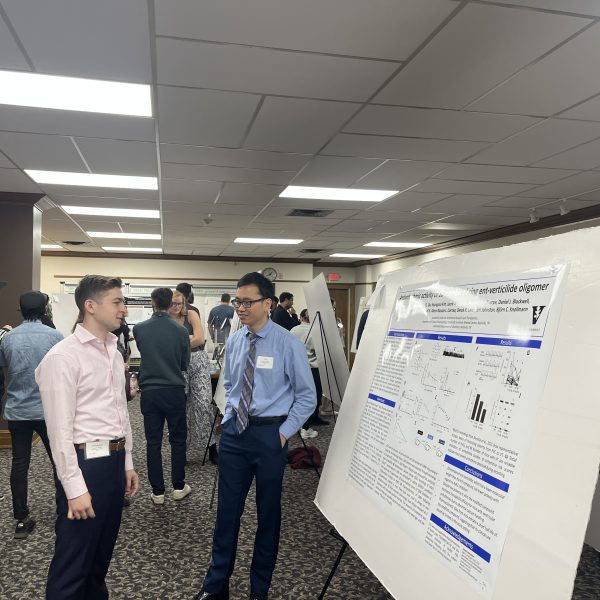 Throughout graduate training, students are expected to engage in scholarly activities, such as studying the scientific literature with the goal of integrating this new information into their own research questions, and attending lectures, journal clubs, and scientific meetings in order to keep abreast of the most recent scientific achievements. Meeting these and other expectations will foster a student’s professional development, establishing a scientific life-style of learning that will persist throughout the professional career.
Lee Limbird Dissertation Enhancement Award
Established in 2005 by private donation, this fund has been used by students for dissertation expenses and travel expenses and for special training opportunities.
Photo Credit: Valentina Cigliola (Headline)