>
 

High Throughput Screening Facility

We empower researchers with cutting-edge tools and expertise to accelerate drug discovery and biomedical breakthroughs.

MED Basic Sciences - 2025 Vanderbilt Institute of Chemical Biology
Section Contents

Workflow

The High-Throughput Screening (HTS) and Molecular Design & Synthesis Center (MDSC) partner with investigators to discover and optimize compounds for chemical probes and drug development.
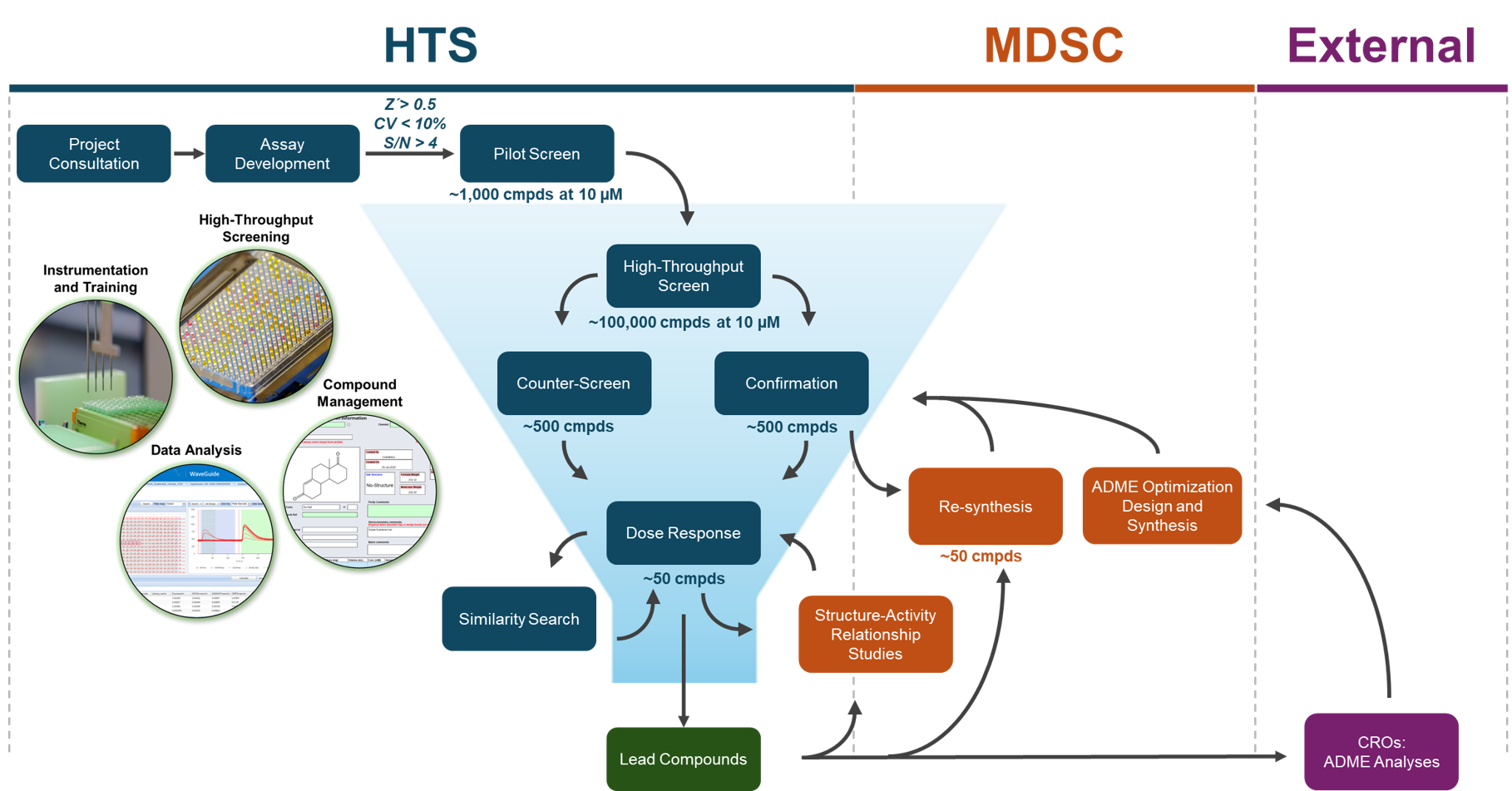
Flowchart of a drug discovery workflow divided into three sections: HTS (High-Throughput Screening), MDSC (Medicinal Chemistry/Drug Optimization), and External. The process begins with project consultation and assay development, followed by a pilot screen (~1,000 compounds). A large-scale high-throughput screen (~100,000 compounds at 10 µM) narrows candidates through counter-screening and confirmation (~500 compounds each), then dose–response testing (~50 compounds). Selected hits undergo similarity search and progress to lead compounds. In the MDSC phase, compounds are re-synthesized (~50 compounds) and optimized through structure–activity relationship (SAR) studies and ADME design. External CROs perform ADME analyses. Circular images illustrate pipetting, microplates, and data analysis tools.

Projects begin with a consultation to set goals, define success measures, and adapt assays for automated HTS. HTS staff assist with assay development, validation, and pilot screening to ensure robust performance. Once optimized, a full screen identifies initial hits (~0.5%), followed by confirmation tests, re-synthesis or vendor reorders, and counter-screens to eliminate false positives.

High-confidence hits undergo dose-response testing to assess potency and efficacy. Informatics-driven similarity searches and SAR studies, supported by MDSC chemists and pharmacologists, further refine compound activity, selectivity, and drug-like properties. For translational projects, HTS/MDSC can coordinate ADME analyses with CROs to inform medicinal chemistry optimization.

HTS staff provide guidance throughout—managing compounds, running screens, analyzing data, and delivering tailored reports. The goal is to generate a focused set of high-quality compounds ready for use as chemical probes or as leads for drug development.
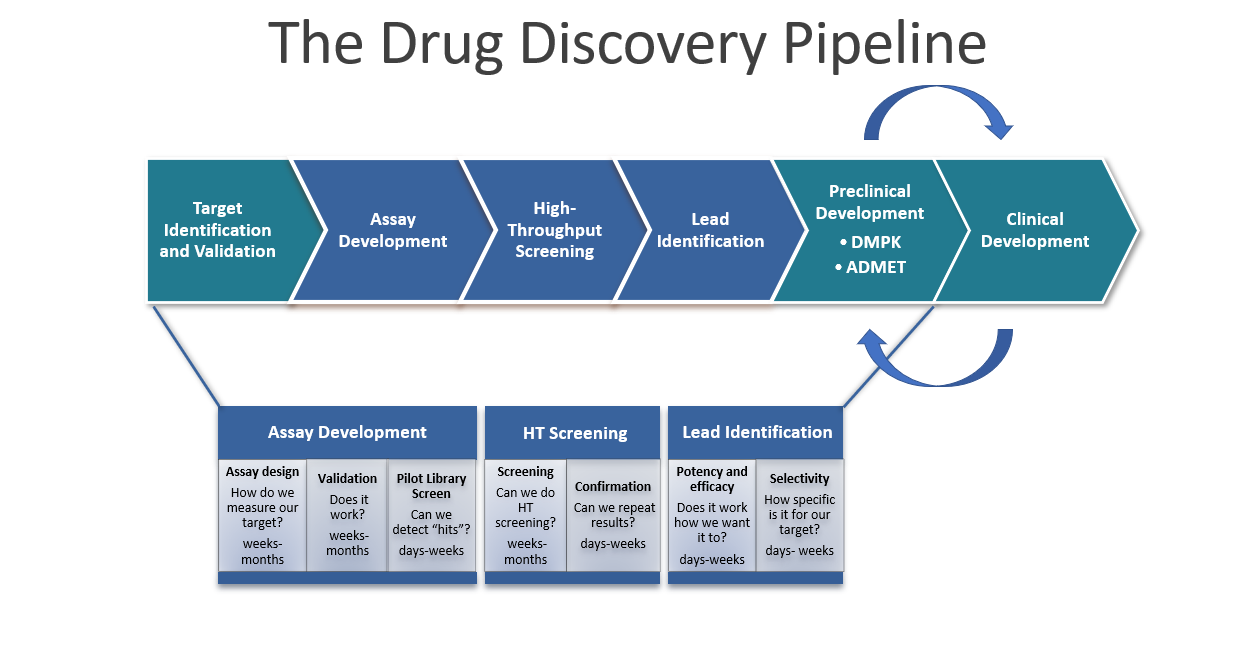
Diagram titled “The Drug Discovery Pipeline” showing sequential stages: target identification and validation, assay development, high-throughput screening, lead identification, preclinical development (including DMPK and ADMET), and clinical development. Arrows indicate progression through stages with feedback loops between preclinical and clinical phases. Below, additional panels detail key steps such as assay design and validation, pilot screening, hit confirmation, and evaluation of potency and selectivity, along with approximate timelines for each stage.

Compound Library

V-HTS Compound Collections

  • Diverse Collections

    Broad-coverage, chemically diverse sets meant to represent as much chemical space as possible without targeting a specific protein family or therapeutic area. Generally large, multi-purpose libraries are used for primary screening.

    Vanderbilt Discovery Collection – 98,880
    Selected from Life Chemicals by Vanderbilt medicinal and computational chemists to provide lead-like motifs, minimum pan-assay interference, and maximum diversity.

    VICB – 148,030
    Legacy collection of diverse drug-like molecules from  ChemBridge and ChemDiv 

    Diversity Set V – 1,593
    Diverse scaffolds selected from the 140,000-compound from the NCI Developmental Therapeutics Program 

    MLPCN – 16,707
    In 2008, Vanderbilt was selected to be a part of the NIH Molecular Libraries Probe Production Centers Network (NIH MLPCN) This is a collection of chemically diverse small molecules, some of which have known biological activities and others of which have the potential to modulate novel biological functions. All results are required to place results into PubChem 

    Spectrum Collection – 3,118
    Structurally diverse biologically active compounds and natural products from Spectrum Chemical.

  • Combinatorial / Directed

    Focused collections designed with a specific target class, therapeutic area, or chemical scaffold in mind. Includes curated or combinatorially designed sets, as well as collections enriched for certain biological activities.

    BBB-Permeable CNS Library – 7,100
    Curated selection of Blood-Brain Barrier (BBB) permeable compounds, featuring high chemical diversity and structural novelty. Tailored for CNS drug discovery, targeting a range of CNS and neurological-related diseases such as Parkinson’s disease, Alzheimer’s disease, schizophrenia, and drug dependence from Life Chemicals.

    BioActive Lipid 2023 – 1,037
    Includes prostaglandins, thromboxanes , cannabinoids, D-myo-inositol-phosphates, phosphatidylinositol-phosphates, sphingolipids, inhibitors, receptor agonists and antagonists, ceramide derivatives, and several other complex polyunsaturated fatty acids; ideal for proteinoids or other G protein-coupled receptor screening. Cayman Chemical 

    Enzo Kinase Inhibitors – 80
    Known kinase inhibitors including Insulin/IFG Receptors, PI 3-Kinase, CaM Kinase II, JAK, PKA, CDK, JNK, PKC, CKI II, MAPK, RAF, EGFR, MEK, SAPK, GSK, MLCK, Src-family, IKK, PDGFR, VEGFR, and more from Enzo Life Sciences.

    Epigenetics 2019 – 171
    Variety of structurally and mechanistically distinct small molecule modulators (inhibitors and activators) with biological activity used for epigenetics research and associated assays from SelleckChem.  

    GlaxoSmithKline Published Kinase Inhibitors – 349
    Small molecule kinase inhibitors spanning over 30 chemotypes that have been previously published by GSK in peer-reviewed scientific journals. 

    Ion Channel Library – 6,240
    A collection of compounds targeted to ion channels complied using 2D fingerprint similarity methodology from Life Chemicals.  

    Kinase Inhibitor Library – 423
    A unique collection of kinase inhibitors for high-throughput screening and high content screening from SelleckChem.  

    Marnett Library – 310
    Nonsteroidal anti-inflammatory drugs (NSAID) derivatives contain cyclooxygenase inhibitors, PPARgamma activators, and apoptosis inducers that were synthesized by Larry Marnett.  NSAID derivatives with COX inhibition, PPARγ activation, and apoptosis induction.

    Mechanistic Set III – 813
    Derived from the 37,836 open compounds that have been tested in the NCI human tumor 60 cell line screen from the NCI Developmental Therapeutics Program.

    Steroid-like Library – 498
    Steroid-like compounds and drugs used to treat an assortment of medical ailments such as inflammation, allergic reaction, heart disease, cancer, and metabolic disease.  ChemDiv 

  • Known Bioactives & FDA Approved

    Collections containing compounds with established biological activity, approved drugs, clinical candidates, or historically significant compounds. These are often used for repurposing, benchmarking assays, and validating screening hits.

    Anti-Cancer Compound Library – 412
    Unique collection of anti-cancer compounds for multiple cancer types: breast, lung, colorectal, leukemia, lymphoma, etc.  SelleckChem 

    FDA Approved Drugs – 960
    FDA-approved drugs prior to 2016. SelleckChem 

    NIH Clinical Collection – 640
    Compounds tested in human clinical trials from various vendors including: Enamine, Light Biologicals, Sequoia Research Products Ltd., Tocris, and Sigma.

    Roche – 235
    Protein kinase inhibitors, disclosed in peer-reviewed scientific publications, require a collaborative agreement with Roche. This collection was previously in Roche’s drug development pipeline but was discontinued after failing to meet clinical trial milestones.  

    Schuppe Collection – 42
    Alex Schuppe is interested in the development of new carbon–carbon bond forming reactions to rapidly synthesize biologically active small molecules with special interest in designing innovative strategies to access molecules with potent anticancer and neurological activities. This collection was donated to MDSC for screening.  

    Stork Collection – 249
    This unique collection includes structurally diverse natural products, synthetic intermediates, analogs, and historically significant compounds not available in commercial libraries. All were synthesized by Gilbert Stork and generously donated to the MDSC for screening. 

    Vanderbilt Custom Collection – 498
    Unique chemistry synthesized by Vanderbilt chemists in MDSC.

    Weaver Library – 294
    Compounds synthesized by MDSC for C. David Weaver including activators, inhibitors, and dead were made for the GIRK ion channel modulator program. 

    Fragment Library- Low molecular weight molecules designed for fragment-based drug discovery. Not typically used for whole-library HTS in the same way as diverse or focused sets — requires specialized screening and follow-up chemistry.

    Fesik Fragment Library – 15,473
    This library also requires approval from Fesik Lab prior to distribution.   

Target-based

Highlighted user ‘success’ stories

Over the past 10 years, the utilization of Panoptic in the Vanderbilt HTS Center, has contributed to more than 50 publications and has supported successful research projects and proposals involving the discovery and characterization of small molecule modulators of ion channels (e.g., Kv, IRKs, SLACK, VRAC, SLO3, etc.), ion transporters (such as KCC2) and GPCRs (e.g., 5-HTRs, mAchRs, mGluRs), the development of novel bioluminescent assay reporters (e.g., CalfluxCTN), and the identification of new activator chemotypes for enzymes (such as NAPE-PLD). 

1. Ca2+ Flux Assay: HTS Identifies Potent 5-HT2B Antagonists

Reference: Bender, Aaron M., et al. "Identification of Potent, Selective, and Peripherally Restricted Serotonin Receptor 2B Antagonists from a High-Throughput Screen." ASSAY and Drug Development Technologies 21.3 (2023): 89-96.

Antagonists of the serotonin receptor 2B (5-HT2B) have shown great promise as therapeutics for the treatment of pulmonary arterial hypertension, valvular heart disease, and related cardiopathies. A high-throughput screen performed on Panoptic Imaging Platform led to the identification of highly potent 5-HT2B antagonists (e.g. VU0530244, VU0544894 and VU0631019).

Multi-panel figure illustrating a high-throughput calcium assay screening workflow and results. On the left, a timeline shows imaging start, compound addition, serotonin (5-HT) stimulation, and imaging end. Below it, representative fluorescence traces from a 384-well plate show responses over time, including control and antagonist effects. In the center, screening results from ~25,000 compounds are displayed as distributions of calcium responses, highlighting identification of antagonist hits. On the right, dose–response curves compare selected antagonist candidates to a control compound, showing potency across concentration ranges.

2. Tl+ Flux Assay: HTS Identifies the First Selective Inhibitor or Vascular Kir6.1/SUR2B KATP Channels

Reference: Li, Kangjun, et al. "Discovery and characterization of VU0542270, the first selective inhibitor of vascular Kir6. 1/SUR2B KATP channels." Molecular pharmacology 105.3 (2024): 202-212.

Small-molecule inhibitors of vascular smooth muscle Kir6.1/SUR2B KATP channels represents novel therapeutics for patent ductus arteriosus, migraine headache, and sepsis; however, the lack of selective channel inhibitors has slowed progress in these therapeutic areas. A high-throughput screen performed on Panoptic Imaging Platform led to the discovery of the first vascular-specific KATP channel inhibitor, VU0542270.

Multi-panel figure illustrating a thallium flux assay for high-throughput screening of potassium channel activity. Top left shows a cartoon of ion channels (Kir6.1/SUR2B) in a membrane with thallium ions entering through opened channels and detected by a fluorescent dye. Top center and right panels show dose–response and inhibition data comparing activation by pinacidil and inhibition by glibenclamide. Bottom panels include (A) screening results displaying percent inhibition across compound groups, (B) the chemical structure of a hit compound (VU0542270), and (C) representative fluorescence traces over time showing responses to pinacidil alone, pinacidil plus glibenclamide, and pinacidil plus the test compound.

Phenotypic (HCI) Screening

coming soon

Functional Genomics Screening

Functional genomics (FG) enables exploration of gene and protein function at the individual gene level as well as the genome-wide scale. RNA interference (RNAi) and gene editing (e.g. CRISPR) alter gene expression/function allowing us to investigate each gene function in a single experiment. The V-HTS Functional Genomics Screening service provides tools, technologies, protocols, and access for individual genes, pathway-focused genes, and genome-wide screening capabilities. V-HTS has standardized most protocols for FGS services and has expertise in customized screens to meet your needs. The core serves as a forum for scientific exchange and nurturing collaborations in FGS at Vanderbilt and research community.
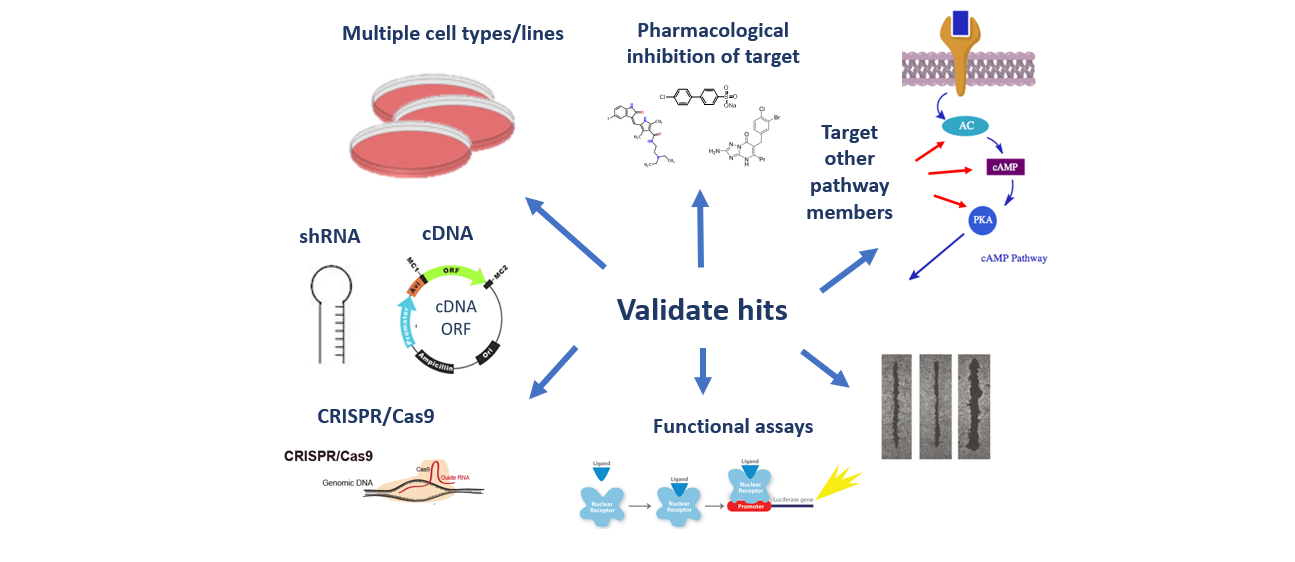
chart explaining "Validate hits", pointing to functional assays, multiple cell type/lines, Pharmacological Inhibition of Target, Target of other pathway members, cDNA, shRNA, and CRISPR/Cas9

V-HTS Functional Genomics Screening Libraries
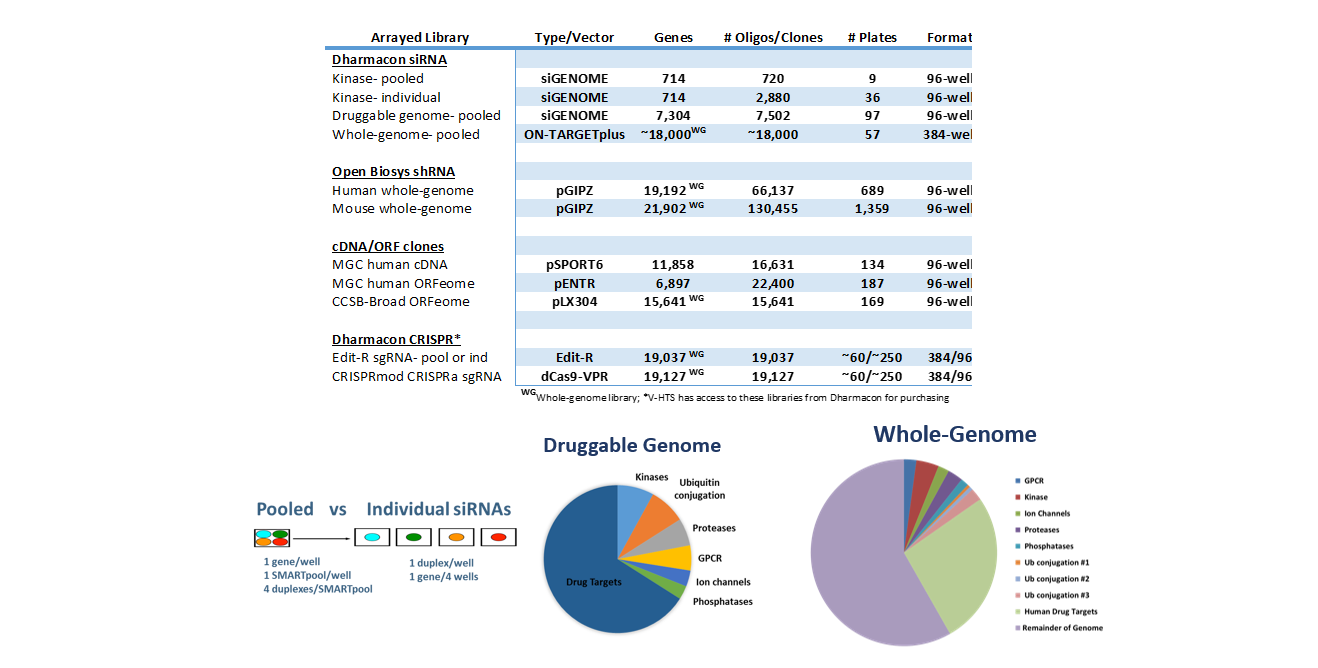
Figure summarizing genomic screening libraries and formats. A table lists arrayed libraries including Dharmacon siRNA, Open Biosystems shRNA, cDNA/ORF clones, and CRISPR libraries, with details on vector type, number of genes, oligos/clones, plates, and well formats. Below, a diagram compares pooled versus individual siRNA screening strategies. Two pie charts show the composition of the druggable genome (e.g., kinases, GPCRs, ion channels, proteases) and the whole genome, highlighting the proportion of known drug targets versus other gene classes.

Timeline

Timeline diagram of a functional genomic screening (FGS) workflow. Steps progress from “Screen & assay optimization” (3–6 months, done with PI + HTS), to “Primary FGS screen” (1–2 months, in HTS lab), “Data analysis & hit picking” (1–2 months, done with PI + HTS), “Confirmation” (1–3 months, done with PI + HTS), and “Validation” (6–12 months, in PI lab).

Full-Service Workflow

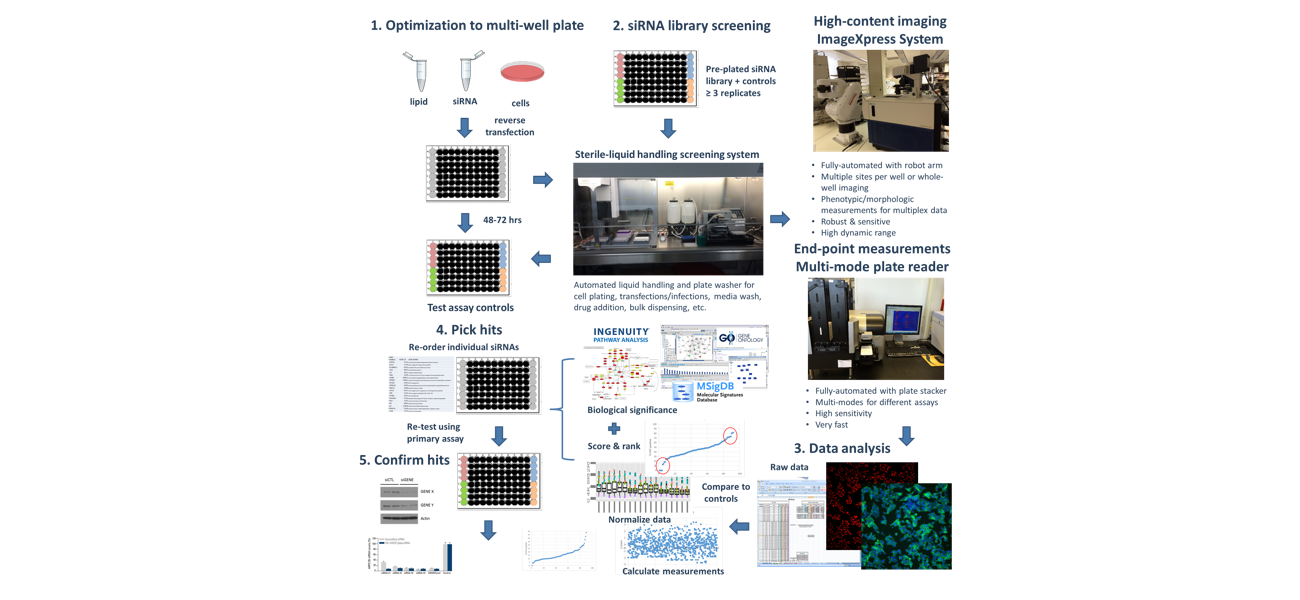
Workflow diagram of an siRNA-based functional screening assay. Step 1 shows optimization in multi-well plates using lipid, siRNA, and cells with reverse transfection and assay controls. Step 2 depicts siRNA library screening in multi-well plates with replicates using an automated liquid-handling system. High-content imaging is performed with an ImageXpress system, followed by endpoint measurements using a multi-mode plate reader. Step 3 shows data analysis, including normalization, scoring, and comparison of results. Step 4 involves selecting hits and re-testing individual siRNAs, and Step 5 confirms hits through secondary assays and validation.
Kinase screen identifies PDK1, a druggable target, as a determinant of sensitivity to CDK4/6 inhibition
PDK1 inhibition restores sensitivity to CDK blockade in drug-resistant breast cancer cell lines and xenograft tumor mouse models.

Services

  • HTS Informatics LIMS – ChemCart and WaveGuide

    Overview

    A Laboratory Information Management System [LIMS] is a software system designed to manage, document, and enable searchable access to all aspects of laboratory operations – including batch and sample registration and tracking, inventory management, assay data capture, and storage of analyzed data.

    Our informatics platform integrates two internally supported tools – ChemCart and WaveGuide – that together function as a custom LIMS tailored to our HTS workflows.

    All compound and assay data are protected through batch-level permissions to ensure secure access by authorized project members only.

    Access

    • Access to the HTS LIMS system is available to all users of HTS upon request.
    • ChemCart access requires a user license, billed annually, and a license is necessary for chemists registering new compounds.
    • WaveGuide is used for submitting compound requests . It is also recommended for users who wish to view their assay results beyond the reports provided by the HTS Data Analyst.
    • To request access to ChemCart and/or WaveGuide, please send a brief description of your request to VICBinformatics@vanderbilt.edu.
  • Custom Informatics Services

    Overview

    In addition to maintaining the HTS infrastructure, the Informatics team offers custom, fee-for-service support for projects that fall outside standard HTS workflows. These services are tailored to meet the needs of individual HTS campaigns, and they are typically billed based on project scope and time required.

    Available Services

    Below is a list of commonly used services. Additional custom informatics support may be available upon request.

    • Large-scale structure similarity searches – Perform substructure and similarity searches for all compounds in an internal or external library to identify matches, analogs, and options for hit expansion.
    • Custom assay importer – Import and format data from new assays that are not supported by current HTS platforms.
    • Unified project data integration – Link HTS data with results from other research programs (e.g., ADME/DMPK studies, PI lab data) and create custom data displays in ChemCart to visualize aggregated results with compound structures.
    • Data aggregation – Generate reports that compile and summarize results across all analyses within a project.
    • Compound library analysis – Assess similarity to existing screening libraries, evaluate internal diversity, and flag compounds with undesirable features (e.g., PAINS, NIH alerts).
    • New library registration – Register new compound libraries for use in HTS and visualization in ChemCart and WaveGuide.
    • Search a list of compounds/drugs by multiple identifiers – Perform an advanced search into the HTS chemical database using identifiers such as PubChem ID, SMILES, or chemical name.