Ever wonder about your return on investment in medical research?
The next time you’re in a pharmacy, take stock of the hundreds of prescription drugs and over-the-counter medicines you see. Better yet, look inside your home medicine cabinet.
Researchers at the Vanderbilt School of Medicine Basic Sciences are constantly hard at work ensuring the next generation of drugs, scientists, and early disease detection methods will be there for you in the years to come.
Here are some of the advances our researchers have made— and some recent grants they have received for future advances—in the past twelve months.
Cancer
Breast cancer

Triple-negative breast cancer, an aggressive type of breast cancer, accounts for 10 percent of all breast cancer cases in the United States annually. CD8+ T cells that normally kill cancer cells often become exhausted and stop. To overcome that, some cancers, such as TNBC, can be treated with immune checkpoint inhibitors, which inhibit checkpoint proteins that cause T-cell exhaustion and allow them to continue to attack tumor cells. Ann Richmond, professor of pharmacology, is optimizing chemotherapy or targeted therapy approaches for use in combination with ICI. Vanderbilt researchers identify potential drug combinations to improve breast cancer treatment.
Pancreatic cancer
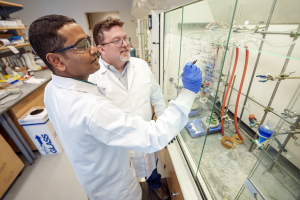
Pancreatic ductal adenocarcinoma has a dismal five-year survival rate of around 13 percent, as most patients are diagnosed when the cancer has reached an advanced, incurable stage. However, about 20 percent of cases arise from intraductal papillary mucinous neoplasms—cysts that are often detected in a premalignant state.
Department of Cell and Developmental Biology researchers recently identified biomarkers that distinguish low-grade from high-grade IPMN, which could help distinguish patients who require immediate treatment from those who can be safely monitored. The researchers aim to avoid unnecessary surgeries and improve outcomes for IPMN patients, and have received funding from the Waddell Walker Hancock Cancer Discovery Fund to further their work.
Read the full story: Waddell Walker Hancock Cancer Discovery Fund names two more scholars.
Colorectal cancer

Colorectal cancer is the fourth most common cancer and the second leading cause of cancer deaths in the U.S. Cell and developmental biologists at Vanderbilt received a $5 million grant from the National Cancer Institute to build a comprehensive molecular map of CRC at different stages of the disease.
The project aims to create a three-dimensional, multimodal atlas that can provide insights into the underlying causes of early-onset CRC. This comprehensive mapping of CRC across different stages of disease development could lead to important breakthroughs in understanding and treating this deadly disease.
Precancer Detection
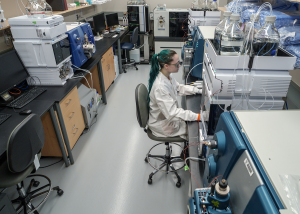
Vanderbilt cell and developmental biologists have made progress in understanding the origins of cancer by studying the precise timing of cellular growth. Their work suggests that colorectal cancer often arises from multiple normal cells in the intestinal lining, not just a single cell. The researchers developed a highly precise molecular “clock” that can track the timing of cellular events at a single-cell level. Their research provides valuable insights into the complex origins of colorectal cancer.
Alzheimer’s disease and schizophrenia

The successful clinical trial of VU319, a drug for memory loss in people with Alzheimer’s disease and schizophrenia, marks a significant step forward in the development of Alzheimer’s treatments.
Researchers at the Warren Center for Neuroscience Drug Discovery have completed a phase I single ascending dose clinical trial that demonstrated target engagement and no adverse effects. This milestone highlights Vanderbilt’s ability to drive discovery from research to clinical impact.
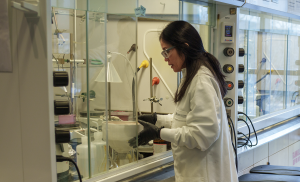
WCNDD researchers have also created a new compound that could potentially treat both the positive and negative symptoms of schizophrenia. They propose a novel target and mechanism that could improve cognition—a negative symptom—while also treating the positive symptoms, such as hallucinations.
Further research building on these findings could lead to the development of new compounds that are effective without adverse effects, providing a new therapeutic approach for addressing the comprehensive symptoms of schizophrenia.
Urinary tract infection

Gepotidacin (brand name Blujepa) was approved by the Food and Drug Administration for the treatment of uncomplicated urinary tract infections in women. Gepotidacin is the first new class of antibacterials to be approved for uncomplicated urinary tract infections since fosfomycin was approved by the FDA in 1996.
All the “mechanism of action” data that pharmaceutical company GlaxoSmithKline submitted as part of their application to the FDA came from a Department of Biochemistry lab.
Opioid addiction
A collaboration between Vanderbilt University and the University of Glasgow, funded by the Wellcome Trust, aims to develop new treatments for opioid addiction. The researchers will investigate how blocking the M5 muscarinic receptor in the brain can counteract the addictive properties of opioids, while preserving their pain-relieving effects, potentially leading to safer opioid-based therapies.
Antibiotic resistance
Through a process called chemotaxis, bacteria change direction and move toward food or away from danger using a molecular motor that drives a whip-like flagellum, which acts as a propeller to push the bacteria around. Understanding chemotaxis may help researchers develop new treatments for persistent and drug-resistant infections as antibiotic resistance has grown to be a significant challenge in treating infectious diseases.
Department of Pharmacology researchers recently provided new insights into how a flagellum motor component called a switch reverses rotation and transmits torque to the flagellum itself.
Read the full story: ‘Smarter Every Day’ explores how bacteria move to survive—and make us sick.
Long QT syndrome
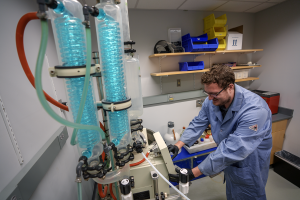
Researchers from Vanderbilt’s Department of Biochemistry, in collaboration with colleagues from Northwestern University, found that a more personalized approach could benefit people with long QT syndrome, a heart condition that causes irregular heartbeats. The condition is caused by genetic mutations affecting potassium channels in heart cells, which help reset the heart’s electrical activity.
The findings showed that gene variants affect the potassium channels differently, so determining the exact mutation and disease mechanism for each patient is crucial to guide personalized treatment for LQTS patients.
Peanut allergies
Food allergies, especially peanut and tree nut allergies, are widespread in the U.S., affecting over seven percent of children and 10 percent of adults. Existing treatments, such as epinephrine pens, are costly and short-lived. Vanderbilt researchers studied the molecular details of peanut allergies and identified critical regions on peanut proteins that trigger immune reactions. This lays the groundwork for “hypoallergen” treatments that could desensitize people to peanut allergens and reduce the severity of reactions.
Gallbladder disease
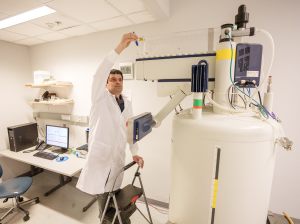
Developmental biologists led by researchers in the School of Medicine Basic Sciences have discovered that the concentration of a particular transcription factor is critical for the formation of the gallbladder and bile duct system. Their findings provide valuable insights into the development of the gallbladder and extrahepatic biliary ducts, which may help researchers understand, prevent, or treat related diseases such as biliary atresia, a childhood disease, and cholangiocarcinoma, cancer of the bile ducts.
Hunger and food intake

Department of Molecular Physiology and Biophysics researchers have discovered that the hunger hormone leptin can influence the development of neural circuits in the brain even in neurons that do not have leptin receptors. This is the first evidence that the activity of neurons can play a role in shaping the organization of circuits in the hypothalamus that control essential functions related to metabolism and disease risk. This finding expands our understanding of how hormones like leptin can impact the development of neural networks beyond the traditional view of receptor-mediated control of gene expression.
Infectious diseases
Antibody treatments
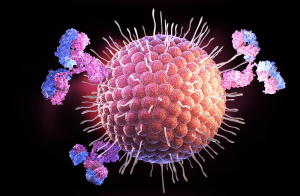
Alongside vaccines and drugs, antibodies have become crucial tools for combating infectious diseases. At the beginning of the pandemic, researchers from the Vanderbilt Center for Antibody Therapeutics (formerly the Vanderbilt Vaccine Center) made huge breakthroughs in understanding COVID-19 and targeting it with antibodies. Now, they’re turning their attention to finding antibodies to fight a wide range of other infectious diseases.
VCAT launched a program called AHEAD100 to develop antibodies for 100 different pathogens that could cause future epidemics. The team is working to make antibodies more accessible and practical for preventing and treating a variety of infectious illnesses.
Read the full story: From art to antibodies.
Herpes viruses
Infectious agents such as herpes simplex virus 1 affect billions of people globally each year. Department of Biochemistry researchers recently shed light on the underlying molecular mechanisms of mRNA export—a critical process that enables the transport of genetic instructions from the cell’s nucleus to the cytoplasm for protein production—which is often hijacked by viruses such as HSV1. Understanding how our cells’ mRNA export machinery coordinates the various steps in this pathway may uncover new targets for potential antiviral therapies. This research could also deepen our understanding of the links between mRNA export dysfunction and diseases such as cancer.
Our work is never done. Biomedical researchers continue to unravel the complexities of human physiology, how the human body functions at the molecular level, how and why good cells become dysfunctional, and how diseases such as cancers, Alzheimer’s, and a slew of others arise.
So, to answer your question, although your ROI for supporting medical research can’t be measured by how much money you save for your future, it can be measured by how much your support now can help save future lives—perhaps even your own.