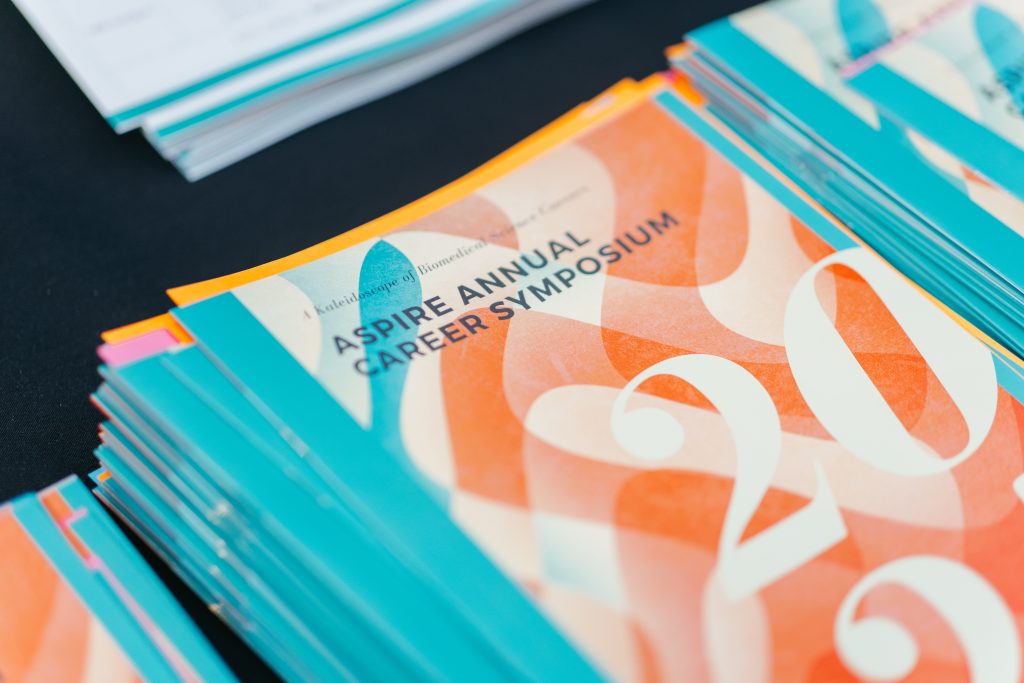
The 2025 ASPIRE Annual Career Symposium, hosted by the Vanderbilt University Office of Biomedical Research Education and Training, brought together graduate students and postdoctoral fellows to explore the diverse spectrum of careers in biomedical science from professionals. Held on May 30 in the Student Life Center, the event—themed “A Kaleidoscope of Biomedical Science Careers”—offered insights into a rapidly evolving professional landscape, with a special emphasis on industry innovation, artificial intelligence, and personal career growth.
The day-long symposium featured panels, workshops, and a compelling keynote address by Renee Iacona, PhD’98, vice president and chief operating officer of oncology R&D at AstraZeneca and valued member of the School of Medicine Basic Sciences Council of Visitors. Her keynote captivated the audience with a mix of humor, humility, and high-level insight.
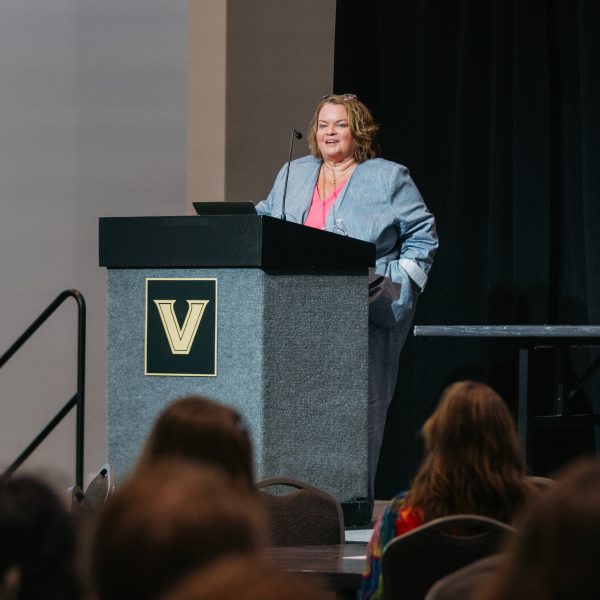
A first-generation college student from Hendersonville, Tennessee, she recounted her path from the University of Tennessee at Martin to earning a Ph.D. and at Vanderbilt—a journey marked by grit, mentorship, and bold career moves.
“I dreamed of going to Vanderbilt, but my family couldn’t afford it at first,” she told the audience. “So, I took a full ride to UT Martin and eventually made it to Vanderbilt for grad school. And I think I did it in the right way [for me].”
Her transition into industry came not through a traditional postdoc, but a leap of faith: applying cold to an AstraZeneca listing in the paper. Despite lacking direct industry experience, she persuaded the company to take a chance. “What did I have to lose?” she asked. That risk ultimately launched a 25-year career at AstraZeneca, where she is now overseeing numerous employees across multiple global sites.
Iacona emphasized leadership skills, adaptability, and lifelong learning as tools that helped her meet her career milestones. Her rise to a global biomedical executive involved strategic mentoring, learning to lead teams, and never losing her scientific fluency. “I could talk to science, and I could also talk statistics. That was like gold to [AstraZeneca],” she said.
Her advice for aspiring professionals? “One of the things I learned along the way is say yes to even what looks to be the most mundane opportunity.”
To allow attendees to get a sense of all the career paths one might say “yes” to, the symposium brought in alums and leaders in various fields to help showcase the breadth of careers available to biomedical Ph.D.’s beyond academia.
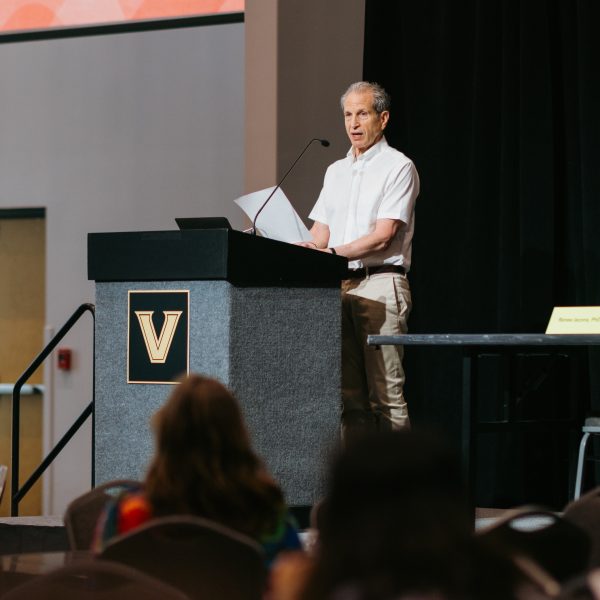
“This year’s symposium [was] jam-packed with alum advice from many different parts of the biomedical research enterprise,” Walter Chazin said. Chazin is the Chancellor’s Professor of Medicine and senior associate dean for BRET. “Our goal is to provide attendees with insights from personal perspectives to assist them in their career exploration and show that their training is preparing them for any number of productive and valuable careers in the future.”
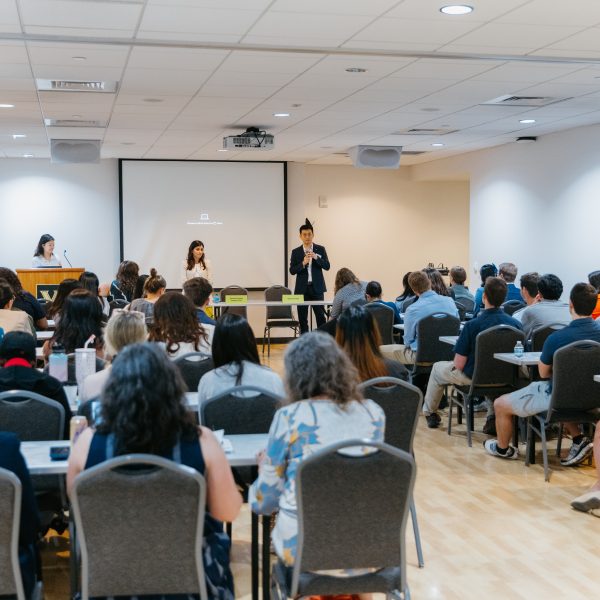
Panel sessions included “Careers in Science Policy and Advocacy,” “Science Communication and Medical Writing,” and “Navigating Biotech Startups.” Attendees could meet one-on-one with professionals in breakout networking tables to gain tailored advice on fields ranging from public health to regulatory affairs.
As the day concluded with a networking reception, the message was clear: The future of biomedical science is dynamic, interdisciplinary, and full of opportunity.
For trainees navigating the next steps in their careers, Iacona’s story offered both inspiration and realism. “You are your biggest advocate,” she reminded them. “You can also look for mentors who can help you and advise you, but at a certain point, you have to drive your development yourself, and you make those opportunities happen. You have to do some of the work.”