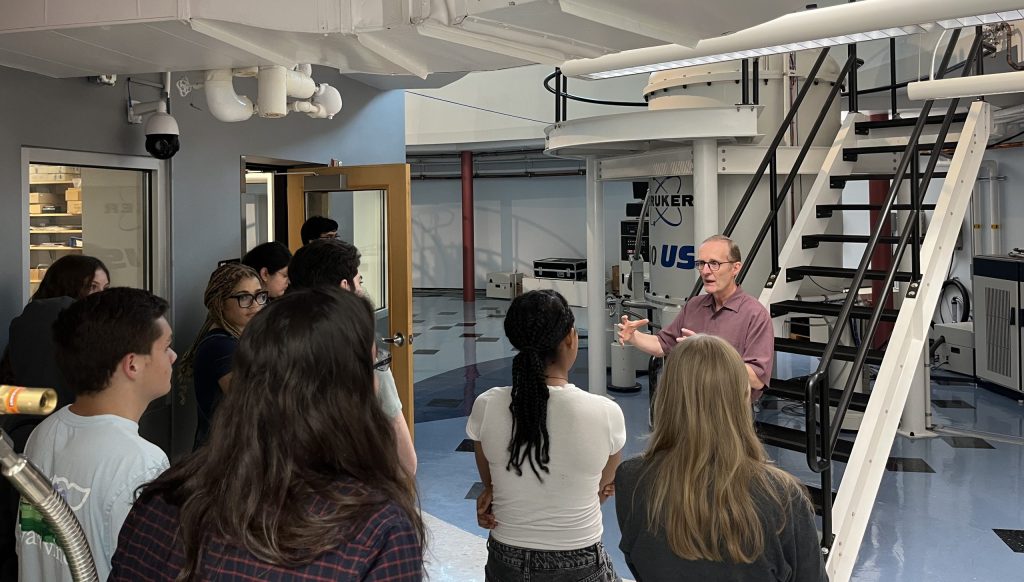
This summer, the Vanderbilt University School of Medicine Center for AI in Protein Dynamics launched a new initiative to introduce high school students to the world of biomedical research through a one-week program held this summer called the Biomedical and Computational Discovery Experience. Designed for students with little or no prior experience in biomedical science, BioCoDE provided participants with an immersive, hands-on introduction to the intersection of biology and computer science, exposing the young adults to the world of protein structure, Python basics, artificial intelligence, and more.
Organized and led by Stephanie Wankowicz, assistant professor of molecular physiology and biophysics, the program welcomed nine local high school students to Vanderbilt’s campus in early June.
“I wanted to start this program to expose students to what biomedical research is,” said Wankowicz. “Unless you know someone in research, it can be very opaque. What do researchers do all day? How do you get into grad school? How do you become a professor?”
Wankowicz noted that many existing high school science programs at Vanderbilt require extended commitments. BioCoDE was designed to offer a condensed, accessible experience that lowers barriers to participation while still delivering meaningful scientific engagement.
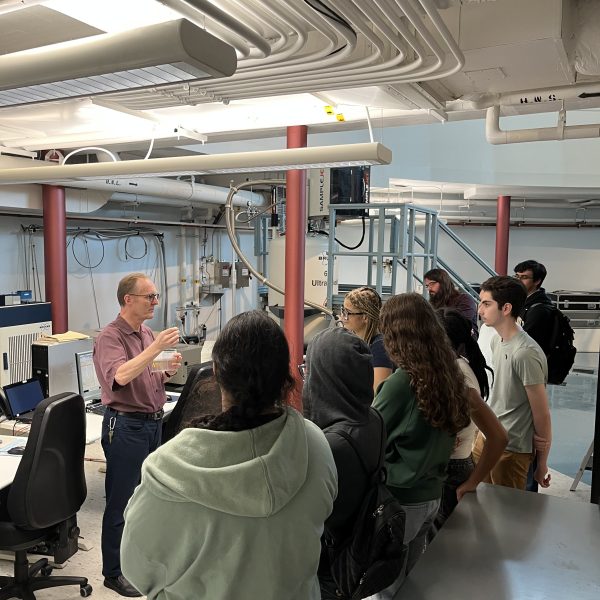
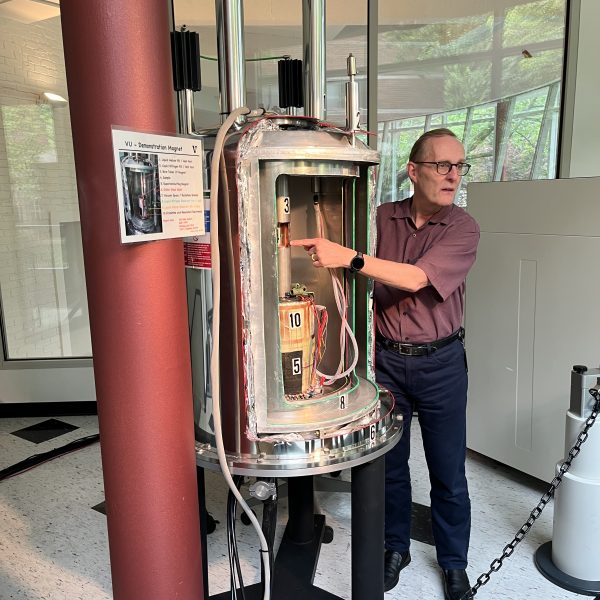
Over the course of the week, students explored topics such as protein structure, molecular visualization, and data analysis using tools like PyMOL and Python. They also toured advanced research facilities, such as the Center for Structural Biology Cryo-Electron Microscopy Facility and the Biomolecular Nuclear Magnetic Resonance Facility. At the Cryo-Electron Microscopy Facility, the students tried to guess if they could fit into the microscope (their answer was yes!), and at the NMR facility, they peered inside one of the machines.
A highlight for Wankowicz was seeing the students connect the protein visualization project they did at the beginning of the week with the linear regression project they did at the end of the week.
“It allowed them to connect ‘just numbers’ to visualizations, one of my favorite parts of structural biology,” she said.
Feedback from the participants was overwhelmingly positive. Many students expressed an interest in continuing research, and several were connected with Vanderbilt labs for follow-up opportunities.
“Almost none of the students had spent significant time on Vanderbilt’s campus or had prior exposure to research,” Wankowicz said. “We ended up connecting three of them with labs here and hopefully gave them enough skills that will be useful.”
Faculty and graduate students from across the university—including assistant professors of molecular physiology and biophysics Derek Claxton and Gregor Neuert and Assistant Professor of Computer Science Catie Chang—also took part, sharing their research and personal journeys into science with the participating students.
The faculty members all shared valuable advice.
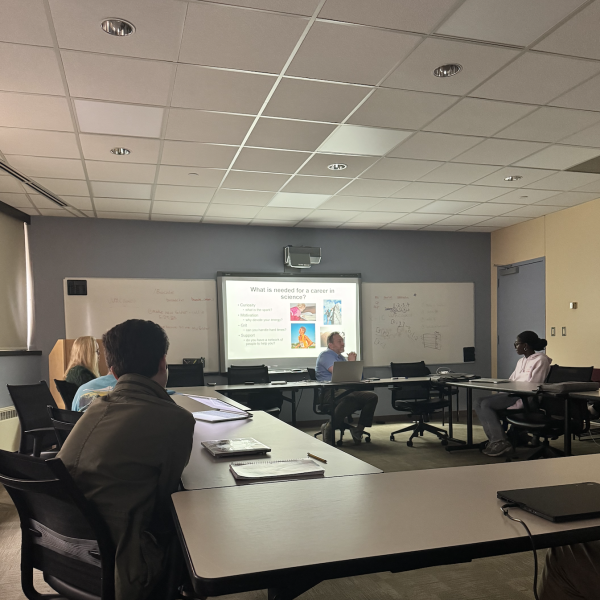
Claxton, whose work explores how proteins change to regulate blood sugar levels, emphasized the importance of curiosity, a strong support network, resilience, and perseverance when starting a career in science.
“Accepting failure… That’s a really hard one,” he said to the students. “Someone is always going to beat you to the finish line, but that doesn’t mean you quit the race.”
He advised students to be open to change, get hands-on experience, and not be discouraged by detours—noting that the path to a scientific career is rarely linear. Ultimately, he encouraged them to stay curious, persistent, and detailed even in the face of uncertainty.
“Science is not all rainbows and butterflies, but it is still possible to get to where you want to be, no matter where you start,” he said.
Wankowicz echoed Claxton’s sentiments. “To be a successful scientist, you need curiosity and grit,” she said. “Don’t delay getting involved in research. You’ll learn effectively on the job.”
The opportunity to talk to researchers like Claxton and Wankowicz was a highlight for participants. Several indicated that the experience had increased their interest in attending Vanderbilt as undergraduates.
“Each student came from different backgrounds, and it was valuable for them to see multiple paths into the field,” Wankowicz said.
With the first—and highly successful—iteration of BioCoDE under their belt, Wankowicz and other organizers who made BioCoDE possible are excited for next year’s program and the possibility of exposing more young adults to the world of biomedical research at Vanderbilt and beyond.