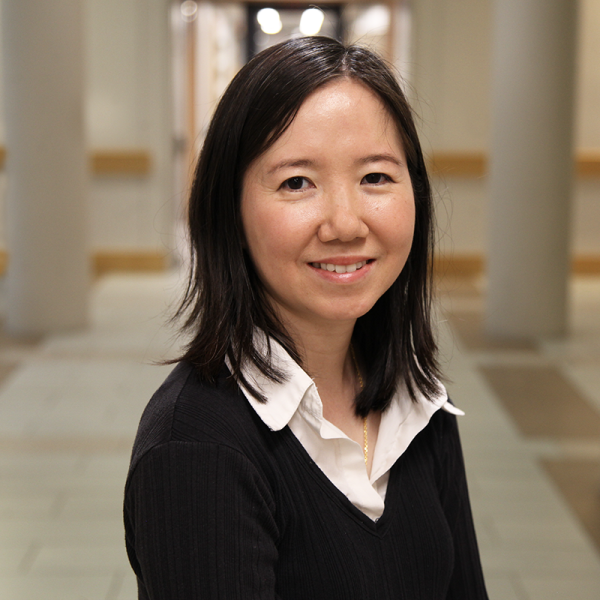
 Quynh Anh Nguyen has been awarded the highly competitive Klingenstein Fellowship in Neuroscience, a national honor that recognizes promising early-career investigators pursuing high-risk, high-reward research in the neurosciences. The fellowship will support Nguyen, an assistant professor of pharmacology, and her pioneering investigations into the brain’s inhibitory circuitry and its role in the development and control of epilepsy.
“The Esther A. & Joseph Klingenstein Fund’s neuroscience fellowships are presented annually to highly promising, early career scientists aimed at advancing cutting-edge investigations,” Eliot Brenner said. Brenner is the executive director of and trustee at Klingenstein Philanthropies. “Dr. Quynh Anh Nguyen is the first recipient of a neuroscience fellowship from Vanderbilt University since 1985, and we are delighted to welcome her.”
Epilepsy, a neurological disorder marked by spontaneous seizures, is believed to arise from an imbalance between excitatory and inhibitory signaling in the brain. Nguyen’s research aims to unravel this complex dynamic by focusing on how specific subtypes of inhibitory neurons contribute to or suppress hyperexcitability in neural circuits.
“I’m interested in identifying the particular circuits that are involved in the generation of seizures in the brain,” Nguyen said. “The fellowship will be funding a particular aspect of our research looking at how inhibitory cells in the brain control hyperexcitability.”
Nguyen’s lab uses transgenic mice and mouse models of epilepsy to observe how inhibitory neuron populations behave during seizures. Her innovative project will leverage emerging tools in genetic targeting, voltage imaging, and real-time neural modulation. Using voltage imaging—a technology that offers high-resolution insight into the moment-by-moment electrical changes within neurons, a capability that outperforms the more commonly used calcium imaging—will be a key aspect of the project.
“Voltage imaging is more representative of the dynamics in a particular cell,” Nguyen said. “You can get changes in voltage deflections that normally would not be seen … This is particularly important for looking at inhibitory circuits.”
The project also integrates real-time seizure detection technology with optogenetics—a technique that uses light to turn specific brain cells on or off, like flipping a switch to control how the brain works—enabling the lab to intervene with precision. Once a seizure is detected, light-activated molecular tools can modulate specific inhibitory circuits to determine whether this intervention can halt seizure progression.
Nguyen credits Vanderbilt’s collaborative and well-resourced research ecosystem with enabling her research, and she’s particularly thankful for the two-photon microscope in her lab. “We really appreciate Vanderbilt’s investment to allow us to have this microscope to use because it’s necessary for our studies,” she said. “Advanced molecular imaging tools like the two-photon microscope are important because they enable you to obtain sample images at fast rates.” Nguyen added that support from the Mouse Neurobehavioral Core and collaborative partnerships with neurosurgeons and molecular biologists make her research possible.
Nguyen’s interdisciplinary approach links molecular and circuit-level neuroscience with potential clinical applications. “Once we’ve identified particular inhibitory circuits, we’re interested in figuring out if modulating them could help us stop seizures.”
Beyond her departmental affiliation, Nguyen is affiliated with several centers at Vanderbilt, including the Vanderbilt Brain Institute and the Vanderbilt Memory & Alzheimer’s Center—reflecting the relevance of her work to broader neurological disease research beyond just epilepsy.
“This award is both a tremendous personal honor and a reflection of the vibrant neuroscience community here at Vanderbilt,” Nguyen said. “I’m excited not just to uncover fundamental brain mechanisms, but to push toward interventions that could change the lives of people living with epilepsy.”