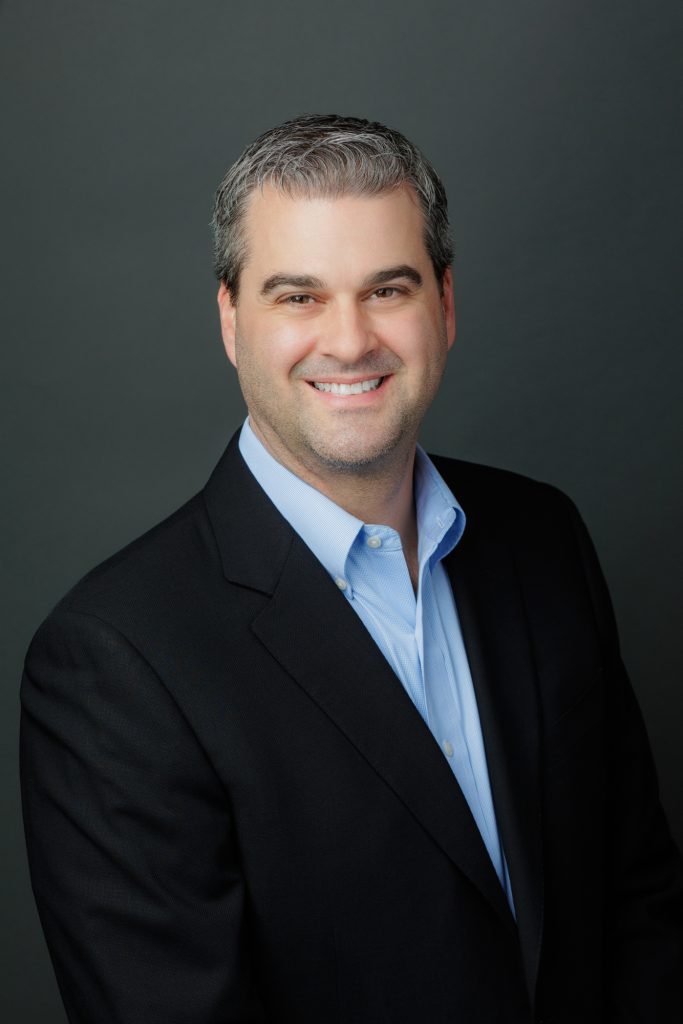
 Meet Richard Gustin, PhD’10, who graduated with a degree in pharmacology and is now a senior director of innovation and strategic initiatives at Neurelis, Inc. We sat down with Richard to discuss his experiences studying basic science and how it played a role in his successful career.
Graduate program: Pharmacology
Current role: Senior director of innovation and strategic initiatives at Neurelis, Inc.
How did Vanderbilt help with your career path?
Vanderbilt played a key role in shaping my career path in several ways. The high quality of research being conducted, the caliber of the principal investigators, and especially the structure of the Interdisciplinary Graduate Program gave me the opportunity to explore a variety of disciplines and ultimately find the best fit for my interests and goals. This broad foundation helped me develop a well-rounded scientific perspective.
Additionally, Vanderbilt has been one of the most collaborative environments that I have experienced across academia and beyond. Curiosity and willingness to partner is embedded in the culture at Vanderbilt across the different biomedical departments, and that has not only enhanced my research experience but also prepared me for interdisciplinary work throughout my career.
What skills or knowledge gained during your time at Vanderbilt have been most valuable in your current role or industry?
The importance of collaboration, respect for others’ experiences, perspectives, and opinions; the ability to rigorously distill and analyze data; and the skill to effectively communicate science to a broad audience—including laypersons, healthcare providers, government officials, patients, and care partners—are all essential. Equally critical is the need for a more sophisticated approach to translating scientific discoveries into medical practice.
How did the networking opportunities at Vanderbilt contribute to your professional connections and career advancement?
On a practical level, mentioning that I completed my graduate work at Vanderbilt often lends immediate credibility when engaging with colleagues, peers, and potential business partners.
Were there any specific mentors or professors who played a crucial role in shaping your career aspirations?
Roger Colbran. Roger is an amazing scientist. He consistently demonstrated scientific rigor and a thorough approach to data analysis, and he encouraged his trainees to pursue their scientific interests—always with a supporting hand. The scientific acumen and lessons I gained from Roger have extended far beyond bench research, giving me the confidence in my skill set that has helped me build a successful career in the biotech and pharmaceutical industry.
Were there any unexpected twists or turns in your career journey?
Like many others, my graduate journey came with its share of challenges. I began my research in the lab of a junior assistant professor, drawn by the creativity and outside-the-box thinking the lab encouraged. However, as is often the case, funding became an issue, and the lab was forced to disband. Two years into my graduate career, I had to transition to a new lab. I was able to find a new home and began to refocus my research efforts—until the PI decided to relocate their lab to another university. Once again, I was at a crossroads four years into my graduate journey and having to begin fresh in a new lab.
At the time, it was incredibly stressful, but I was fortunate to find a third lab—the one from which I ultimately graduated. Looking back, the path was rocky, but the lessons I learned have been deeply impactful. The training I received—the ability to dissect research questions, rigorously analyze data, craft sound hypotheses, and design experiments using the resources available—has stayed with me. Working in multiple labs also gave me the unique opportunity to observe how different scientists approach their work, manage their teams, and operationalize science.
In what ways did your involvement in additional projects or internships during your time at Vanderbilt contribute to your current success?
During my time at Vanderbilt, I conducted extensive research using an Angelman syndrome model. Through this work, I became involved with the Angelman Syndrome Foundation and had the opportunity to meet patients and families affected by the condition. I observed how these individuals interacted with their care partners, tutors, and within social environments.
This experience not only fueled my passion for continuing bench research but opened my eyes to a critical gap: Science doesn’t always translate directly into medical practice. I realized I could play a meaningful role in bridging that gap by helping to translate the underlying scientific principles of disease into information that clinicians, patients, and care partners could understand and use to inform clinical research and treatment decisions.
How has the interdisciplinary nature of biomedical research training played a role in your ability to collaborate with professionals from different fields in your career?
I’ve leveraged my understanding of science and biomedical research as a core value proposition. My colleagues often view me as a go-to resource for gaining deeper insight into our business. This reputation has extended beyond science and research, thanks to the trust I’ve built, my ability to consider multiple perspectives, and my skill in quickly integrating information to develop meaningful strategies.
What advice would you give to a student studying basic sciences?
Experiments do not “fail.” Even when it seems like they are, it’s important to dig in and understand why. What may appear as failure is often just part of the process: Each setback is a building block, paving the way toward success.