The Vanderbilt University School of Medicine Basic Sciences draws graduate students from across the country, but it also holds a special place in the heart of local students. Chase Spurlock, PhD’14, was one such graduate student. Originally from Middle Tennessee, Spurlock grew up knowing that Vanderbilt was a center of excellence in healthcare and science and was drawn to be a part of it.
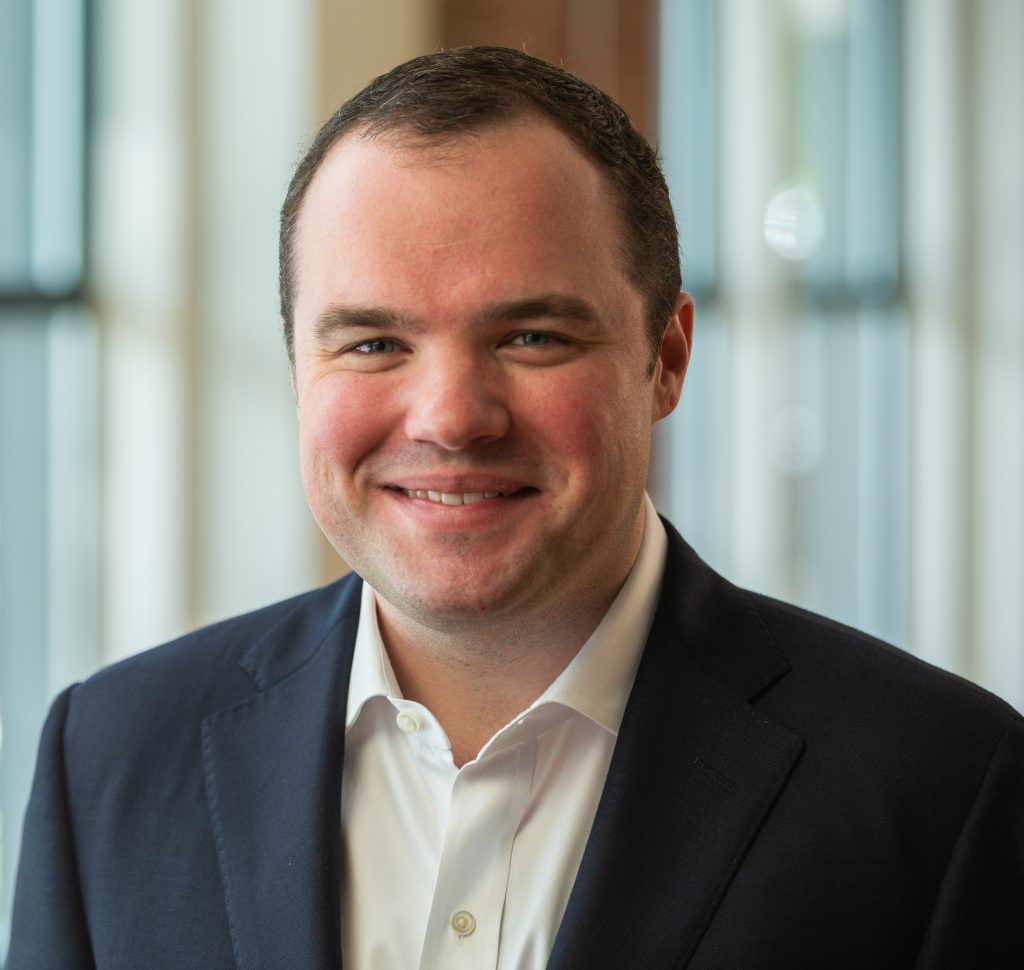
Driven by a desire to help patients, he originally intended to go to medical school after graduate school, but a translational project ignited in him a desire to impact patient lives through academic-industry partnerships, and he has not looked back since.
We had some questions for Spurlock, and here are his alum answers.
These answers may have been lightly edited for grammar or clarity.
- Are you a graduate or a postdoc alum?
I earned my Ph.D. in the School of Medicine’s Department of Pathology, Microbiology and Immunology. - When did you graduate?
I completed the Microbiology and Immunology program and graduated in 2014. - What is your current role and company you work for?
I am the CEO and co-founder of Decode Health, based in Nashville, Tennessee. In addition to my work at Decode, I serve as an adjunct professor at Vanderbilt University School of Medicine, New York University, and Belmont University’s Thomas F. Frist, Jr. College of Medicine. - Why did you decide to study at Vanderbilt?
Growing up in Middle Tennessee, I witnessed Vanderbilt’s profound influence on the region and its reputation for exceptional patient care and scientific leadership. Families in our community regularly sought answers at Vanderbilt, which established the university in my mind as a symbol of excellence. Joining that environment felt like the ideal way to make a meaningful contribution to science and healthcare. - What activities by Vanderbilt or the Office of Biomedical Research Education and Training had the most significant impact on your career path?
Direct mentorship from faculty and the opportunity to collaborate across departments significantly shaped my career. At that time, immunology had just started to embrace machine learning approaches, so partnering with colleagues in mathematics and biostatistics exposed me to techniques that now form the basis of much of my work in precision medicine.
Early workshops on entrepreneurship and technology transfer also introduced me to the business side of science, paving the way for my career as a serial entrepreneur. - Can you share a particular challenge you faced during your biomedical research training and how you overcame it? Have there been any unexpected twists and turns in your career? How have these experiences contributed to your professional development?
It may surprise some people, but I never had a bad day in the lab. I always enjoyed the process and rarely felt discouraged. The bigger twist came after graduation when I chose not to pursue medical school. While helping to translate an autoimmune diagnostic technology to the clinic, I realized that combining academic discovery with industry partnerships could reach many more patients. That insight redirected my path toward entrepreneurship and continues to motivate my work today. - Were there any specific mentors or professors who played a crucial role in shaping your career aspirations? How did they influence you?
My thesis advisor, Dr. Tom Aune, treated my training like a true partnership. We would sit down and brainstorm, and then I had the freedom to execute our ideas. He taught me the importance of incrementally building a story through consistent work and experimentation. Celebrating when a ‘wild’ idea finally worked taught me the joy of steady, incremental progress. I learned from Tom how exciting it is to show up each day ready to solve the next puzzle, and I discovered a lasting love for learning and the scientific process. - In what ways did your involvement in additional projects or internships during your time at Vanderbilt contribute to your current success?
Near the end of my Ph.D. training, our group pursued a tech transfer opportunity to commercialize an autoimmune disease detection assay. Negotiating with potential licensees and navigating regulatory questions revealed both the promise and complexity of translating lab discoveries into clinical products. Those early lessons continue to guide how I scope research and development projects, build stakeholder relationships, and educate research teams on effective industry collaboration. - How did the networking opportunities provided by Vanderbilt and/or BRET contribute to your professional connections and career advancement?
I have been fortunate to stay engaged with Vanderbilt since graduating. In the early days, Vanderbilt’s reputation opened doors in Nashville and beyond, and I made the most of those opportunities. I have remained involved by mentoring students and postdocs, which keeps me connected to fresh ideas while paying forward the support I received. - What skills or knowledge gained during your time at Vanderbilt have been most valuable in your current role or industry?
Three habits stand out: rigorous reproducibility, strategic teamwork, and disciplined time management. Designing experiments so that multiple approaches converge on the same conclusion forms the foundation of reliable science and trustworthy products. Treating my dissertation like a full-time job allowed me to complete the program in about three and a half years and now informs how I structure teams and manage major initiatives at Decode. - Can you share a pivotal moment or decision in your career that was influenced by your experiences at Vanderbilt or with BRET?
At Decode, we maintain a very active R&D team that is supported by industry partners and funding from the National Institutes of Health. The training and mindset I developed at Vanderbilt instilled in me the confidence to advance these programs and the skills to lead the team. Vanderbilt taught me how to tackle a blank page, figure out what to do next, and build the relationships necessary to navigate uncertainty. Those lessons continue to shape my leadership style. - How has the interdisciplinary nature of biomedical research training played a role in your ability to collaborate with professionals from different fields in your career?
Modern precision medicine relies on the seamless integration of biology, data science, engineering, and business. My graduate work taught me to embrace diverse viewpoints, identify potential roadblocks early, and ensure everyone stays aligned. Those skills accelerate both research and commercial projects. - Looking back, is there any advice you would give to current biomedical science students based on your own experiences and the lessons you have learned in your career?
Stay curious, manage your time wisely, and never hesitate to ask for help. Science advances through collective effort, so invest in relationships and embrace constructive criticism, even when it stings. Those tough conversations can sharpen your thinking and make you a more resilient researcher and leader.