
Shan Meltzer has been awarded a prestigious Edward Mallinckrodt, Jr. Foundation Award to advance her pioneering research that seeks to determine how the body’s sensory circuits form and function. Her work seeks to answer a fundamental question in neuroscience: how do the brain and spinal cord organize their intricate networks to perform such a wide range of functions? By uncovering the molecular principles that guide this process, Meltzer’s research could ultimately lead to new ways to “rewire” or repair sensory circuits to treat somatosensory disorders such as chronic pain, nerve injuries, and spinal cord injuries.
“This award will allow my lab to pursue high-risk, high-reward studies that bridge molecular and developmental neuroscience,” Meltzer said. Meltzer is an assistant professor of pharmacology.
About one in three adults in the United States experience some form of somatosensory dysfunction, which affects how they sense touch, pain, temperature, and more. Somatosensation, including touch and pain, is among the first of our basic senses to develop but, although it’s essential to daily life, it remains one of the least understood senses at the molecular and developmental levels.
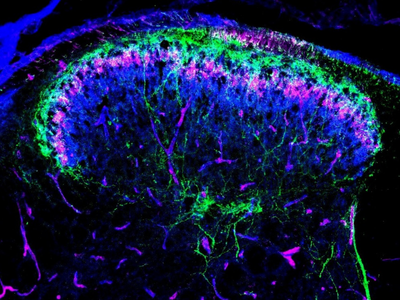
The spinal cord plays a central role in processing these sensory signals. When its circuits are disrupted, the result can be sensory disorders such as chronic pain or touch hypersensitivity. Developing effective treatments for these conditions will mean learning how to rewire the affected sensory circuits, but scientists still don’t fully understand how these spinal cord circuits form in the first place.
The Mallinckrodt award, aimed to support early-stage investigators engaged in biomedical research, will allow Meltzer and her lab to address this gap by exploring the molecular and cellular mechanisms that guide the wiring of somatosensory circuits during development. With support from the Edward Mallinckrodt, Jr. Foundation, her team will decode the mouse somatosensory circuit formation at single-cell resolution using a combination of transcriptomics, mouse genetics, pharmacology, and anatomy. Meltzer and her team aim to uncover the roles of critical genes and cells that direct the touch and pain neural circuit formation.
Together, these efforts will advance our understanding of the field and identify new therapeutic targets for rewiring pain and touch circuits, offering potential treatments for somatosensory dysfunctions in neurological disorders such as spinal cord injury and chronic pain.
Ege Kavalali, the William Stokes Professor of Experimental Therapeutics and the chair of the Department of Pharmacology, praised Meltzer’s accomplishments and believes she is well deserving of the Edward Mallinckrodt, Jr. Foundation Award.
“Shan has established a robust, highly innovative independent research program in mammalian somatosensation assembly and has an international reputation in neurobiology,” he said. “This new framework will not only provide new insights in developmental and sensory neurobiology but also holds immense potential for treating somatosensory dysfunctions in diseases.”
Meltzer came to Vanderbilt University in 2024 from Harvard Medical School, where she completed her postdoctoral fellowship and established a new niche in the study of somatosensory circuit assembly. Her pioneering work has earned numerous honors, including selection as a HHMI Hanna Gray Fellow and an MIT Biology Catalyst fellow and receipt of the C.J. Herrick Award in Neuroanatomy and the Grass Foundation Trustees Recognition Award.