Dave Vigerust, PhD’04, grew up in El Paso, Texas. He went to undergrad at the University of Texas at El Paso and Texas Tech University and stayed at Texas Tech to work on a master’s in microbiology and immunology. For his Ph.D., however, he looked outside of his home state. He considered schools in Georgia, Alabama—and yes, a couple of places in Texas. But something drew him to Vanderbilt University’s Nashville, Tennessee.
“At the time, the IGP program was quite unusual, and few programs offered such an environment,” Vigerust said, referring to the Interdisciplinary Graduate Program in Biological and Biomedical Sciences, one of the two umbrella programs housed within the School of Medicine Basic Sciences. “The deeply interdisciplinary environment at Vanderbilt was important to my training, and none of my other options provided interdisciplinary environments like Vanderbilt did. The IGP program felt like home.”
So, home it became for him. Vigerust enrolled in the IGP in 1999 and joined the lab of Virginia Shepherd in the Department of Pathology, graduating with a Ph.D. in cellular and molecular pathology in 2004. His interests have always connected directly to the patient experience, so he did two postdocs, one at St. Jude Children’s Research Hospital and one back at Vanderbilt in the Department of Pediatrics and the Vanderbilt Vaccine Center under the direction of Dr. James Crowe. After his second postdoc, Vigerust remained in Nashville as a research assistant professor of pathology at Vanderbilt and a health research scientist at the U.S. Department of Veterans Affairs.
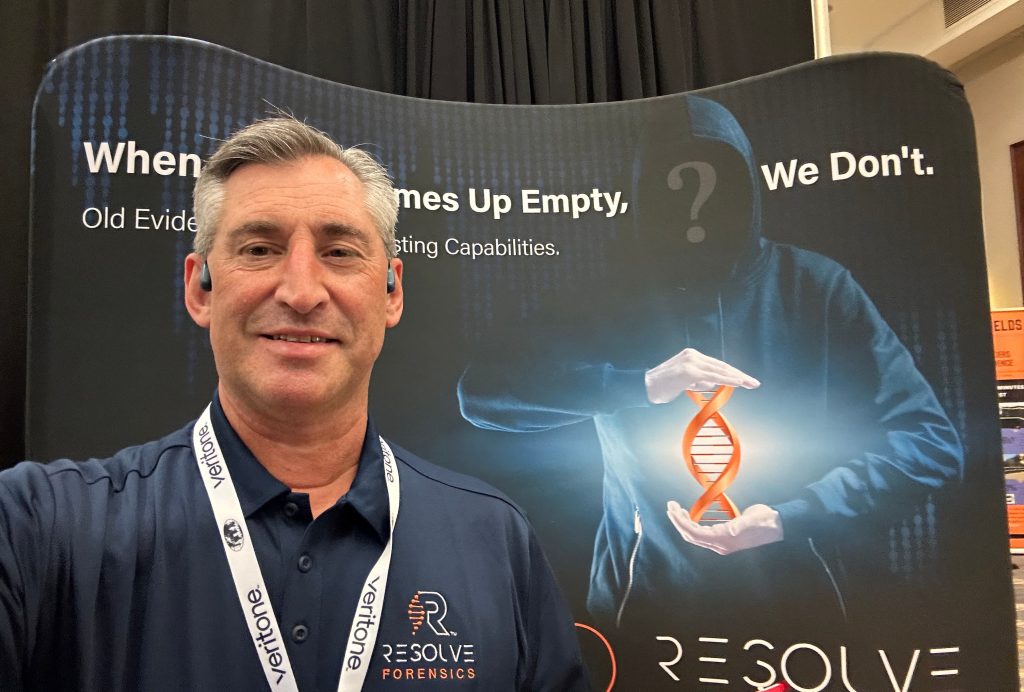
He is currently the chief scientific and strategy officer for three companies: Spectrum Health Sciences, Resolve Forensics, and Cancer Diagnostics of America.
We had some questions for Vigerust, and here are his alum answers.
These answers were lightly edited for grammar and clarity.
What skills or knowledge gained during your time at Vanderbilt have been most valuable in your current role or industry?
The most valuable things I gained during my time at Vanderbilt weren’t just specific facts about molecular pathology and infectious disease, but a way of thinking about problems that I still use every day. My Ph.D. training and subsequent fellowship work in pediatric infectious diseases immersed me in rigorous experimental design, critical data analysis, and the discipline of asking why a result is true, rather than simply accepting it. That mindset underpins everything I do now in precision diagnostics, infectious disease, and forensic science.
Vanderbilt was where I learned how to lead scientific programs, including writing grants, managing projects and teams, mentoring trainees, and communicating complex science to non-specialists—skills I now rely on in industry and forensic applications, where building evidence-based solutions is crucial for regulator, clinician, investigator, and patient trust.
Were there any specific mentors or faculty members who played a crucial role in shaping your career aspirations? How did they influence you?
Absolutely—my trajectory was shaped as much by people as by coursework or lab techniques. During my Ph.D. in cellular and molecular pathology, my primary research mentor, Dr. Virginia Shepherd, and dissertation committee, Drs. Larry Swift, Chris Aiken, and Greg Sephel, were foundational. They pushed me to think beyond, “Does this experiment work?” and instead ask, “What question does this answer, and why does it matter?” That group set very high standards for experimental design, statistical rigor, and scientific writing, and they were relentless in ensuring that I could explain complex molecular mechanisms in plain, clinical language. That mindset is precisely what I use now when designing and validating molecular diagnostic assays and trying to translate them into everyday clinical practice.
Equally important were the faculty—Dr. Jon McCullers from St. Jude and Dr. James Crowe from Vanderbilt—and other postdoctoral fellows who mentored and supported me during my pediatric infectious disease fellowships and through subsequent work with vaccine and respiratory virus research. They modeled how to bridge basic virology and immunology with real-world patient care, considering host response, comorbidities, and long-term outcomes, rather than just viral titers. Watching them move seamlessly between the bench, the clinic, and multidisciplinary teams strongly influenced my decision to focus on precision diagnostics and preventive medicine in infectious disease, cardiovascular risk, and oncology.
How has the interdisciplinary nature of your Vanderbilt biomedical education played a role in your ability to collaborate with professionals from different fields?
Working across pathology, microbiology, immunology, infectious disease, and, later, neurosurgery exposed me to how clinicians, basic scientists, and translational researchers all approach the same problem from different angles. Learning to “translate” complex molecular mechanisms into clinically relevant hypotheses and then into practical diagnostic assays was a direct result of that ecosystem and is central to my current work, which involves developing and implementing molecular diagnostics and precision-medicine tools.
If you conduct research, what did you learn at Vanderbilt that has set you up for success in your current role or throughout your career?
I do still conduct research, but it looks very different now than it did when I was at Vanderbilt. Today it’s tightly linked to diagnostics, oral-systemic health, and forensic applications rather than classic “R01-style” bench work. I am currently a principal investigator or co-PI on four privately funded Institutional Review Board–approved studies. The foundation for all of that was built during my research years at Vanderbilt.
At Vanderbilt, I learned a few key lessons that have been significant for me: how to think like a translational scientist, including asking, “How would this actually change patient care?”; rigor in experimental design and data analysis, teaching me to be obsessive about controls, reproducibility, and statistics; working across disciplines and learning to “speak everyone’s language”; project and people management, including running research projects, mentoring students, and writing grants; comfort with complexity and uncertainty, understanding that biology is messy and data are rarely “perfect” and that you often have to make high-stakes calls using the best available evidence, not perfect knowledge.
So even though my day-to-day work is now more applied, entrepreneurial, and forensic than traditional academic research, the habits I built at Vanderbilt—rigor, curiosity, translational focus, and cross-disciplinary collaboration—are the backbone of everything I do.
Looking back, what advice you would give to current biomedical students or postdocs based on your own experiences and the lessons you’ve learned along the way?
Use your time in training to become the kind of scientist whose thinking is valuable in any room, not just the person who happened to be on a particular paper. I’d boil it down to a handful of things I wish someone had told me more clearly:
- Play the long game, not the paper game: Publications matter, but what really lasts are the skills you build: how to ask a good question, design a clean experiment, analyze data honestly, and communicate clearly. If you focus on learning how to do rigorous science, the CV will mostly take care of itself.
- Treat your training years as a controlled exploration: Try collaborations outside your comfort zone, do a short project with a clinician or an industry partner, or volunteer to help on something slightly adjacent to your core work. That’s how you discover whether you love the grant-writing grind, the translational pipeline, diagnostics, startups, teaching, or something unexpected.
- Learn to translate, not just discover: Whether you end up in academia, industry, diagnostics, or something completely different, the ability to move between bench language and real-world impact is priceless. Practice explaining your work to a clinician in three minutes, a smart non-scientist in 30 seconds, and yourself in one sentence. If you can’t explain it simply, keep sharpening your thinking. This is a skill that can transfer across sectors.
- Choose mentors, not just projects. A great mentor will do more for your career than a “hot” topic. Look for people who let you see the messy parts (failed experiments, rejected grants), talk honestly about career paths and tradeoffs, and give you both opportunity and credit. If your main mentor doesn’t give you that, build an informal “board of advisors” from other faculty, clinicians, or industry scientists.
- Get proximate to patients and problems. Even if you’re very basic science–oriented, find ways to see what diseases actually look like outside of the lab. I’ve worked with heart surgeons, pharmacists, oncologists, pathologists, nurses, physicians, dentists, and laboratorians to learn how to see and treat patients with compassion, see firsthand the trials that a cancer patient faces, assist with autopsies, and do work in prevention medicine. These experiences have led me to ask better questions and, later, have shaped my career in more impactful directions.
- Protect your integrity like it’s your most valuable asset, because it is. You’ll feel pressure to make the story cleaner, the p-value smaller, the graph prettier. Don’t. Your reputation for honesty and rigor is worth more than any single result. In fields that touch patient care or forensics, that’s non-negotiable.
What’s something fun, quirky, or unexpected about you that people may not know?
My idol is Wile E. Coyote. Despite repeated failure and frustration, he NEVER quits.
What do you do for fun when you are not at work?
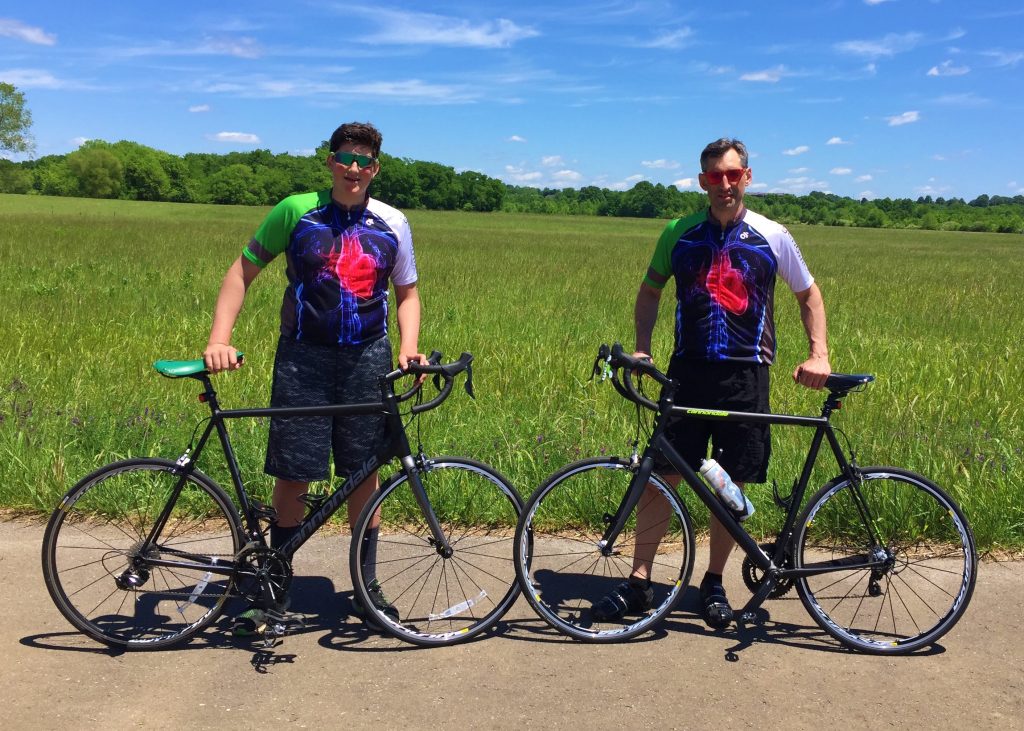
Cycling and kayaking.
What are you reading, listening, or watching right now?
Reading: Outlive: The Science of Art & Longevity by Peter Attia. Listening: a podcast called Head Number 7. Watching: Landman, because it reminds me of where I grew up in West Texas.
Which of the following do you prefer: fancy belt buckles, patterned socks, or color-coordinated outfits?
Fun and eclectic-patterned socks.