Guest
-

Study reveals new clues to cystic fibrosis ‘gender gap’
A research team led by structural biologists from Vanderbilt University has come up with the first detailed molecular explanation for a factor that may contribute to the so-called cystic fibrosis (CF) “gender gap.” There is evidence that women with CF die on average two to three years earlier… Read MoreSep. 22, 2016
-
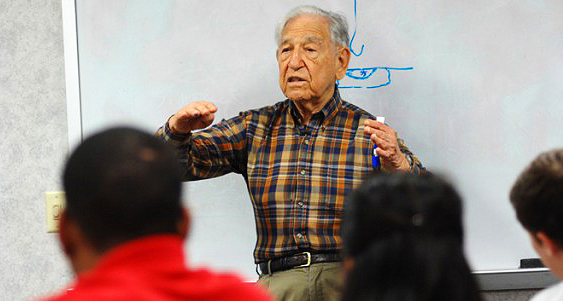
New fund honors spirit of Cohen’s innovative research
When Tom Daniel, M.D., joined the Vanderbilt University faculty in December 1986, Stanley Cohen, Ph.D., had just been awarded the Nobel Prize in Physiology or Medicine for his discovery of epidermal growth factor (EGF). “Stanley was part of the reason I came to Vanderbilt,” said Daniel, who recently retired as… Read MoreAug. 25, 2016
-

Program helps Ph.D. students find non-academic careers
In 2013, Vanderbilt University School of Medicine (VUSM) received one of 10 grants from the National Institutes of Health called BEST (Broadening Experiences in Scientific Training) to help train scientists for a variety of diverse careers. The program grew from a workforce study indicating that 80 percent of people with biomedical… Read MoreAug. 18, 2016
-
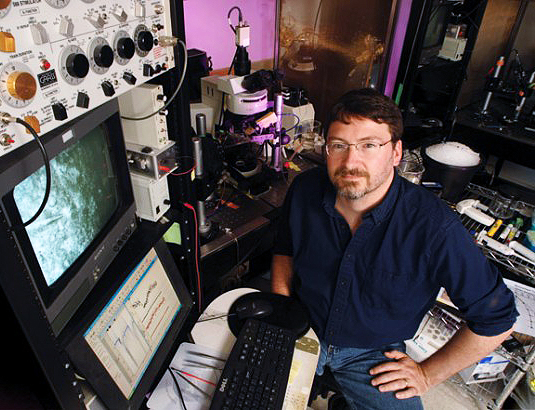
New center will examine addiction at molecular level, develop treatments
Vanderbilt University researchers from diverse scientific disciplines are joining forces to help crack the stubborn mysteries of addiction. Through the new Vanderbilt Center for Addiction Research (VCAR), their goal is to define the molecular events that drive addictive behavior and, ultimately, to develop new treatments that can help people sustain long-term recovery. “Addiction… Read MoreAug. 17, 2016
-

Foundation’s support speeds search for new schizophrenia drugs at Vanderbilt
Research in the Vanderbilt Center for Neuroscience Drug Discovery (VCNDD) aimed at developing innovative new treatments for schizophrenia just received a powerful assist from The William K. Warren Foundation. The Tulsa, Oklahoma-based foundation announced it will increase its support by another $1 million, as VCNDD’s game-changing schizophrenia program approaches the point… Read MoreAug. 15, 2016
-

NIH grant bolsters mass spectrometry research initiatives
The National Institutes of Health (NIH) has awarded a major renewal grant to continue the National Research Resource for Imaging Mass Spectrometry at Vanderbilt University School of Medicine. The five-year, $10.5-million grant will support groundbreaking projects aimed at visualizing, at the molecular level, retinal disease, ovarian cancer, the impact of diabetes… Read MoreAug. 11, 2016
-

Exploring Antibiotic Resistance in a Nanodisc
The increasing prevalence of antibiotic-resistant bacteria is a growing public health threat that must be addressed. One way that bacteria become resistant to antibiotics is through the use of multidrug transporters, membrane proteins that pump foreign molecules out of the cell. Thus, understanding how these proteins work could lead… Read MoreJul. 22, 2016
-
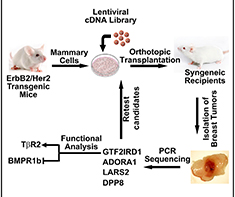
In Search of Cancer Drivers
Rapid advances in our ability to comprehensively examine cancer genomes have revealed that cancer results from an accumulation of genetic damage that is unique for each tumor. Consequently, new therapies that directly target abnormalities in cancer cells must be personalized to match the singular genetic composition of an individual… Read MoreJul. 21, 2016
-
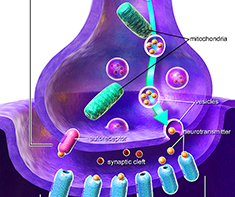
A Bridge to Better Motor Coordination
In the nervous system, signals are transmitted from cell to cell by the flow of chemical neurotransmitters across a specialized junction known as a synapse. In the vertebrate central nervous system, the major neurotransmitter at excitatory synapses is glutamate, which acts by binding to specific protein receptors expressed on… Read MoreJul. 21, 2016
-
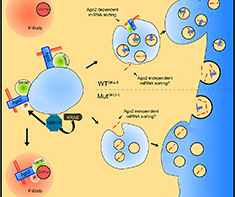
Exploring the MiRNA-Cancer Connection
MicroRNA (miRNA) is a short strand of RNA that regulates the translation of messenger RNAs into proteins inside the cell. Recent evidence shows that miRNAs are also found outside of the cell, and that they likely play a role in cell-to-cell communications, including communications between cancer cells and the… Read MoreJul. 20, 2016