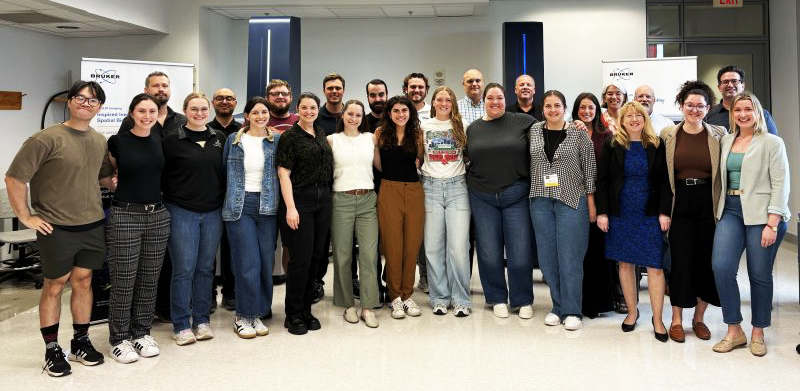
Just as swallows journey to San Juan Capistrano, California, and monarch butterflies migrate to Michoacan, Mexico, each spring, so mass spectrometrists from across the globe converge on Vanderbilt University for the annual Advanced Imaging Mass Spectrometry workshop. The Mass Spectrometry Research Center‘s AIMS laboratory course is an immersive, four-day experience in MALDI imaging mass spectrometry that caters to attendees from industry, government, and academia. The most recent event, hosted on April 29–May 2, included researchers from the United States, Scotland, and South Korea.
AIMS is a unique educational opportunity designed to teach the procedures of MALDI imaging mass spec. MALDI, which stands for matrix-assisted laser desorption ionization, is a mass spectrometry technique that was developed by Vanderbilt researchers and that can be used to identify and visualize the spatial distribution of a wide range of molecules within a tissue sample, including proteins, peptides, and small metabolites. MALDI imaging is used in cancer research, drug development, the assessment of the molecular profile of tissues to aid in diagnosing and treating disease, and more.
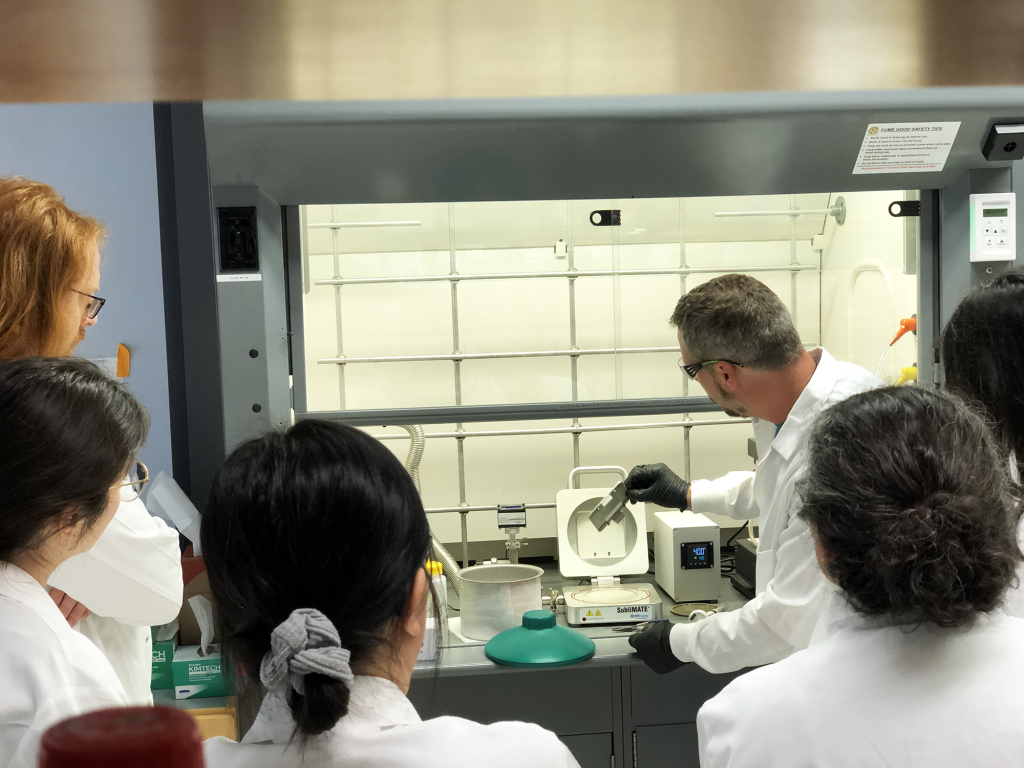
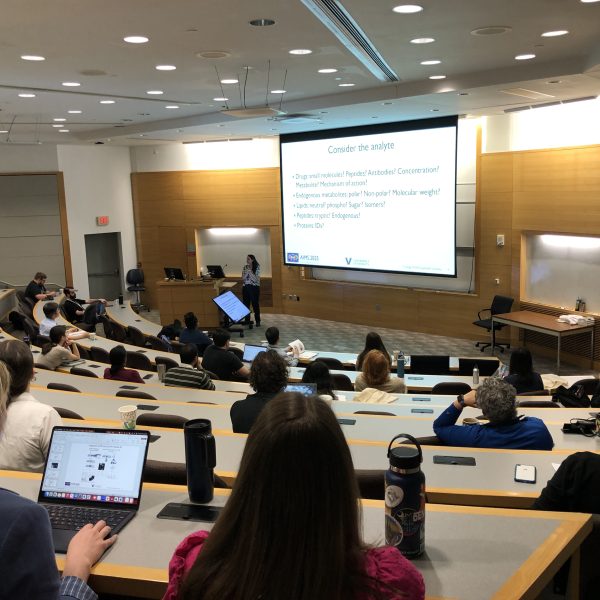
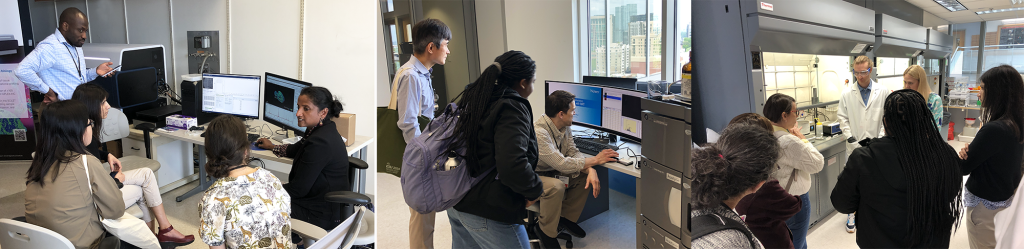
The annual AIMS meetings bring together small cohorts of novice and experienced MALDI imaging researchers, mass spectrometry instrument vendors, and Vanderbilt scientists who spend four days engaged in intense, hands-on workshops, lectures, networking, and vendor equipment demonstrations.
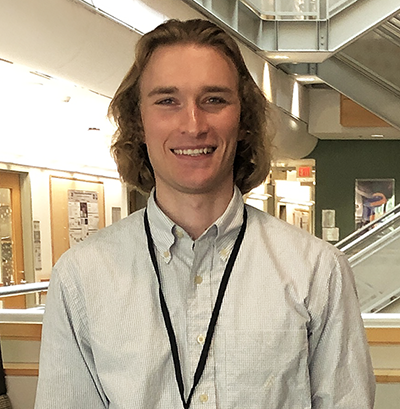
One of the vendor representatives was Stephen Henley, a product engineer who works at HTX Technologies, which has been sending representatives to AIMS since its inception. Henley sees AIMS as a continuing education experience not just for attendees but for instrument vendors as well and noted that HTX enjoys sending employees to AIMS to meet new individuals to the imaging field. “To be here as a vendor, as someone who does sample preparation, just makes good business sense. It would be like Ford [not showing up to] the Daytona 500 to demo their cars.”
The courses cover sample preparation, matrix application, instrumentation, and image and data processing. There are also presentations on high-speed imaging, high-sensitivity imaging, and image registration. This year’s roster of vendors included Bruker Daltonics, Shimadzu, HTX Imaging, Mass Tech, and Waters, and their representatives were on hand for small-group and one-on-one demonstration sessions.
“The success of AIMS is a direct result of the extraordinary commitment of our MSRC team,” MSRC Director Jeff Spraggins said. “For an entire week, they set aside their own research to provide world-class training in imaging mass spectrometry. Their passion for education, training, and collaboration defines the spirit of this course.”
“To be here as a vendor, as someone who does sample preparation, just makes good business sense. It would be like Ford [not showing up to] the Daytona 500 to demo their cars.”
The AIMS course director, Michelle “Mitch” Reyzer, looks forward to the course each year. “It’s a lot of work, but everyone at the MSRC enjoys talking to the attendees about their applications and things they have tried,” she said.
Knowledge and networking: The dual benefits of AIMS workshops
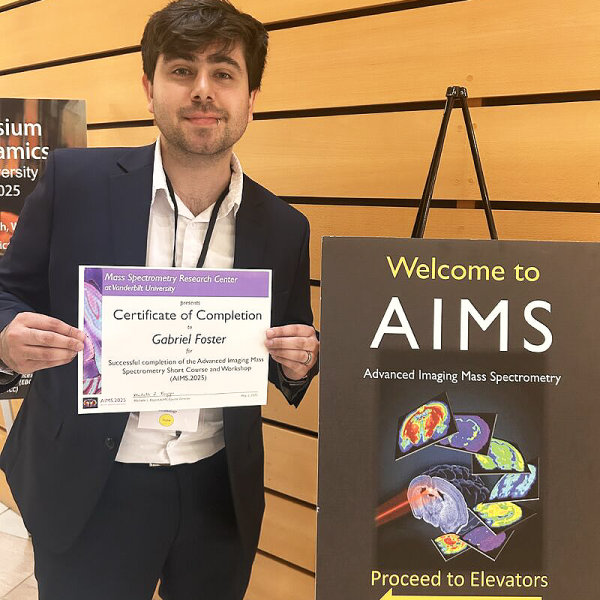
First-year Georgia Institute of Technology graduate student Gabriel Foster studies coral reef diseases and coral reef metabolomics, which can lead to new scientific discoveries relevant to both human and marine health. Although Foster had experience with traditional liquid chromatography-mass spectrometry, he wanted to learn more about imaging mass spectrometry for a new project he wanted to launch on spatial metabolomics. “I’m the first one in my lab to develop these methods. We’re hoping to adapt what they’re teaching at Vanderbilt to our work and see how we can apply it to identify shifts in the small molecules between diseased and healthy coral,” Foster said. He had developing his own methods by reading the scientific literature and trying to piece things together, but decided to attend AIMS “to learn from the experts” and develop smoother procedures to apply to his research.
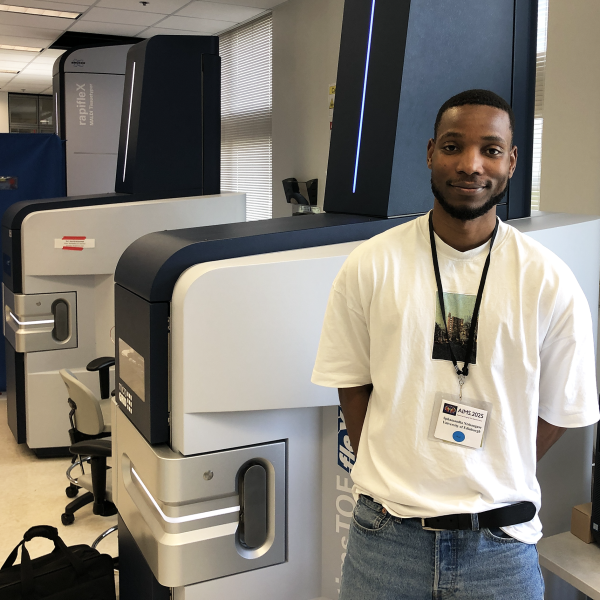
Another attendee, Sphamandla “Spha” Ntshangase, is a research scientist at the University of Edinburgh’s British Heart Foundation Centre for Cardiovascular Science. His focus is on understanding cardiovascular health, specifically conditions like atherosclerosis and aortic valve disease. Ntshangase uses advanced techniques to study disease progression and hopes to find new biomarkers that could lead to better diagnoses and treatments. Although he’s been using imaging techniques for his research since his Ph.D. in South Africa, he helped establish MALDI-MS-based spatial omics—including lipidomics and proteomics—at the CCS and has led the efforts for nearly five years. “Vanderbilt’s broad expertise across these areas have been a great opportunity to learn and refine our approaches, from sample prep to data analysis,” Ntshangase said.
Ntshangase and Foster both used their time in AIMS to network with their fellow attendees potential future collaborators. “I’m trying to talk as many people as I can,” Foster said, hoping to reach back out to them and ask for help if he’s “stumped” or if he needs help conducting experiments that are beyond the capability of his lab at Georgia Tech.
Ntshangase noted that the small number of attendees—22 people registered for the course—makes it “easier to connect with everybody” compared to being in groups of 200–500 people as in larger conferences. The small attendee pool made it “easy to collaborate and talk about research,” Ntshangase said.
“Going back to the lab I’ll be improving the workflows that we’ve already developed and trying to make sure that we are operating at the world-class standard.”
Vendor relations: From calibration to conversation
According to Foster, some of the vendors who he’s emailed with for technical help with equipment at Georgia Tech are the same vendors who attended AIMS. “It was nice to meet them and put a put a name to the face,” he said.
“Vanderbilt is hands-down one of the best imaging research facilities in the world,” Henley said. “Throughout the year, when I’m out in the field—installing instruments, training people on how to use them—I’ll often point them to AIMS. These people know what they’re doing, they’re super friendly, they’re helpful, and everyone comes away from AIMS courses being happy with what they learned.”
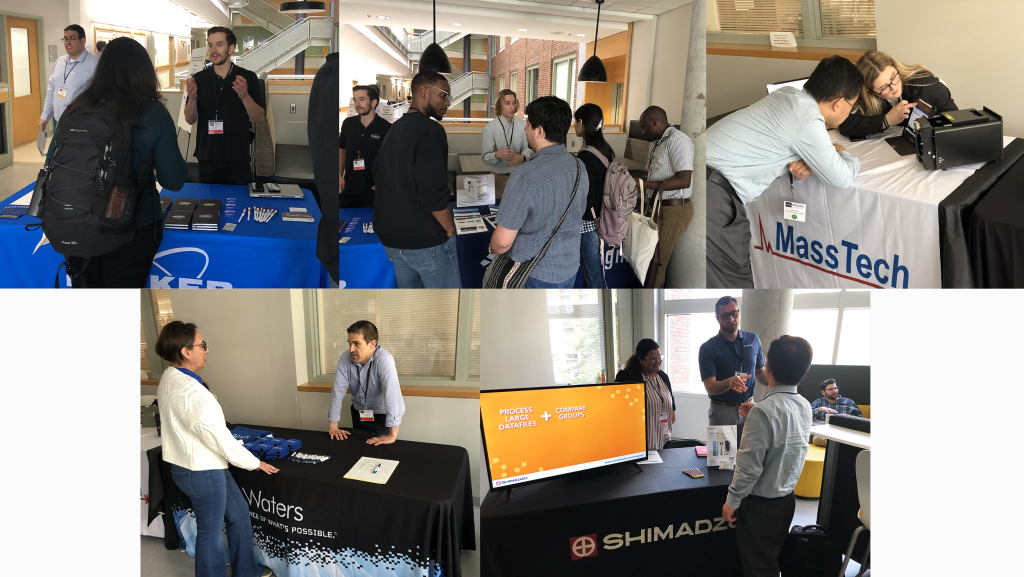
AIMS allows vendors to demonstrate their products and get feedback from attendees on what they need, which can lead to design improvements. All the vendors in attendance held small-group workshops. On the final day, Bruker Daltonics sponsored a symposium that featured an outstanding lineup of speakers, including Medical University of South Carolina Associate Professor of Pharmacology and Immunology Peggi Angel, Emory School of Medicine Associate Professor of Biochemistry Blaine Roberts, and Vanderbilt Professor of Chemistry John McLean, who shared exciting developments in advanced instrumentation and biomedical research applications.
From theory to practice: Applying workshop insights in the lab
Foster plans to revamp his entire workflow when he returns to Georgia Tech based on what he learned at AIMS. “It’s a great help to be around this many people who are in the field doing imaging and who can give you tips or tricks that they don’t write about in the papers. I really hope to use that to overhaul everything in the lab.”
Ntshangase agreed. “Going back to the lab I’ll be improving the workflows that we’ve already developed and trying to make sure that we are operating at the world-class standard,” he said.
Comments like these are music to Spraggins’s ears. “AIMS is more than a workshop: It’s a transformative learning experience that empowers scientists to take our advanced imaging mass spectrometry methods back to their home labs,” he said. “I am continuously reminded of the course’s impact when I am approached at meetings by past attendees and they update me on their successes building on what they learned here at Vanderbilt.”
This four-day event is beneficial for both AIMS registrants and Vanderbilt’s MALDI experts. “Over the years we have picked up some useful tricks from AIMS attendees,” Reyzer said. “We have also developed great relationships and started collaborations with different attendees. In fact, one prior AIMS attendee is now an MSRC faculty member, and another former MSRC member met his now-wife when she was an AIMS attendee.”
So, until the next AIMS meeting in 2026, in keeping with Vanderbilt’s spirit of radical collaboration, our researchers will be tirelessly pushing the boundaries of MALDI imaging and nurturing a vibrant global community, all in the name of pioneering scientific exploration through groundbreaking imaging techniques.