Stomach
-

Stomach Disease Research – Original
Stomach Disorders Vanderbilt School of Medicine basic science researchers study stomach (gastric) cancer by uncovering the molecular and cellular mechanisms that drive tumor initiation, progression, and treatment resistance. Work spans cancer genetics and epigenetics, oncogenic signaling, metabolism, and interactions with the tumor microenvironment and immune system. Many labs use… Read MoreJan. 28, 2026
-
Stomach Disease Research
Stomach Disorders Vanderbilt School of Medicine basic science researchers study stomach (gastric) cancer by uncovering the molecular and cellular mechanisms that drive tumor initiation, progression, and treatment resistance. Work spans cancer genetics and epigenetics, oncogenic signaling, metabolism, and interactions with the tumor microenvironment and immune system. Many labs use patient-derived… Read MoreJan. 10, 2026
-
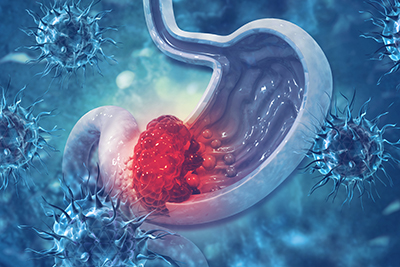
To cause cancer or not to cause cancer: What leads to H. pylori-induced stomach malignancies
Researchers from the Vanderbilt University Medical Center and Vanderbilt University have figured out how two bacterial elements present in only some Helicobacter pylori strains lead to molecular changes in host tissues that favor the development of gastric cancer. Read MoreApr. 2, 2025
-

Investigation of Helicobacter pylori infection highlights opportunities for early gastric cancer detection
By Emily Overway Timothy Cover, professor of pathology, microbiology, and immunology, published an article in mSphere in late 2021 investigating infection by Helicobacter pylori, a bacterium that infects the stomach, potentially leading to gastric cancer. The research for the paper “Loss of Corpus-Specific Lipids in Helicobacter… Read MoreJan. 28, 2022
-

An ounce of prevention is worth two pounds of cure
https://cdn.vanderbilt.edu/t2-main/medschool-prd/wp-content/uploads/sites/101/2020/04/Goldenring_Website-1.mp4 By Sarah Glass Gastric cancer is one of the leading causes of cancer death in the U.S. © Crystal light, stock.adobe.com Clocking in at two pounds, the stomach is one of the body’s heaviest internal organs and can become afflicted with one of the leading causes… Read MoreApr. 10, 2020
-
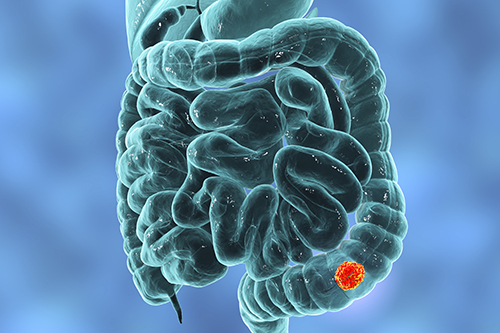
The tale of the targeted mouse
By Sarah Glass https://cdn.vanderbilt.edu/t2-main/medschool-prd/wp-content/uploads/sites/101/2020/02/Coffey_Updated.mp4 3D illustration of colorectal cancer. Kateryna_Kon, stock.adobe.com. Researchers from the labs of Robert Coffey (Medicine) and Jacob Houghton (Radiology and Radiological Sciences) report in Gastroenterology the identification of two human antibodies, P1X and P2X, that can neutralize EGFR in mice. EGFR,… Read MoreFeb. 13, 2020