
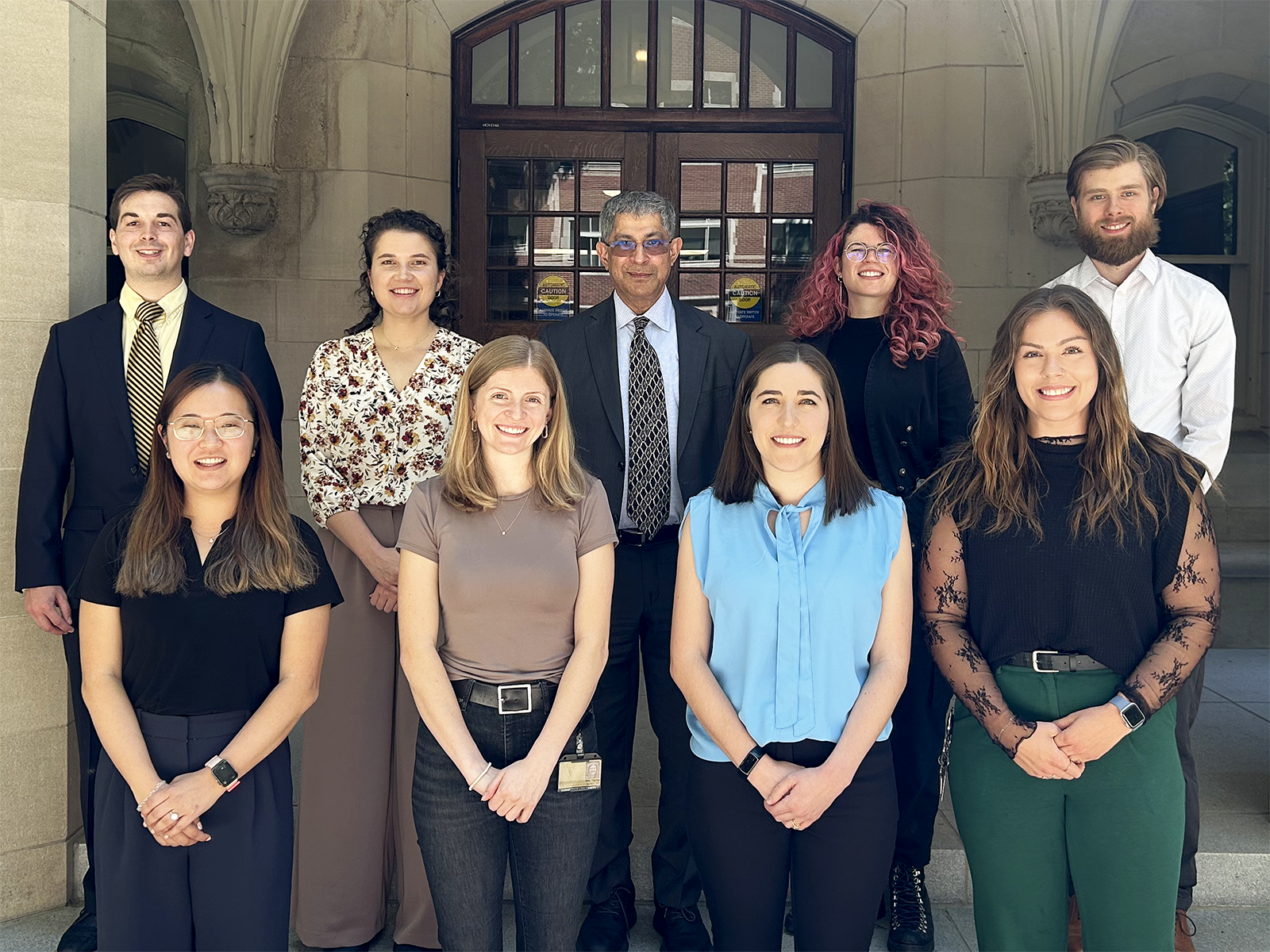
The School of Medicine Basic Sciences has named ten graduate students as recipients of the 2025 Dean’s Award for Exceptional Achievement in Graduate Studies. This prestigious honor recognizes students who have demonstrated outstanding academic performance and produced dissertation research marked by originality, significance, and scientific rigor.
“These students aren’t just completing dissertations—they’re charting new territory in science,” said John Kuriyan, Dean, Basic Sciences, School of Medicine, and holder of the Mary Geddes Stahlman Chair. “They’re decoding the molecular language of life, revealing the origins of disease, and in some cases, laying the scientific foundation for tomorrow’s cures. The dean’s award recognizes not just excellence, but the kind of bold, rigorous thinking that moves an entire field forward.”
The awardees were selected by a committee made up of the directors of graduate studies for each of the Ph.D.-granting programs in the School of Medicine. It was chaired by Walter Chazin, senior associate dean of biomedical research education and training, the Chancellor’s Professor of Medicine, and professor of biochemistry.
Each awardee will receive $5,000 in stipend support per year for the next two years or until they receive their Ph.D., whichever happens first. This year, funds were provided by the Office of the Dean of the SOMBS, the Richard McEwen German, Jr. and Marjorie Wolff German Fund, and the Zenobia and Mark Godschalk Research Fund.
The awardees are:
Niki Harris, Pharmacology
Advised by Colleen Niswender
This award is funded by the Zenobia and Mark Godschalk Research Fund.
Harris’ research primarily focuses on developing small-molecule therapeutics to enhance the expression of metabotropic glutamate receptor 7. Her work addresses challenges in mGlu7 activation, which is significant due to its role in regulating neurotransmission and its links to neurodevelopmental and neuropsychiatric disorders such as schizophrenia, major depressive disorder, Rett syndrome, and autism. Harris is advancing antisense oligonucleotide technology to target microRNAs, such as miR34a, that influence mGlu7 expression, hypothesizing that this will increase mGlu7 protein levels. Her innovative approach combines molecular neuroscience and therapeutic development to address critical needs in treating these disorders.
Harris has achieved remarkable extracurricular success alongside her academic and research pursuits. She has maintained a stellar 4.0 GPA and serves as a mentor to an IGP rotation student. She cofounded the Cellular and Molecular Neuroscience Journal Club, a platform through which she fosters graduate and undergraduate student engagement with neuroscience and the development of presentation skills.
Beyond Vanderbilt, Harris is deeply involved in science outreach and education. She volunteers to teach neuroscience fundamentals through tasks such as sheep brain dissections to middle and high school students, honing her ability to convey complex concepts to varied audiences. Additionally, she mentors high school students, guiding them in research methodology, and has served on educational panels and as a poster judge for scientific symposia, providing feedback to students pursuing advanced degrees.
Katherine Clowes Moster, Biochemistry
Advised by Chuck Sanders
This award is partially funded by the Richard McEwen German and Marjorie Wolff German Fund.
Moster’s research focuses on addressing mutations in the voltage-gated potassium channel KCNQ1, which are the most common cause of long QT syndrome, a genetic arrhythmia linked to sudden death in young people. Her work aims to identify drug-like molecules that stabilize KCNQ1’s improper folding and restore its trafficking to the cell surface, potentially mitigating the loss of function caused by these mutations.
Moster has developed a high-throughput screening assay to identify compounds that modulate KCNQ1 trafficking. After screening approximately 25,000 compounds, she identified promising candidates, including molecules that increase the surface trafficking of KCNQ1 and show potential as lead compounds for LQTS treatment. Additionally, she discovered compounds that decrease surface trafficking of mutant KCNQ1 associated with short QT syndrome, offering a potential treatment avenue for this gain-of-function disorder.
Her research demonstrates not only innovative experimental design but also attention to statistical rigor and validation methods. Moster is currently exploring the mechanism of action of these compounds and expects to publish her groundbreaking findings soon, advancing therapeutic development for LQTS and SQTS.
Moster demonstrates exceptional interpersonal and leadership skills that enhance her scientific work and collaborative spirit. Her research is complemented by lively, constructive discussions with team members, showing her ability to foster mutual growth and contribute to broader projects. She is highly receptive to mentorship and generously shares advice and encouragement with others, creating a supportive lab atmosphere. As co-president of the Vanderbilt Biochemistry Student Association, Moster has actively contributed to her academic community and consistently steps up to assist in various capacities. Her excellent public speaking abilities and dedication to her commitments highlight her professionalism and passion for service, making her an invaluable asset to her field and community.
Clint Holt, Chemical and Physical Biology
Advised by Ivelin Georgiev
Holt’s research focuses on computational and experimental advancements in understanding and designing antibody-antigen interactions with significant biomedical applications. He conducted structural and genetic analyses of a unique SARS-CoV-2 antibody, uncovering its ability to target a conserved cryptic binding site across coronaviruses, with implications for developing broadly protective coronavirus vaccines. Holt also developed a contrastive learning algorithm to predict overlapping antigen-binding sites based on antibody sequences, which showed promise in identifying therapeutic candidates for diseases such as HIV-1. Additionally, he led efforts in computational design and single-cell characterization of broadly protective influenza vaccine candidates. His work combines innovative algorithm development, detailed structural analysis, and wet lab validation, demonstrating a methodical and adaptive approach to solving complex scientific challenges.
Holt exemplifies outstanding qualities beyond his technical expertise. He displays exceptional attention to detail, critical thinking, and a remarkable drive for research coupled with the ability to generate innovative ideas and directions in his field. Personally, Holt is positive, approachable, and intellectually mature, fostering strong relationships with peers and faculty alike. His effective communication skills and collaborative nature enhance his contributions to the lab and broader scientific community.
Jeewoo Kim, Human Genetics
Advised by Digna Velez Edwards
Kim’s research focuses on advancing the understanding of uterine fibroids using statistical genetic and bioinformatics approaches. Her work includes genome-wide association studies to identify genetic factors linked to fibroids and prediction of gene expression associated with the disease. Her proposed dissertation expands on this by analyzing whole-genome sequencing for rare variant detection, identifying potential drug targets, and investigating the genetic contributions to fibroid size and location. Kim demonstrates a strong ability to integrate preliminary data with clinical applications and critically assess research questions, making significant contributions to women’s health and human genetics.
Kim’s extracurricular activities reflect her exceptional leadership, mentorship, and dedication to women’s health. She founded a curriculum committee in the Human Genetics program to improve communication between faculty and students, demonstrating strategic initiative. Kim actively mentors students across various stages, including high school, undergraduate, and peers in the Medical Scientist Training Program. As part of the Women’s Health Research Symposium planning committee, she has been instrumental in planning the symposium and proposed a theme on menopausal and middle-aged women’s health, which was inspired by national research priorities.
Her leadership extends to clinical roles, where she served as gynecology director at a student-run free clinic, providing care to uninsured individuals. Additionally, she participates in monthly clinical shifts with her OBGYN mentor. Kim balances her research, leadership, and clinical commitments effortlessly, creating a strong foundation for her future as a physician-scientist in human genetics.
Jen Silverman, Cell and Developmental Biology
Advised by Matthew Tyska
Silverman’s research focuses on understanding the cytoskeletal architecture of intestinal tuft cells, a rare and understudied cell type involved in ligand sensing, immunity, and parasite clearance. Her innovative work uses super-resolution imaging and electron microscopy to reveal the organization of actin bundles and microtubule networks that create a cytoskeletal “superstructure” unique to tuft cells. By developing novel imaging methods and analyzing RNAseq data, Silverman has uncovered how these cells’ structure supports their physiological functions, with implications for infectious disease research. Her discoveries have led to publications in high-impact journals and a National Institutes of Health award supporting her studies.
Beyond her research, Silverman actively contributes to science communication, education, and outreach. She volunteers at the local Adventure Science Center and engages in the Women in Science and Engineering Group to encourage young women to pursue STEM careers. Silverman’s artistic talents further amplify her ability to communicate complex scientific concepts in accessible and engaging ways, making her a strong advocate for science outreach. Her exceptional blend of intellectual curiosity, community engagement, and creativity exemplifies her dedication to advancing not only her field but also the broader scientific community.
Megan Tigue, Cancer Biology
Advised by Vivian Weiss
Tigue’s research focuses on understanding the role of tumor-associated macrophages in pediatric and adult thyroid cancer. Her doctoral work involves discovering unique populations of these immune cells, which support tumor cell invasion, and exploring the role of Wnt signaling in TAM recruitment and polarization. Tigue’s findings aim to lay the foundation for novel therapies for aggressive thyroid cancers, showcasing her significant contributions to translational cancer biology. Her research achievements are highlighted by numerous publications, including first-author reviews, and support from a Vanderbilt Institute for Clinical and Translational Research grant. She has also presented her work at prestigious conferences, emphasizing her dedication to advancing thyroid cancer care.
In addition to her scientific accomplishments, Tigue has served as co-president of the Vanderbilt Medical Scientist Training Program’s Women in Training committee, where she built mentorship programs connecting students and faculty. Tigue also co-chaired the 2023 MSTP retreat planning committee. Her leadership and community engagement, combined with her groundbreaking research, make her an outstanding recipient of the Dean’s Award for Exceptional Achievement in Graduate Studies.
Hannah Waterman, Molecular Physiology and Biophysics
Advised by Alan Cherrington
Waterman is conducting innovative research that leverages advanced molecular techniques to address critical questions in human physiology. Her work focuses on using a large animal model, which closely mimics human physiology, to explore novel research areas. She has demonstrated an exceptional ability to master and implement complex methodologies, such as RNA sequencing, proteomics, and improved Western blot protocols, ensuring strong reproducibility and robust results. Her proactive approach in seeking guidance and refining experimental protocols has allowed her to generate significant findings. This dedication has already led to two published manuscripts and highly productive thesis committee meetings. Through her creativity and rigor, Hannah continues to push the boundaries of research in her field.
Beyond her scientific achievements, Hannah is distinguished by her intellectual curiosity, dedication to excellence, and collaborative spirit. She excels at delivering compelling research presentations, creating clear and engaging visuals, and addressing challenging questions with poise and insight. Her enthusiasm extends to engaging with diverse scientific topics and contributing to discussions within the academic community. With her dynamic energy, remarkable intellect, and ability to adapt and innovate, Hannah stands out as a top-tier scientist with immense potential for future success, making her a highly deserving recipient the dean’s award.
Lindsay Bass, Molecular Pathology and Immunology
Advised by Rachel Bonami
Bass’ research focuses on understanding how autoantigen-specific B lymphocytes breach immune tolerance mechanisms to drive autoimmune diseases like idiopathic inflammatory myopathies. Her work addresses the variability observed in immunotherapy outcomes by investigating B cell changes as specific biomarkers of disease progression. Bass’ findings aim to improve the selection of clinical trial participants and enhance monitoring of drug responses, paving the way for more tailored and effective treatments.
Her exceptional experimental skills, combined with her ability to generate impactful data, have led to numerous first-author abstracts and publications, solidifying her significant contributions to the field of autoimmune disease research.
Beyond her scientific accomplishments, Bass is a model graduate student who embodies leadership, collaboration, and dedication to her academic community. She is recognized for her exceptional communication skills, ability to mentor and inspire peers, and commitment to excellence at the bench. Bass has delivered nationally invited talks at prestigious conferences, showcasing her ability to present complex findings to diverse audiences. Her collaborative spirit, organizational skills, and proactive pursuit of feedback make her an outstanding team player and natural leader. Bass’ combination of rigorous research, mentorship, and professional achievements makes her a deserving recipient of the Dean’s Award for Exceptional Achievement in Graduate Studies.
Ryan Fansler, Microbe-Host Interactions
Advised by Wenhan Zhu
Fansler’s research explores the mechanisms by which gut commensal bacteria adapt to the nutrient-deprived environment of intestinal inflammation, with a focus on Bacteroides thetaiotaomicron. Fansler has uncovered how this gut commensal employs a unique iron uptake system to “steal” iron-chelating compounds from pathogens, thereby evading host nutritional immunity. This work highlighted commensal iron acquisition as a previously unrecognized layer of host nutritional defense, resulting in a co-first-author publication in Cell Host & Microbe. Fansler has also investigated how B. thetaiotaomicron conserves iron during inflammation by using small RNA-mediated mechanisms to maintain metabolic activity with non-iron enzymes. His findings provide crucial insights into the evolutionary adaptations of commensal bacteria under iron limitation and their impact on gut microbiota structure and function. Through innovative use of bacterial genetics, chemical biology, and animal models, Fansler has significantly advanced our understanding of host-microbe interactions and commensal resilience in the gut.
Fansler’s creativity, independence, and persistence shine through his exceptional research achievements. He has consistently demonstrated the ability to generate and test innovative hypotheses, rapidly troubleshoot challenging protocols, and address complex reviewer feedback with thorough experimental data. His groundbreaking contributions have not only led to high-impact publications but also paved the way for future studies on microbial adaptation and gut health.
Fansler is an exemplary graduate student, showcasing exceptional academic achievements, including a perfect 4.0 GPA, “Outstanding” ratings in communication and originality, and recognition through awards like the NIH-F31 and Provost’s Pathbreaking Discovery Award. He excels in both detail-oriented experimental work and big-picture conceptual thinking, producing impactful research and manuscripts.
Beyond his academic rigor, Fansler demonstrates a remarkable passion for science, evident in his dedication to the lab and fearless pursuit of innovative solutions to complex problems. His collaborative spirit, maturity, and ability to integrate feedback make him a positive influence and a natural leader, strongly positioning him as a deserving recipient of the Dean’s Award for Exceptional Achievement in Graduate Studies.
Natalie Guzikowski, Neuroscience
Advised by Ege Kavalali
Guzikowski has made significant contributions to the understanding of inhibitory synapse physiology and its implications for human diseases like SNAREopathies. Her primary thesis research focuses on the nanoscale organization and functional mechanisms of GABAergic synapses, addressing critical gaps in neuroscience. Using cutting-edge techniques such as super-resolution microscopy, patch clamp electrophysiology, and live calcium imaging, Guzikowski has demonstrated the role of gephyrin-mediated scaffolding, spontaneous neurotransmission, and liquid-liquid phase separation in regulating synaptic functions. Her innovative work with the antimalarial drug artemisinin provided a novel pharmacological tool, while her investigations into LLPS shed light on its necessity for high-fidelity neurotransmission. Guzikowski’s research has yielded several first-author publications in prestigious journals, such as Cell Reports and Nature Communications, underscoring her excellence and establishing a strong foundation for a promising career in neuroscience.
Guzikowski exemplifies dedication, leadership, and enthusiasm both within and beyond her academic pursuits. Despite challenges like the COVID-19 pandemic, she has actively shared her research through prestigious conferences and seminars internationally. Her commitment to teaching is evident in her roles as a teaching assistant, guest lecturer, and mentor, in which she has skillfully guided students in neuroscience concepts and techniques. Guzikowski contributes to the Neuroscience Student Organization, enhancing graduate program curricula, and has been recognized for her excellence with awards like a Russell G. Hamilton Fellowship and the Elaine Sanders-Bush Award. Her passion for science drives her to tackle experiments with persistence, mentor peers and mentees, and continually grow intellectually. Above all, her enthusiasm and curiosity make her an inspiring figure in her scientific community.
In 2016, Richard M. German Jr., MD’43, established the Richard McEwen German, Jr. and Marjorie Wolff German Fund through his estate to provide support for the School of Medicine. In 2023, Zenobia and Mark Godschalk, BA’92, established the Zenobia and Mark Godschalk Research Fund to provide support for research in the basic sciences in the School of Medicine.
Recipients for the Dean’s Award for Exceptional Achievement in Graduate Studies are selected based on research excellence, which is evidenced by fellowship awards, publications, and presentations at conferences. The awardees demonstrate a mastery of their disciplines through a track record of high achievement in their classes and strong performances in their qualifying exams and committee meetings.
All students in Ph.D. programs connected to the School of Medicine are eligible for nomination, including students working on the Ph.D. portion of the Medical Scientist Training Program, the School of Medicine’s M.D./Ph.D. program.