By Cherie Saffold
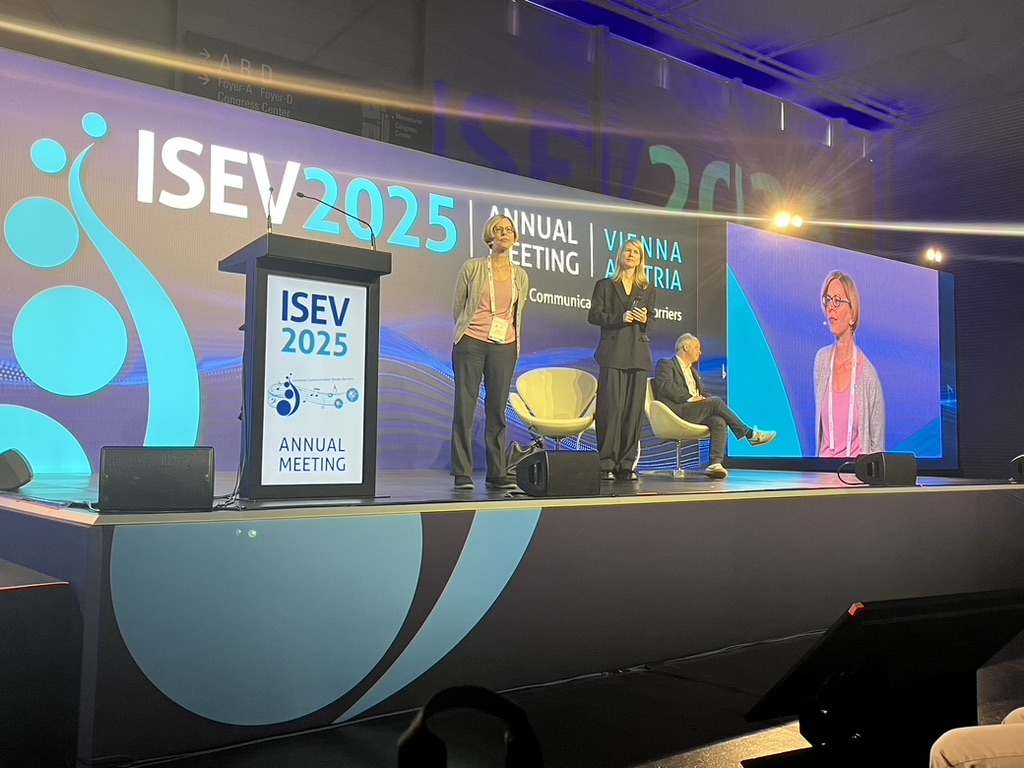
The Vanderbilt Center for Extracellular Vesicle Research members presented their research at the International Society of Extracellular Vesicles conference hosted at the end of April in Vienna, Austria. Alissa Weaver, Cornelius Vanderbilt Professor of Cell and Developmental Biology and Vanderbilt CEVR director, gave one of four prestigious plenary talks to a record-breaking 1,200 plus attendees. In addition, CEVR trainees were selected to give poster presentations.
Extracellular vesicles are tiny, lipid-bound particles that transport bioactive molecules including proteins, lipids, and nucleic acids. Though only recently brought to light, EVs are now recognized as essential mediators of intercellular communication. They influence a diverse array of cellular activities and enable signaling between individual cells as well as across tissues, organs, and entire organisms.
The CEVR is dedicated to driving forward groundbreaking and high-impact research in the dynamic and rapidly expanding field of EVs. At the forefront of the CEVR’s mission is to provide multilayered support for Vanderbilt EV researchers through funding opportunities, research equipment, and extracellular vesicle-focused seminars. The center supports and encourages members to present at extracellular vesicle research conferences like the ISEV 2025 conference.
ISEV is the largest extracellular vesicle research society in the world. Founded in 2011, ISEV aims to create a global extracellular vesicle research community, and they hold an annual conference to bring researchers together and exchange ideas. This year’s conference theme was “Universal Communication Breaks Barriers,” exploring how extracellular vesicles are ubiquitous modes of cellular communication.
Weaver’s presentation, titled “Exosomes as critical mediators of cell migration,” was a perfect fit for the conference theme. As an establishment in the extracellular vesicle field, she has spent over a decade understanding the role of extracellular vesicles in cancer cell migration, invasion, and metastasis.
Weaver’s presentation shared her expertise on the mechanisms of vesicle-dependent cell motility. She began her talk emphasizing the importance of cell movement in cancer biology. Cell movement is what allows cancer cells to invade other tissues and metastasize, which is the main cause of cancer mortality.
Her talk continued by exploring how exosomes—small extracellular vesicles derived from the endosome—are involved in multiple facets of cell motility. She explained that cancer cells unable to release exosomes have impaired movement speed and metastatic colony formation. In addition, Weaver detailed how cancer cells can follow exosome trails that other cells leave behind. Importantly, Weaver showed that specific exosome cargoes are required to form filopodia, a cytoskeletal component that cells use to move.
When the presentation concluded, Weaver clearly demonstrated that exosomes are implicated in fundamental processes of cellular movement. Importantly, these fundamental movement mechanisms facilitate cancer pathology.
Other members of the CEVR build upon Weaver’s research—Bong Hwan Sung, research associate professor of cell and developmental biology who works in Weaver’s lab, presented his work on how exosomes are necessary for fibronectin assembly, a critical step for proper tissue formation, blood clotting, and mammalian embryo development.
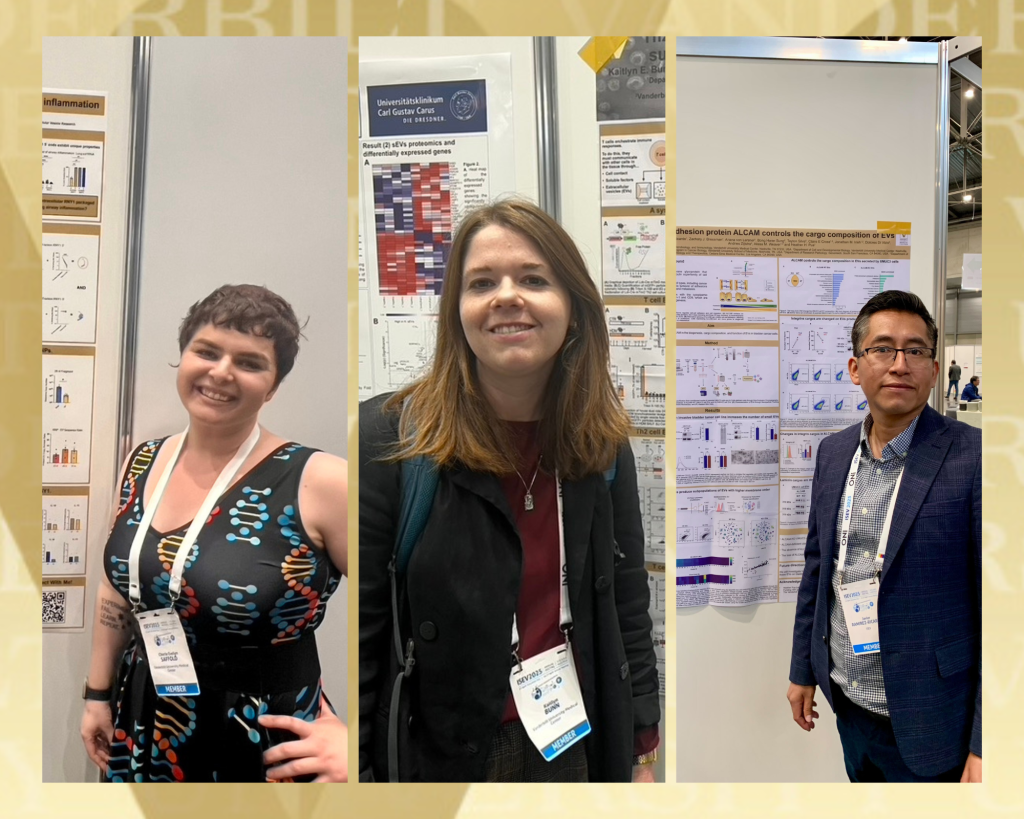
More CEVR members, including graduate student Cherie Saffold, postdoctoral research fellow Javier Ramírez Ricardo, and graduate student Katy Bunn gave poster presentations on their EV research. The CEVR provided these three with scholarships to attend the ISEV 2025 conference.
Saffold presented her work showing that YRNAs, a class of small noncoding RNAs, are present in lung extracellular vesicles and may function to promote inflammatory gene expression in recipient cells. Ramirez Ricardo presented his work on the role of ALCAM, a cellular adhesion protein, in cancer cell extracellular vesicle composition. Bunn presented her work on T-cell extracellular vesicles promoting eosinophil survival in models of allergic asthma.
With leaders in EV research from all around the world in attendance, the ISEV 2025 conference was a fantastic opportunity for CEVR members to share their groundbreaking research and interact with the larger extracellular vesicle community.