Artificial Intelligence
-

Celebrating five years of investment in innovation: Brighter Ventures Student Award granted to Victoria Howard to support artificial intelligence–driven vaccine design
Artificial intelligence is transforming biomedical research, and the Vanderbilt University School of Medicine Basic Sciences is preparing the next generation of scientists to lead that future through the Brighter Ventures Student Award. The 2026 recipient is Victoria Howard. Read MoreAugust 27, 2026
-

Center for Structural Biology and Center for AI in Protein Dynamics symposium discusses the joining of structural biology and AI
A joint symposium hosted by the Center for Structural Biology and the Center for AI in Protein Dynamics featured internal and visiting speakers and underscored the increasing integration of structural biology and computational techniques. Read MoreMay 15, 2026
-

Ten-year anniversary: Ten defining discoveries and research collaborations in the School of Medicine Basic Sciences
Celebrate the 10-year anniversary of the School of Medicine Basic Sciences by revisiting 10 scientific discoveries and achievements from our short history. Read MoreApril 27, 2026
-
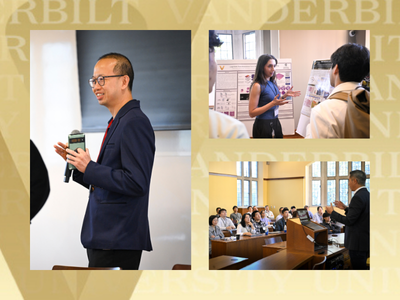
Center for Computational Systems Biology explores how 3D AI is reshaping biomedical research
The Center for Computational Systems Biology hosted its inaugural Symposium on AI, Spatial & Systems Biology. The two-day event highlighted how emerging 3D artificial intelligence technologies are transforming biomedical research, ushering in a new era of discovery that bridges molecular, cellular, and systems-level understanding of biology. Read MoreNovember 5, 2025
-
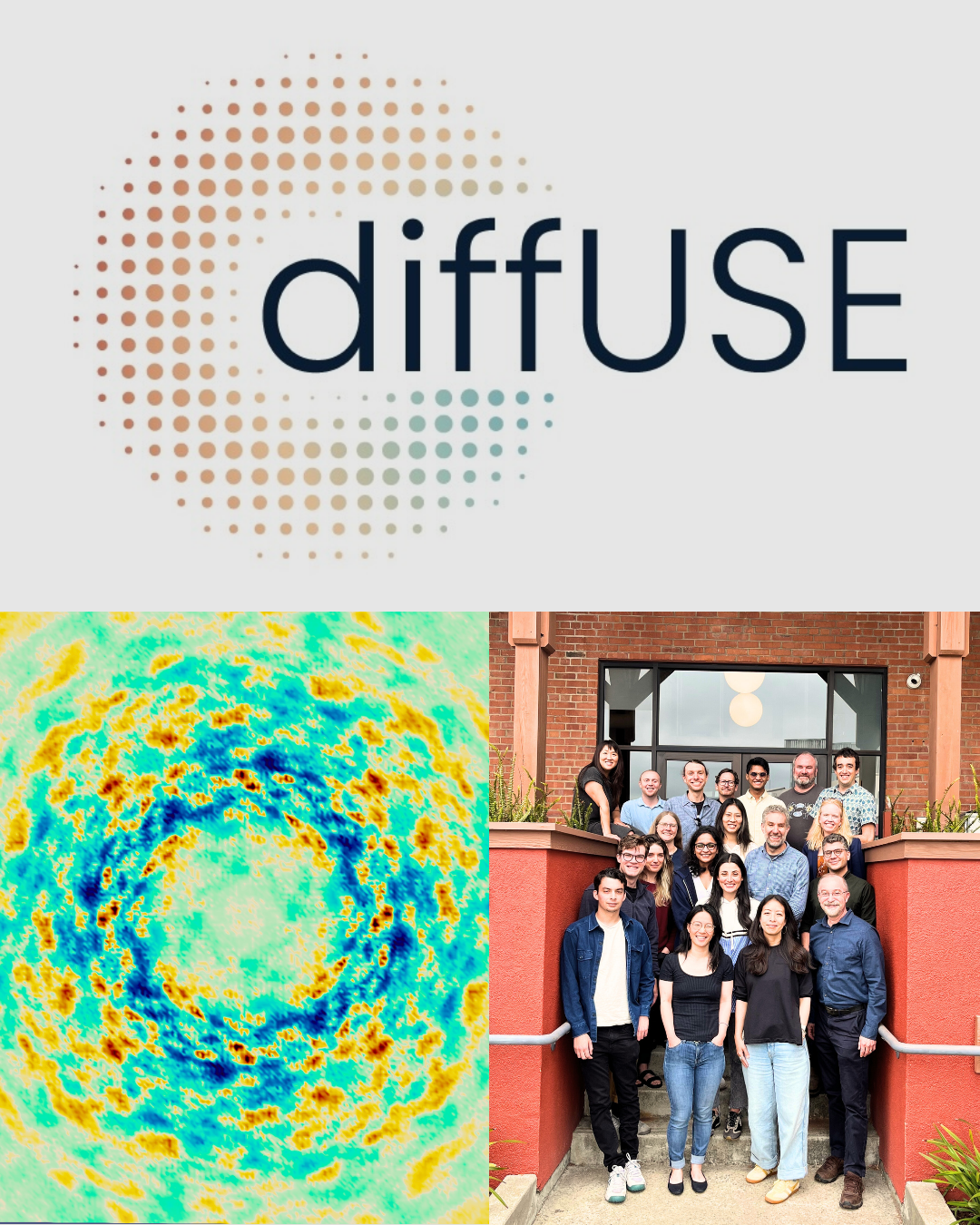
Beyond the fold: From single snapshots to shapeshifting proteins
Started in June 2025, a new collaborative science project called diffUSE involving Vanderbilt University, Cornell University, and the University of California, San Francisco, could be the next watershed moment. The $5 million, three-year project led by the Astera Institute will advance our understanding of protein motion. Using diffuse scattering, an overlooked signal measured by X-ray crystallography, the project will determine how protein dynamics are characterized, leading to a new paradigm in dynamic structural biology. Read MoreSeptember 25, 2025
-

2025 Brighter Ventures Student Award granted to Adoma Manful for research on lung cancer disparities and outcomes
Adoma Manful, a Ph.D. student in epidemiology, won the 2025 Brighter Ventures Student Award for her research on improving lung cancer screening equity and addressing algorithmic bias in precision medicine tools. Read MoreAugust 1, 2025
-

Vanderbilt alumnus Walt Gall applies basic sciences to AI and space innovation
Walt Gall, PhD’02, sat down with us to discuss his experience studying basic science at Vanderbilt and how it played a role in his career. Gall is an entrepreneur in residence at the Exploration Institute. Read MoreJuly 16, 2025
-
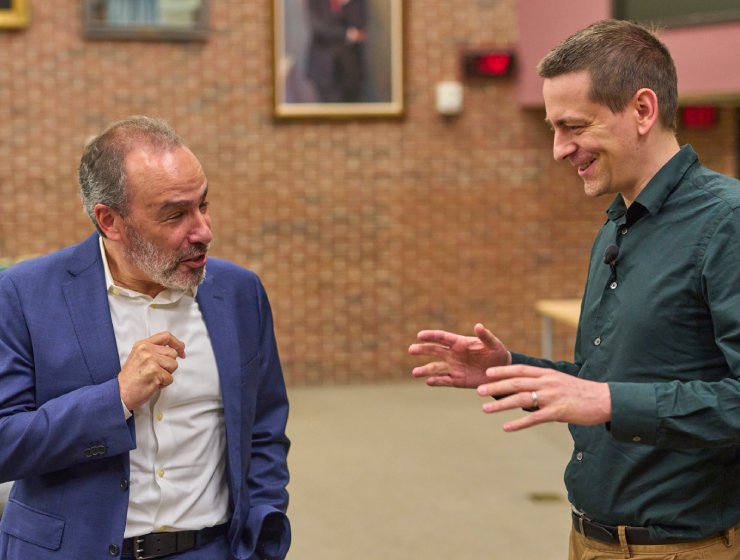
John M. Jumper, DeepMind researcher and Vanderbilt alumnus, shares 2024 Nobel Prize in chemistry
Dr. Jumper’s work with AlphaFold2 represents an unprecedented step in the integration of artificial intelligence and the natural sciences. John and his colleagues have given us inspiring evidence of its limitless potential for advancing scientific discovery. Read MoreOctober 10, 2024
-
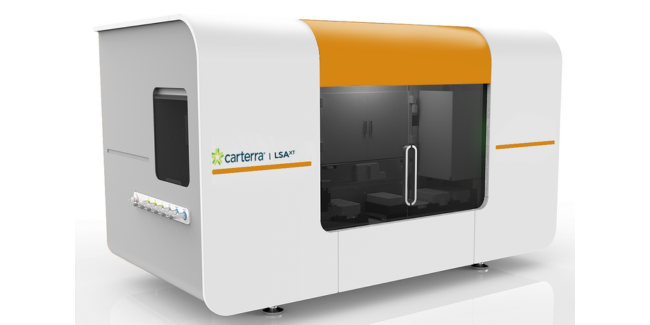
Vanderbilt University School of Medicine Basic Sciences adds Carterra’s LSAXT instrument to speed drug and vaccine research and advance patient care
The Center for Structural Biology in the School of Medicine Basic Sciences will be a hub of research innovation using Carterra’s platform in traditional and AI-driven workflows for characterizing both antibodies and other biomolecules Read MoreSeptember 25, 2024
-
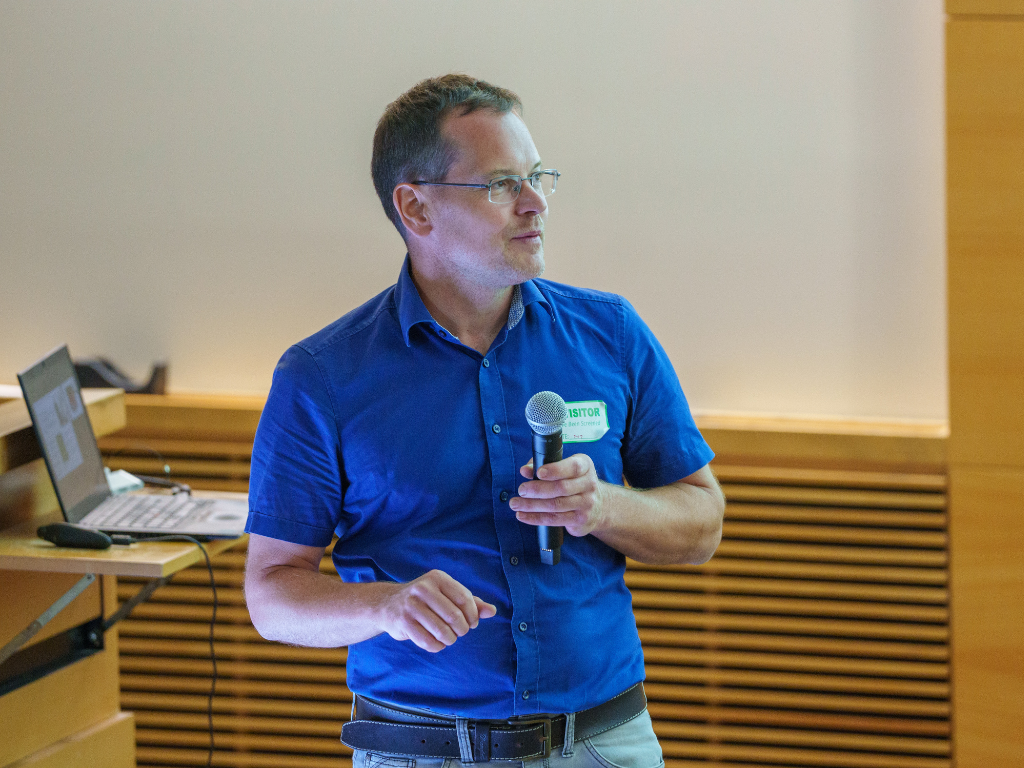
Expert in bio-inspired AI systems visits Vanderbilt to discuss the future potential of neuromorphic supercomputers
At a recent Center for Applied AI in Protein Dynamics seminar, Christian Mayr of Technische Universität Dresden discussed how new hardware technologies will transform AI development and allow machines to mimic the efficiency and processing power of the human brain. Read MoreAugust 26, 2024