Colon
-

Study challenges traditional assumptions about gut inflammation and Crohn’s disease
A new study reveals mechanistic underpinnings of Crohn’s disease, including some vulnerabilities within the ascending colon. This work challenges the assumption that all regions of the gut respond similarly to inflammation, argues for region-specific treatments for the disease, and highlights a potential new target for treatment within the ascending colon. Read MoreFebruary 18, 2026
-
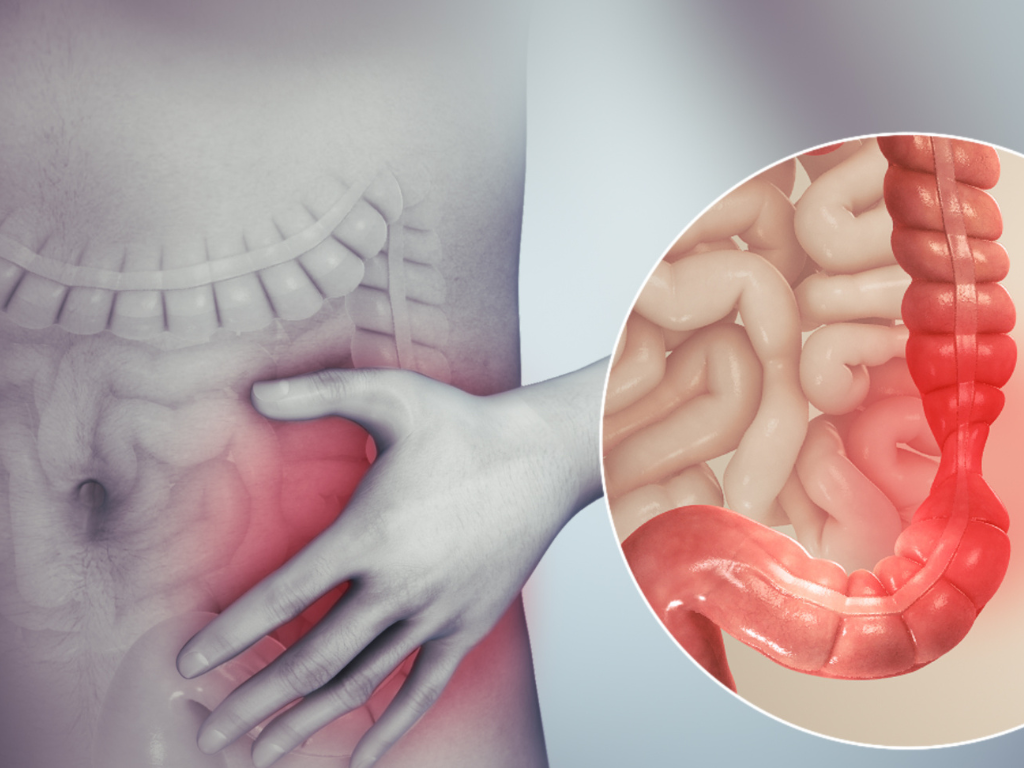
Researchers uncover critical genetic drivers of the gut’s “nervous system” development, offering insights into gut motility disorders
Vanderbilt scientists shed light on how the enteric nervous system—sometimes called the "brain" of the gut—forms and functions, offering insights that may advance treatments for gut motility disorders like irritable bowel syndrome and chronic constipation. Read MoreAugust 19, 2025
-
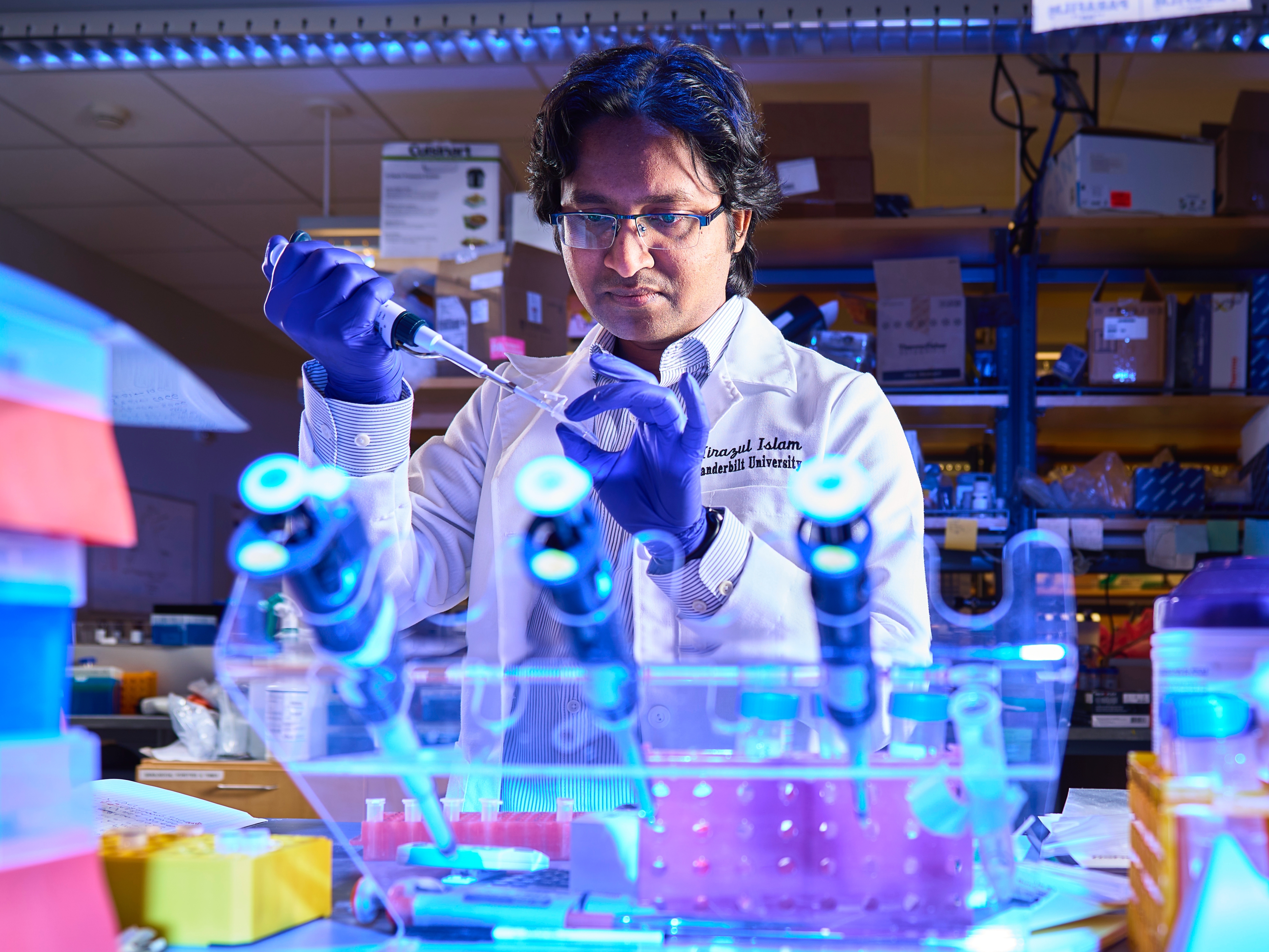
Determining the precise timing of cellular growth to understand the origins of cancer
Mirazul Islam, a graduate student in the lab of Professor Ken Lau, has developed a molecular clock that records the timing of cellular events at a single-cell resolution. Read MoreOctober 31, 2024
-

Goldenring’s gastrointestinal research contributions lauded
James Goldenring, MD, PhD, the Paul W. Sanger Professor of Experimental Surgery at Vanderbilt University Medical Center, has been honored by the American Gastroenterological Association for making significant contributions to understanding gastrointestinal disease. Goldenring, vice chair of Surgical Research for the Section of Surgical Sciences and professor of Surgery… Read MoreMarch 23, 2023
-

Gene mutations impair gut barrier
All of us suffer from gastrointestinal (GI) distress from time to time, but people with mutations in the SLC12A2gene suffer from chronic GI infections, intestinal obstruction, constipation, nutrient malabsorption and blood in the intestine. To understand why this mutation causes such intense GI distress, Eric Delpire, PhD,… Read MoreNovember 10, 2022
-

Unveiling the life cycle of a microvillus
By Colbie Chinowsky The surface of the intestinal tract is the sole site of nutrient absorption—a life-sustaining process—and disturbances to this tissue have the potential for deadly consequences. The small intestine has evolved a variety of structures that maximize the surface area available for nutrient uptake, including microvilli, fingerlike projections… Read MoreSeptember 17, 2021
-

Researchers create molecular ‘atlas’ of GI tract neurons
Oct. 8, 2020, 10:28 AM Michelle Southard-Smith, PhD, Aaron May-Zhang, PhD, and colleagues have created a molecular ‘atlas’ of genes expressed by the neuronal cells within the intestine that coordinate the functions of the gastrointestinal (GI) tract. (photo by Susan Urmy) by Bill Snyder Researchers at Vanderbilt University Medical Center… Read MoreOctober 9, 2020
-

Vanderbilt research shows stimulating tuft cell production reverses intestinal inflammation
by Marissa Shapiro Aug. 28, 2020, 9:00 AM Researchers at Vanderbilt University have, for the first time, been able to trigger the specific immune system response required to reverse the course of small intestinal inflammation by inducing production of tuft cells, very rare epithelial… Read MoreAugust 28, 2020
-
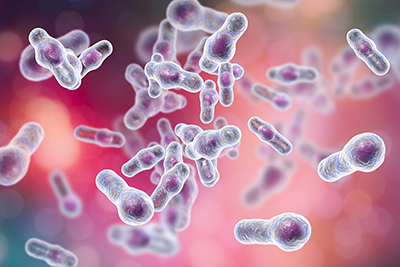
Preventing CDI deaths one stem cell at a time
https://cdn.vanderbilt.edu/t2-main/medschool-prd/wp-content/uploads/sites/101/2020/04/Lacy_Website.mp4 By Sara Eaton C. diff is responsible for 50% of gastrointestinal infections in hospitals but cause over 90% of GI tract infection-related deaths. © Kateryna_Kon, stock.adobe.com Gastrointestinal infections often cause damage to the stem cells in the colon’s epithelium, a thin layer of… Read MoreApril 23, 2020
-
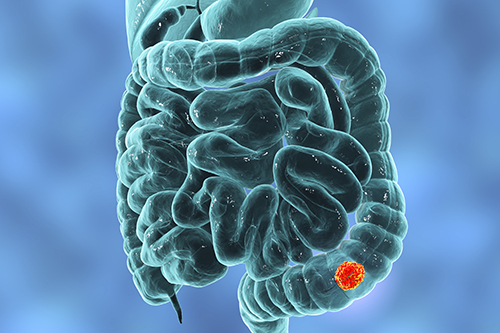
The tale of the targeted mouse
By Sarah Glass https://cdn.vanderbilt.edu/t2-main/medschool-prd/wp-content/uploads/sites/101/2020/02/Coffey_Updated.mp4 3D illustration of colorectal cancer. Kateryna_Kon, stock.adobe.com. Researchers from the labs of Robert Coffey (Medicine) and Jacob Houghton (Radiology and Radiological Sciences) report in Gastroenterology the identification of two human antibodies, P1X and P2X, that can neutralize EGFR in mice. EGFR,… Read MoreFebruary 13, 2020