School Of Medicine Basic Sciences
-
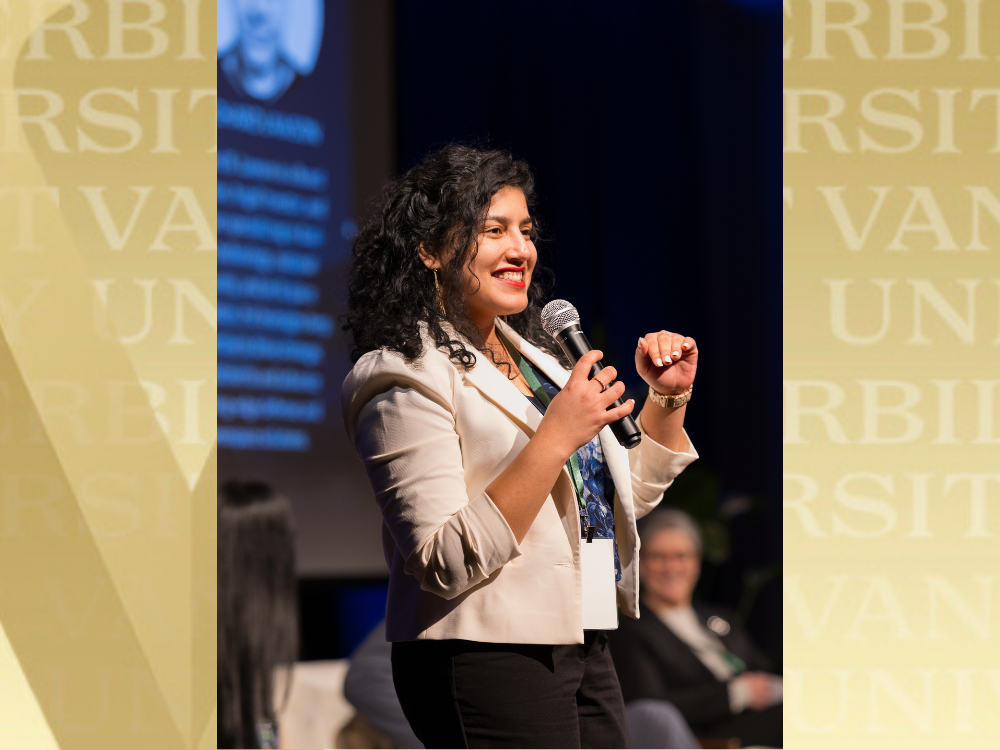
Alum Answers with Kavya Sharman
Kavya Sharman, BS’16, PhD’22, channeled dual expertise in science and business into launching Phase Capital, a Nashville-based venture capital firm focused on tech bio. Today, she supports founders working to transform scientific discoveries into scalable applications across the U.S., all while maintaining close ties to her Vanderbilt alma mater and home. Read MoreJan. 13, 2026
-

Breast Cancer Research
Breast Cancer Breast cancer occurs when cells in the breast mutate and grow uncontrollably, forming tumors in ducts or lobules. It is the second most common cancer in U.S. women, with a 90% five-year survival rate due to advances in treatment. .story-list .story-list__topper { display: flex; justify-content: space-between; align-items: center;… Read MoreJan. 10, 2026
-
Stomach Disease Research
Stomach Disorders Vanderbilt School of Medicine basic science researchers study stomach (gastric) cancer by uncovering the molecular and cellular mechanisms that drive tumor initiation, progression, and treatment resistance. Work spans cancer genetics and epigenetics, oncogenic signaling, metabolism, and interactions with the tumor microenvironment and immune system. Many labs use patient-derived… Read MoreJan. 10, 2026
-
Spinal Cord Research
Spinal cord research Spinal cord and traumatic brain injuries impact millions of people worldwide. These injuries cause neuronal loss and the formation of scar tissue, which is believed to block the regrowth of axons-thin nerve fibers that carry electrical signals. As a result, recovery is limited, often leading to lasting… Read MoreJan. 10, 2026
-
Lung Disease Research
Lung Disease Worldwide, chronic respiratory diseases (CRDs) affect hundreds of millions, with COPD and asthma being major burdens, causing millions of deaths annually, driven largely by smoking and air pollution, though age-standardized rates for many CRDs have dropped, absolute numbers rise due to population growth, and pneumonia remains a leading… Read MoreJan. 10, 2026
-
Spinal Cord Research – Original
Spinal cord research Spinal cord and traumatic brain injuries impact millions of people worldwide. These injuries cause neuronal loss and the formation of scar tissue, which is believed to block the regrowth of axons-thin nerve fibers that carry electrical signals. As a result, recovery is limited, often leading to… Read MoreJan. 10, 2026
-
Kidney Disease Research
Kidney Disease Vanderbilt School of Medicine’s Basic Sciences investigators study kidney cancer and kidney disease from molecules to patients. Teams link genomics, epigenetics, and metabolism to clear cell renal cell carcinoma initiation, therapy resistance, and tumor-immune microenvironment. Researchers build organoid, CRISPR, and mouse models to test pathways and identify drug… Read MoreJan. 10, 2026
-
Heart Disease Research
Heart Disease Vanderbilt University School of Medicine Basic Sciences researchers are investigating the heart at its foundations, from the molecular signals that control contraction and rhythm to the genetic and cellular pathways that drive atherosclerosis, inflammation, and heart failure. This bench-level insight fuels the next generation of diagnostics and therapies,… Read MoreJan. 10, 2026
-
Gallbladder Disease Research
Gallbladder Disease Research Vanderbilt School of Medicine’s Basic Sciences researchers study gallbladder disease by probing the fundamental biology behind gallstone formation and biliary inflammation. Work commonly integrates cell and animal models with human biospecimens. Investigators explore genetic and environmental risk factors, including diet and the gut-liver-biliary axis, and apply modern… Read MoreJan. 10, 2026
-
Breast Cancer Research – Original
Breast Cancer research Breast cancer occurs when cells in the breast mutate and grow uncontrollably, forming tumors in ducts or lobules. It is the second most common cancer in U.S. women, with a 90% five-year survival rate due to advances in treatment. School of Medicine Basic Sciences Breast Cancer… Read MoreJan. 10, 2026