News
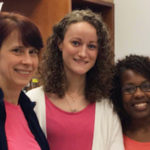
Christi Salsbury-Ruf (Zinkel Lab) featured in Reporter article
Feb. 12, 2019—Jan. 31, 2019, 9:40 AM From left, Sandra Zinkel, MD, PhD, Christi Salisbury-Ruf, MS, Patrice Wagner, PhD, Jing Zou, MD, PhD, and Yuliya Hassan have linked a specific form of programmed cell death to myelodysplastic syndrome, a type of bone marrow failure. by Leigh MacMillan The production of blood cells in the bone marrow —...
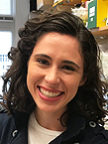
Alissa Guarnaccia named 2018 Vanderbilt Prize Student Scholar
Jan. 28, 2019—Vanderbilt Prize winner Amon to speak at Jan. 31 lecture Jan. 24, 2019, 10:30 AM by Bill Snyder Angelika Amon, PhD, recipient of the 2018 Vanderbilt Prize in Biomedical Science, will deliver her Vanderbilt Prize lecture at 4 p.m. Thursday, Jan. 31, in 208 Light Hall. Angelika Amon, PhD Amon, whose groundbreaking investigations of chromosome...
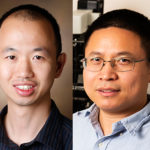
Building a pancreas
Jan. 24, 2019—Jan. 17, 2019, 10:15 AM by Leigh MacMillan (iStock) In the developing pancreas, seemingly equivalent progenitor cells differentiate into the four types of hormone-positive islet cells: alpha, beta, gamma and delta. Insulin-secreting beta cells are destroyed in type 1 diabetes, and understanding how beta cells develop could lead to new cellular or regenerative therapeutic strategies...
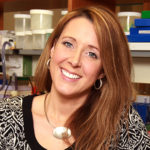
Breast cancer-killing RIG
Jan. 15, 2019—Dec. 13, 2018, 10:00 AM by Leigh MacMillan Immune checkpoint inhibitors — cancer therapies that remove the “brakes” on the adaptive anti-tumor immune response — have had remarkable success in melanoma and lung cancer. Response rates to these immunotherapies in breast cancer have been disappointing, perhaps because breast cancers are less “immunogenic” and contain fewer...
The exocyst dynamo
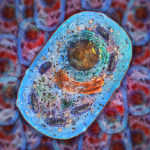
Dec. 18, 2018—Dec. 13, 2018, 9:45 AM by Bill Snyder (iStock) The exocyst is a protein complex essential for life, that is comprised of eight subunits and is a crucial component in vesicle trafficking. The mechanisms by which exocysts assemble and deliver vesicles containing important biological materials to the cell surface has been unclear, especially in mammalian...
Team seeks to create gene expression map of worm’s nervous system
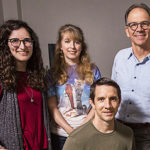
Dec. 12, 2018—by Leigh MacMillan How do you build a brain? What “rules” govern where neurons end up, how they connect to each other, and which functions they perform? “Most of the information that you need to create this extraordinarily complex network of connected cells — the brain — is genetically encoded. The overall architecture is a...

Analyzing single-cell landscapes
Dec. 12, 2018—Nov. 29, 2018, 11:00 AM by Leigh MacMillan Single-cell RNA sequencing is a powerful tool for studying cellular diversity, for example in cancer where varied tumor cell types determine diagnosis, prognosis and response to therapy. Single-cell technologies generate hundreds to thousands of data points per sample, generating a need for new methods to define cell...
Andrea Page-McCaw Elected AAAS Fellow
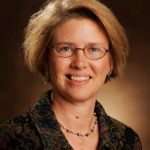
Nov. 29, 2018—Five Vanderbilt University faculty members have been elected fellows of the American Association for the Advancement of Science this year. They are among 416 fellows from around the country selected by their peers for membership in the world’s largest general scientific society “because of their scientifically or socially distinguished efforts to advance science or its applications.” Vanderbilt...

Evading cell death
Nov. 28, 2018—Nov. 8, 2018, 1:30 PM by Amanda Johnson Cancer cells can develop resistance to the treatments designed to eliminate them. Several studies have linked stress granules (SGs), cell organelles that form transiently in response to extracellular stress, to this phenomenon. However, how SGs protect cancer cells remains unclear. Susan Wente, PhD, and Laura Glass, PhD, report...

Vivien Casagrande honored at the Society for Neuroscience Annual Meeting in San Diego
Nov. 7, 2018—Vivien Casagrande, Ph.D. was posthumously inducted into the Patricia Goldman-Rakic Hall of Honor at the recent Society for Neuroscience meeting in San Diego. The Patricia Goldman-Rakic Hall of Honor is a posthumous award for a neuroscientist who pursued career excellence and exhibited dedication to the advancement of women in neuroscience. The recipient is recognized at the Celebration...

Exploring Single Cell Data
Oct. 30, 2018—The Lau lab has uncovered a method for exploring single cell data Read More

CDB Graduate students and post docs explore science policy and advocacy in Washington, D.C.
Oct. 24, 2018—CDB Graduate Students Colbie Chinowsk and Megan Postema (Tyska Lab) along with Lindsey Seldin, Ph.D. (Marara Lab) and Roslin Thoppil, Ph.D. (Kaverina Lab) join other Vanderbilt students and post docs in DC exploring advocacy and policy in science. Read the rest of the story here

The Macara lab is looking for a new RA-II technician
Oct. 22, 2018—The Macara lab is looking for a new RA-II technician to support a dynamic laboratory of about 10 people, including graduate students and postdoctoral fellows, working on breast cancer and epithelial development. The successful candidate will have skills in cell and molecular biology, and be able to handle mice for genotyping and breeding.
Nilay Taneja received 11th place at the Nikon Small World Photomicrography contest
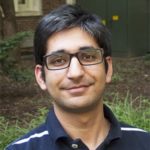
Oct. 22, 2018—Nilay Taneja (Burnette Lab) recently received 11th place at the Nikon Small World Photomicrography contest for his submission, “Human fibroblast undergoing cell division, showing actin (gray), myosin II (green) and DNA (magenta),” using structured illumination microscopy at Vanderbilt’s Nikon Center of Excellence facility.

Novel genetic study sheds new light on risk of heart attack
Oct. 22, 2018—Loss of a protein that regulates mitochondrial function can greatly increase the risk of myocardial infarction (heart attack), Vanderbilt scientists reported Oct. 3 in the journal eLife. The study illustrates how “integrative genomics,” a combination of basic research, a human biobank linked to electronic health records and novel computational genetic approaches can identify genetically determined changes...