News

Marija Zanic Profiled in The Reporter
Mar. 6, 2015—For Marija Zanic, Ph.D., who joined Vanderbilt University’s Department of Cell and Developmental Biology as an assistant professor last August, the journey from her home country took a more circuitous route — from cell biology to theoretical physics and back again. Zanic’s dissertation explored string cosmology, which describes the fundamental structure of the universe. Today she is...

Billy Hudson Appointed CDB Secondary Faculty
Mar. 2, 2015—It is with great pleasure that we announce the secondary appointment to the Department of Cell and Developmental Biology of Billy Hudson, Ph.D. Professor, whose research lies in the structure and function of type IV collagen, the major constituent of basement membranes. Dr. Hudson is well known to many of us. His primary appointment is in the Department of Medicine as well as...

Jim Patton Joins CDB Secondary Faculty
Mar. 2, 2015—Jim Patton, Ph.D., Professor, whose interests in alternative splicing and the control of gene expression, vertebrate microRNA function, and gene therapy applications, is the newest member of the Department of Cell and Developmental Biology's Secondary Faculty. As the director of IGP, Dr. Patton is also well known to many of us, his primary appointment is in the Department...

Andrea Page-McCaw Named to inaugural Chancellor Faculty Fellows Program
Feb. 12, 2015—Fifteen faculty members hailing from a diverse cross section of disciplines have been selected as the first cohort of the Chancellor Faculty Fellows program, including Andrea Page-McCaw. Read announcement.

Young Jae Nam Announcement
Jan. 21, 2015—I am delighted to announce the addition of Young Jae Nam, M.D., to the Department of Cell and Developmental Biology as an Assistant Professor. Dr. Nam works on the induction of diverse cardiac cell types by direct reprogramming. His primary appointment in the Department of Medicine, Division of Cardiovascular Medicine.

Alissa Weaver Appointment
Jan. 21, 2015—I am pleased to announce the appointment of Alissa Weaver, M.D, to the Department of Cell and Developmental Biology as Associate Professor. Her research focuses on how the secretion of small extracellular vesicles from cells promotes aggressive, invasive behavior and facilitates tumor growth and metastasis. Dr. Weaver is well known to many of us; her...

Welcome Marija Zanic
Jul. 29, 2014—It is a great pleasure for me to announce the arrival of Marija Zanic, Ph.D., who will be joining the Department of Cell and Developmental Biology as an Assistant Professor on August 1, 2014. Trained as a theoretical physicist and cytoskeleton biologist, Marija will add a quantitative flair and computational modeling to the diverse expertise...
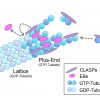
CLASPs Are Required for Proper Microtubule Localization of End-Binding Proteins
Jul. 11, 2014—CLASPs Are Required for Proper Microtubule Localization of End-Binding Proteins Ashley D. Grimaldi1, Takahisa Maki2, Benjamin P. Fitton4, Daniel Roth4, Dmitry Yampolsky1, Michael W. Davidson3, Tatyana Svitkina5, Anne Straube4, Ikuko Hayashi2, Irina Kaverina Summary Microtubule (MT) plus-end tracking proteins (+TIPs) preferentially localize to MT plus ends. End-binding proteins (EBs) are master regulators of the...

Macrophages promote the advancement of metaplasia in the stomach
Jul. 1, 2014—Macrophages Promote Progression of Spasmolytic Polypeptide-Expressing Metaplasia After Acute Loss of Parietal Cells Petersen CP1, Weis VG1, Nam KT2, Sousa JF3, Fingleton B4, Goldenring JR5. Gastroenterology. 2014 Jun;146(7):1727-38.e8. doi: 10.1053/j.gastro.2014.02.007. Epub 2014 Feb 15. Abstract BACKGROUND & AIMS: Loss of parietal cells causes the development of spasmolytic polypeptide-expressing metaplasia (SPEM) through transdifferentiation of chief cells....

Bromine Is an Essential Trace Element for Assembly of Collagen IV Scaffolds in Tissue Development and Architecture
Jun. 11, 2014—Working with Billy Hudson's lab in the department of medicine, the Page-McCaw lab determined that the element bromine is required for crosslinking basement membrane, the extracellular matrix underlying all epithelial tissues. Without bromine, the basement membrane is weakened and fruitflies cannot survive. As this basement-membrane crosslink is highly conserved throughout the animal kingdom, this study...

Bromine Is an Essential Trace Element for Assembly of Collagen IV Scaffolds in Tissue Development and Architecture
Jun. 5, 2014—Working with Billy Hudson's lab in the department of medicine, the Page-McCaw lab determined that the element bromine is required for crosslinking basement membrane, the extracellular matrix underlying all epithelial tissues. Without bromine, the basement membrane is weakened and fruitflies cannot survive. As this basement-membrane crosslink is highly conserved throughout the animal kingdom, this study...

Matt Tyska receives the John Exton Award for Research
May. 28, 2014—John H. Exton Award for Research Leading to Innovative Biological Concepts — Matthew J. Tyska, Ph.D., Associate Professor of Cell and Developmental Biology Tyska earned his Bachelor of Science degree in Biology at the University of Notre Dame, and his Ph.D. in Molecular Physiology and Biophysics at the University of Vermont. After completing a postdoctoral fellowship...
Breast stem cells need polarity signals for survival
May. 25, 2014—The Par3-like polarity protein Par3L is essential for mammary stem cell maintenance.a Yongliang Huo & Ian G. Macara Nature Cell Biology 16, 529–537 (2014) doi:10.1038/ncb2969 Received 01 August 2013, Accepted 11 April 2014, Published online 25 May 2014, Corrected online 30 May 2014 Abstract The Par polarity proteins play key roles in asymmetric division of...

Cell-to-cell variability in gene expression is regulated by casein kinase II
May. 9, 2014—Casein kinase II Regulation of the Hot1 Transcription Factor Promotes Stochastic Gene Expression Laura T. Burns and Susan R. Wente Capsule Background: Dynamic signaling events are required for cell-to-cell gene expression differences during responses to environmental stress. Results: During hyperosmotic stress, casein kinase II (CK2) interacts with and phosphorylates the Hot1 transcription factor. Conclusion:...
The dynamics of kinetochore-attached microtubules govern the metaphase need for kinesin-5 in human cells
May. 7, 2014—Kinetochore-microtubule stability governs the metaphase requirement for Eg5 A. Sophia Gayek1 and Ryoma Ohi1, Department of Cell and Developmental Biology, Vanderbilt University Medical Center, Nashville, TN 37232 Kerry Bloom, Monitoring Editor Submitted March 3, 2014, Revised April 28, 2014, Accepted May 1, 2014. Abstract The mitotic spindle is a bipolar, microtubule (MT)-based cellular machine...