
A new potential treatment for schizophrenia discovered through the Warren Center for Neuroscience Drug Discovery has entered phase 1 clinical trials, marking the fifth WCNDD therapeutic to advance into human testing.
The investigational drug, NMRA-898, is a structurally distinct positive allosteric modulator (PAM) of the M4 muscarinic receptor subtype, an innovative mechanism that has shown promise in treating schizophrenia while avoiding the debilitating side effects associated with traditional antipsychotics. It is being developed by Neumora Therapeutics, a clinical-stage biopharmaceutical company focused on transforming neuroscience drug development.
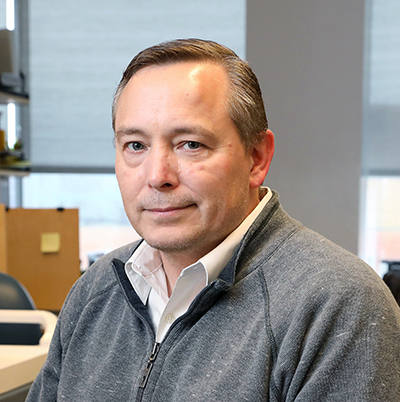
“NMRA-898 is the WCNDD’s fifth compound to advance into human clinical trials and demonstrates our ability to deliver on our CNS pipeline for serious brain disorders,” said Craig Lindsley, University Professor of Pharmacology, Biochemistry and Chemistry, and director of the WCNDD. “Along with NMRA-861, NMRA-898 also has the potential to provide best-in-class pharmacology to address the complex symptoms of schizophrenia and to bring much-needed benefit to patients and families. Neumora plans to evaluate the strategy for its M4 franchise based on these data, potentially including advancing development of one or both programs. Neumora expects to provide a comprehensive franchise update by mid-2026. These successes highlight the impact and essential role for academic drug discovery to identify, derisk, and deliver clinical candidates for novel therapeutic targets.”
NMRA-898 is the second compound in Neumora’s M4 PAM franchise, following the entry of NMRA-861 into clinical trials earlier this year. Both compounds were discovered and optimized at the WCNDD.
Schizophrenia affects an estimated 3 million adults in the U.S. Current treatments often fall short, with roughly 75 percent of patients discontinuing medication within 18 months due to lack of efficacy or intolerable side effects. By offering a new mechanism of action with potential for once-daily dosing, improved tolerability, and higher target specificity, NMRA-898 and its sister compound NMRA-861 represent a promising next chapter in the treatment of schizophrenia.
While most current antipsychotics target dopamine D2 receptors, leading to side effects such as weight gain, movement disorders, and sedation, M4-targeted modulation offers a novel path by engaging brain circuits involved in regulating dopamine, but in a more selective and physiologically aligned manner.
“With both NMRA-898 and NMRA-861 now in the clinic, we are positioned with exceptional strategic flexibility as we advance two potentially best-in-class M4 PAMs,” said Bill Aurora, Neumora chief operating and development officer in a release. “These structurally distinct M4 compounds each demonstrate potential best-in-class pharmacology, giving us the optionality to pursue one or both assets as we advance development. This not only strengthens our pipeline but also enables us to strategically prioritize indications where we can deliver the greatest impact for patients.” A franchise update is expected by mid-2026, which will guide next steps for one or both compounds.
Vanderbilt and Neumora entered into a collaboration and exclusive license agreement in 2022 to advance M4 receptor modulators for schizophrenia and related disorders. The WCNDD, which integrates chemistry, pharmacology, and translational research teams under one roof, continues to stand out among academic drug discovery centers for its translational impact and clinical-stage pipeline.
The M4 PAM mechanism builds on nearly two decades of research at Vanderbilt supported by the National Institutes of Health, the William K. Warren Foundation, and multiple industry collaborations.
About the Warren Center for Neuroscience Drug Discovery
The Warren Center for Neuroscience Drug Discovery is a clinical-stage biotech within Vanderbilt University, a R01 research institution. We pioneer new approaches to developing treatments for serious neurological diseases and accelerate the pace of scientific discovery reaching a patient. By combining the spirit of academia with the rigorous processes that guide the pharmaceutical industry our multidisciplinary teams, including Medicinal Chemistry, In Vivo Pharmacology, Molecular Pharmacology, and Drug Metabolism and Pharmacokinetics, collaborate under one roof. To date, the WCNDD has advanced five compounds into clinical development, an unprecedented achievement for a university-based program.