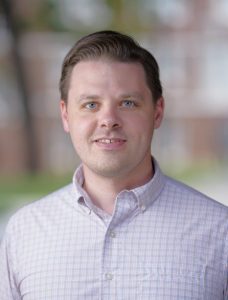
Chance Meers, Ph.D.
Assistant Professor, Biochemistry
- : chance.meers@vanderbilt.edu
- :
626 Robinson Research Building
23rd & Pierce Avenue
Nashville , Tennessee - 37232-0146
Transposable elements, RNA-guided mechanisms, DNA repair, molecular evolution
Research Description: For life to persist, genomes must be faithfully copied, repaired when damaged, and continually adapted under evolutionary pressures. One of the most influential forces acting on genomes comes from selfish mobile genetic elements, fragments of DNA that propagate themselves by moving, duplicating, and inserting into new locations. Through this relentless drive to spread, they have come to occupy large portions of genomes, in humans alone accounting for nearly half of the DNA, and in doing so have played a defining role in the evolution of life. Over time, genomes have become littered with the remnants of these elements, but on occasion life has turned them to its advantage. In fact, some of the most remarkable mechanisms in biology trace their origins to mobile genetic elements, from the CRISPR–Cas immune system in bacteria (Meers et al., Nature 2023) to snoRNA-guided RNA modification (Vaysset & Meers et al., Nature Microbiology 2025) and the V(D)J recombination system that equips our immune cells with the diversity needed to protect us against countless pathogens.
My lab investigates mobile genetic elements through genetics, biochemical reconstitution, and comparative genomics, and we apply these same strategies to other proteins that shape nucleic acid biology. By combining these perspectives with evolutionary and phylogenetic analyses, we uncover the strategies that drive mobility and the ways life has reshaped these molecular machines to serve diverse cellular functions, offering insights into genome evolution and revealing mechanisms we can harness for biotechnology.
Publications: https://www.ncbi.nlm.nih.gov/myncbi/1jSer0hDa68AY/bibliography/public/