Conquer Your Fellowship: A Project Management Tool and Guide for Your NIH Fellowship
Applying for an NIH fellowship can feel overwhelming, but the right guidance makes all the difference. This collection of resources walks you through every stage of the process – from identifying the right funding opportunity to preparing your application and understanding what happens after review. Whether you’re just getting started or refining a resubmission, these posts and tools will help you plan strategically, stay organized, and submit a stronger application.
Please note that BRET will be providing NRSA Drop-In Hour for general NRSA questions. Days and times available include:
- Tuesday, February 3, 10:00-11:00am, Light Hall 439
- Tuesday, March 3, 10:00-11:00am, Light Hall 439
- Tuesday, April 7, 10:00-11:00am, Light Hall 439
- Tuesday, May 5, 10:00-11:00am, Light Hall 439
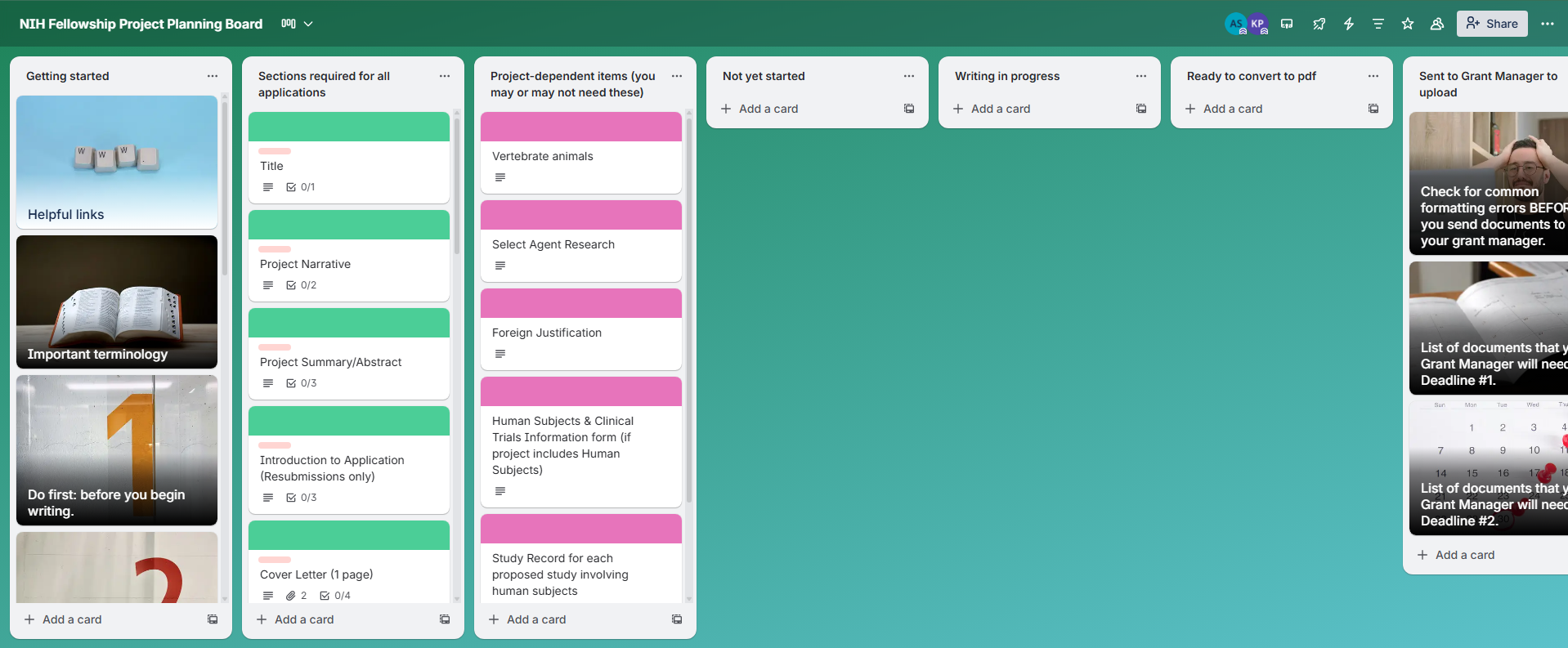
Access the Trello board here (VU login required):
How to use and customize the ASPIRE Grant Planner Trello Board
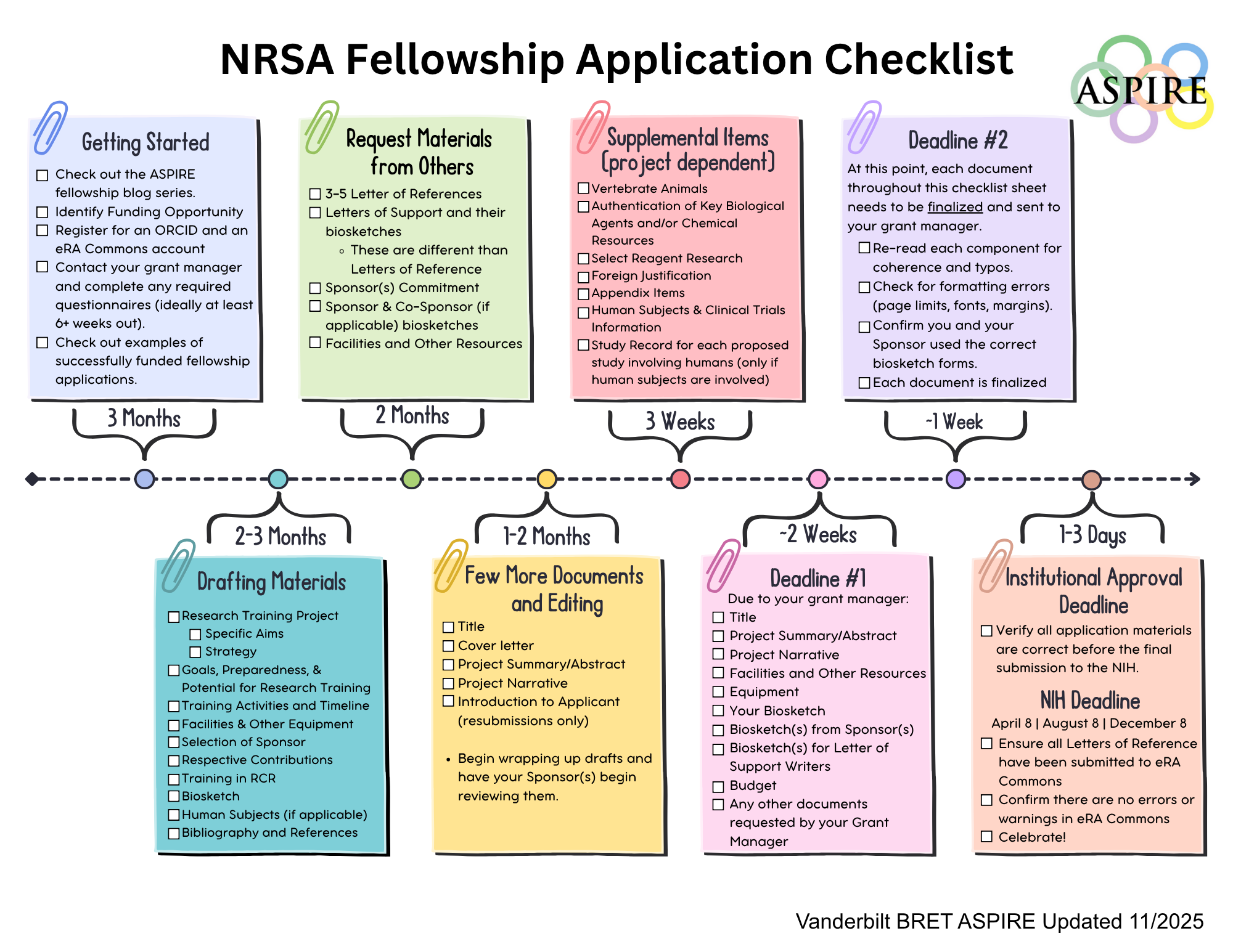
You can download our comprehensive Fellowship Application Checklist to track your progress offline.
The BRET ASPIRE Team has compiled several successful fellowship applications. Request access to the Grant Repository here.
Each blog post below provides detailed information to help you as you are preparing your fellowship application. These blogs complement the cards available on the Trello board. However, if you are not using the Trello board, you can still access the blog posts directly here:
Disclaimer: This information was compiled in November 2025. Always confirm you are using the most current instructions and forms.
Why apply for a fellowship?
- Financial benefit: Secure financial support for training
- Build your career: Notable accomplishment to highlight on your CV or résumé
- Establish a record of success: Previous funding looks good when applying for future funding
- Establish a relationship with the funder: Program staff can get to know you and advocate for your research
- Develop an important skill: Grant writing experience
- Early scientific review: Refine your ideas and solidify your project goals for yourself, PI, committee, and collaborators
Most fellowship applications are evaluated on 4 factors:
- Quality of the applicant
- Quality of your research plan
- Quality of the sponsor (PI of the lab) and sponsoring institution (Vanderbilt)
- Overall training potential (Will the training you receive during your fellowship help you advance in your career?)
5 fundamental principles of (most) fellowships:
- The 3 primary grantors of fellowships for training in the biomedical and life sciences are government agencies, health-related nonprofits, and foundations.
- Fellowships provide support for the PERSON, not the project.
- Fellowship applications are evaluated based on the quality of the: research plan, applicant, faculty sponsor/sponsoring institution, and overall training potential of the proposal.
- Fellowships are TRAINING awards, not research awards.
- Most fellowships provide training in a specific field.