Networking
Networking
Networking is a great way to learn about different careers and build connections. The saying “it’s not about what you know, but rather who you know” is especially true when you are searching for a job. In fact, it is estimated that up to 80% of jobs are filled through a professional network connection, and oftentimes, those jobs aren’t even posted on popular job search sites. The earlier you start building your network, the more connections you will have. Plus, you never know who they might know or what opportunities could open up through them. Check out the links and documents below to get started on your networking journey!
Network Pacing
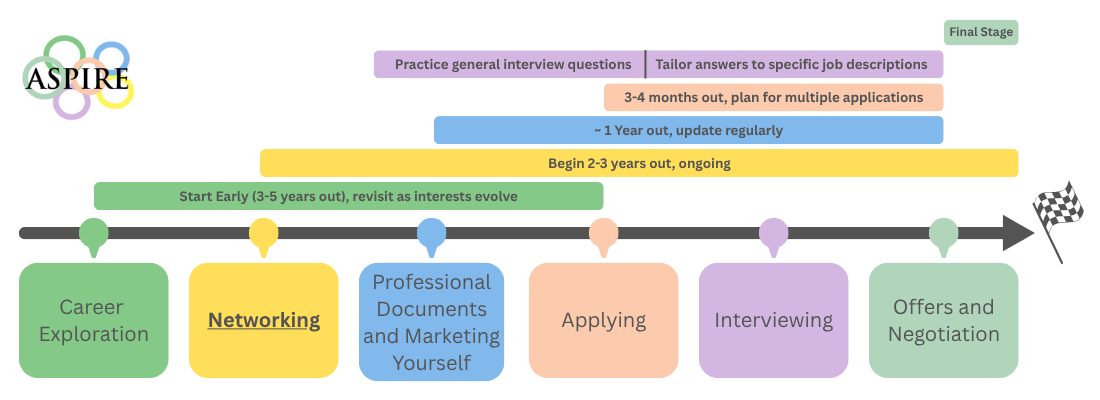
Networking doesn’t have to be overwhelming. It’s most effective when you approach it steadily over time rather than all at once. Building relationships early and maintaining them ensures that when you are ready to apply for jobs, you have a strong foundation. Learn more about how to get started networking in the Introduction to Networking ASPIRE slide deck. Not sure how to start building your network? Think about who you already know in your lab, who your PI might know, or any personal connections you might already have. Ask those people if they know of anyone in the field you are interested in exploring, and see if they would be willing to connect you to them. Also consider Vanderbilt alumni groups – LinkedIn is a great way to connect with them:
- Vanderbilt University – click on the Alumni tab to search for alumni by location, title, or company
- Vanderbilt University School of Medicine – click on the Alumni tab to search for alumni by location, title, or company
- Vanderbilt Alumni Group
- Vanderbilt University Biomedical Research Graduate and Postdoctoral Trainees and Alumni
Informational Interviews
An informational interview is simply a conversation with someone in a career field you are curious about. These conversations can help you learn how people got into their roles, what their day-to-day is like, and what skills are most valuable. They are not about asking for a job, but rather gathering insights and building connections. Listen to examples of informational interviews from our own alumni in the Vanderbilt Beyond the Lab podcast series.
For more information on how to conduct your own informational interviews, check out the ASPIRE Informational Interviews slide deck and the NIH OITE Informational Interviews handout for a list of potential questions to ask.
Tips for reaching out for an informational interview:
Whether you are emailing or sending a short LinkedIn message, keep your initial message short, polite, and specific. The goal is to introduce yourself, explain why you are reaching out, and express interest in learning from their experience.
Initial outreach (when exploring careers):
- Introduce yourself briefly (your school, program, area of research, and interest in their career field).
- Mention how you found them (e.g., alumni network, LinkedIn, conference).
- Ask if they have 30 minutes to share their experience or advice about their role or organization.
- This is not the time to ask them for a job, but rather to learn from their perspective.
During an informational interview:
- Be prepared and engaged by reviewing the person’s background, role and organization ahead of time so that you can ask thoughtful questions.
- Take notes during the conversation to show you are actively listening and to help remember key points later.
- Be mindful of their time and respect the agreed upon length.
- Avoid treating it like a traditional interview. You are not being evaluated for a position, so focus on learning and asking questions, rather than trying to sell yourself.
What to do after an informational interview:
- Send a thank you note within 24 hours expressing your appreciation for their time and insights. If you haven’t already, connect with them on LinkedIn. You could also include a brief thank you message with your connection request. This not only shows professionalism, but also creates a message history you both can refer back to if you reconnect on LinkedIn.
- Summarize your notes and keep them in a central location with notes from your other informational interviews. These can be useful to review if you plan to see this person at a conference or want to reconnect with them in the future. Consider keeping a dedicated folder or document for each person you’ve spoken to so you can easily refresh your memory on your conversation.
- In addition to summarizing what you learned, jot down your impressions of the company, team dynamics, and whether you could see yourself working in that environment. Reflecting on this while it is fresh can help you understand the company’s culture and can provide you with insights into whether you think you’d be a strong fit within the organization or whether that is the type of environment you could see yourself working in.
- Stay in touch periodically by sharing updates on your progress or asking for advice on next steps.
- Engage on LinkedIn by liking or commenting on their posts or congratulating them on new milestones.
- Share relevant articles or resources with them if you come across something that aligns with their interests or work.
- Reconnect with them at conferences if you see they are attending.
- If they are local, reach out and see if they’d like to grab a coffee with you.
Reaching back out during your job search:
When you are actively on the job market, it is a good idea to reconnect with the people in your network.
- Reach out with a short message referencing your previous conversation.
- Provide a brief update, such as mentioning that you are beginning to apply for positions in a specific field or area. You might say something like, “I’m starting to apply for [types of roles] and thought about our earlier conversation about your role at [company/organization].
- If appropriate, ask if they have any new insights about the field, organization, or hiring trends since you last spoke.
- Keep your message professional, genuine, and concise. Your goal is to maintain the relationship, not to directly ask for a job.
- If they respond, thank them for their time and continue to show appreciation to them for being a part of your professional network.
LinkedIn can be a powerful tool for building and maintaining your professional network. Beyond serving as a digital resume, it allows you to showcase your interests, join professional groups, and connect with alumni or other colleagues in fields you want to learn more about. Keeping your profile updated and reaching out to new connections can help you stay visible and engaged within your professional community. Learn more about how you can effectively Leverage LinkedIn from our ASPIRE slide deck.
Networking FAQ
- When should I start networking?
- You should start networking as soon as possible. Don’t wait until you are on the job market. Building a network takes time. Starting early helps you explore careers, learn about different career paths, and build connections long before you need them.
- Is it okay to reach out to someone via LinkedIn or email if I have no prior connection with them? What should I say in my first email or LinkedIn message?
- Yes – this is common and normal. Keep your message short and specific:
- Introduce yourself
- Explain how you found them
- Share what you are hoping to learn
- Ask if they have 20-30 min to talk
- Avoid asking for a job. Focus on learning and building a connection.
- Yes – this is common and normal. Keep your message short and specific:
- What if someone I reach out to doesn’t respond?
- It’s normal! People are busy. Wait about a week and then send a polite follow-up. If you still don’t hear back, move on and reach out to others in similar roles.
- How many informational interviews should I aim to do?
- There is no magic number, but try setting a goal of doing 1-2 informational interviews a month. Start out slow, but as you get more comfortable, you may want to increase your frequency. One thing that is helpful for expanding your network is to ask who you are conducting the interview with if they know anyone else you should reach out to. They may be eager to set up that connection for you – before you know it, your network will be expanding exponentially!
- What are some tips for networking at a conference?
- Review the attendee list ahead of time and identify people you’d like to meet.
- Prepare a brief introduction about yourself and your interests.
- Attend poster sessions, workshops, or social events – these places tend to be a little easier to start conversations.
- Ask open-ended questions and show curiosity.
- Exchange contact information or connect on LinkedIn soon after your meeting.
- Follow up within a few days with a short thank-you message referencing your conversation.